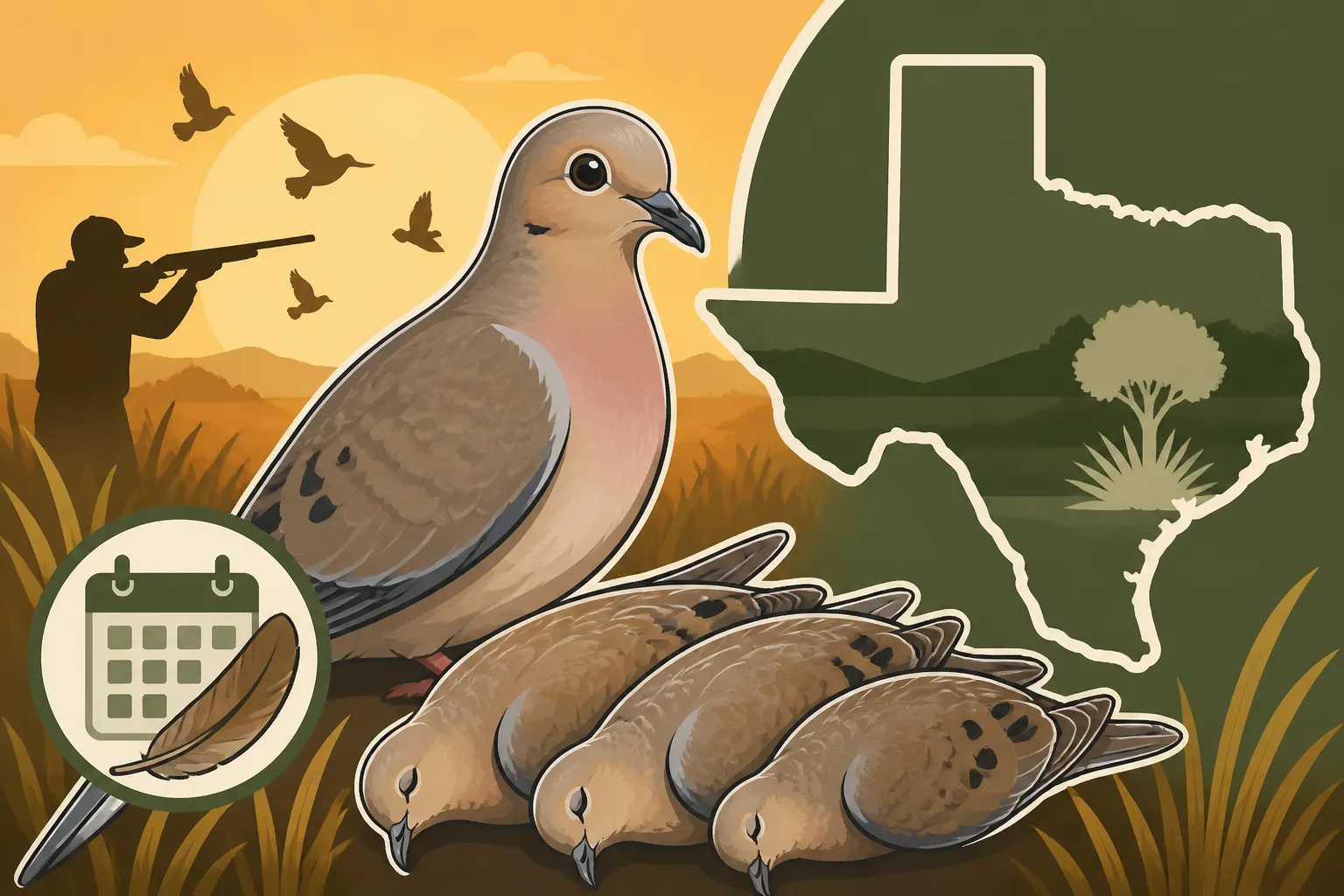
Mourning Dove Season & Bag Limit in Texas
The scorching Texas summer starts to fade, and a familiar itch begins for many hunters: the anticipation of dove season. But let's be honest, trying to decipher the ever-changing, zone-specific season dates and bag limits can feel like navigating a maze blindfolded. This comprehensive guide is here to untangle all that confusion, breaking down everything you need to know about Mourning Dove season and bag limits in Texas, so you can confidently plan your hunts.
Understanding Texas Dove Zones and Their Purpose
Texas is a massive state, stretching from arid deserts to humid coastlines and dense pine forests. It's no surprise that migratory birds, like our beloved mourning doves, move through these diverse landscapes at different times. To account for these varied migration patterns and ensure fair hunting opportunities while managing dove populations responsibly, the Texas Parks and Wildlife Department (TPWD) divides the state into three distinct dove hunting zones: the North Zone, Central Zone, and South Zone.
Why Zonal Divisions Matter
The primary reason for these zonal divisions is ecological. Doves migrate southward as temperatures cool, and different parts of Texas experience these changes at varying rates. By setting staggered season dates, TPWD aims to allow hunters to pursue doves when populations are at their peak in their respective areas, rather than having a one-size-fits-all season that might miss prime migration windows in certain regions. This also helps distribute hunting pressure across the state, contributing to sustainable dove populations. For example, the North Zone generally sees birds arrive and depart earlier, while the South Zone often holds birds much later into the fall and even early winter.
Defining the North, Central, and South Zones
Understanding which zone your hunting spot falls into is absolutely critical, as it dictates your season dates. It's not always intuitive, so it's best to consult the official TPWD Outdoor Annual or a reliable mapping tool.
- North Zone: This zone typically encompasses the Panhandle and much of North Central Texas. Its southern boundary usually runs along Interstate 20 from the New Mexico border to Fort Worth, then follows major highways east. Hunters here often see the earliest dove activity, and thus, the season tends to open first. If you're hunting near cities like Lubbock, Amarillo, or Wichita Falls, you're most likely in the North Zone.
- Central Zone: The Central Zone covers a vast swath of the state, including the Dallas-Fort Worth metroplex, the Pineywoods, the Hill Country, and the vast agricultural lands of Central Texas. Its boundaries are generally defined by the North and South Zones. This is where a huge number of hunters find themselves, and its season dates are often the most referenced for the traditional September 1st opener. Key cities in this zone include Dallas, Austin, San Antonio, Houston, and Tyler. Many hunters use resources like GoHunt or the Texas Dove Zones Map (North, Central, South) to accurately identify their location.
- South Zone: As the name suggests, this zone covers the southernmost part of Texas, including the famed brush country and the fertile Rio Grande Valley. Doves here often arrive later and stay longer due to warmer weather and abundant food sources. The South Zone usually has the latest season openers and closers, sometimes extending well into January. If you're hunting near places like Laredo, Corpus Christi, or Brownsville, you're in the South Zone. The dove hunting here can be truly phenomenal, especially for white-winged doves.
Mourning Dove Season Dates in Texas
While the exact dates for upcoming seasons like "Texas Dove Season Dates 2026" are finalized closer to the hunting year, the structure generally remains consistent. Texas dove seasons typically feature an early segment (often starting September 1st in the Central and North Zones) and a later segment, separated by a brief closure. This split season structure provides flexibility and aligns with migratory patterns.
Early and Late Season Splits
Most dove zones in Texas operate under a split season. The first segment usually kicks off around September 1st (for Central and North Zones) and runs for several weeks. After a temporary closure, often in late October or November, the season reopens for a second, shorter segment that can extend into January. This strategy allows doves to continue their migration without constant hunting pressure, and it offers hunters two distinct opportunities to be in the field. The late season can be particularly productive in areas that receive strong pushes of migratory birds later in the year. Always refer to the official Texas Parks and Wildlife Department Outdoor Annual for the definitive dates each year, or check reliable hunting apps.
Typical Season Openers and Closers
While 2026 dates are still to be determined, we can look at patterns from recent years to understand what to expect.
- North Zone: The North Zone often opens on September 1st, or the closest Saturday to it, running for about 45-50 days. The late season usually reopens in mid-December and typically closes around the second week of January.
- Central Zone: The Central Zone, which includes the iconic "September 1st opener," usually aligns with the North Zone for its early start. Its first segment also runs for roughly 45-50 days. The late season segment commonly reopens in mid-December and closes in early January. For those looking to plan, knowing Texas Dove Season 2026: Zones & Dates as soon as they're released is key for the Central Zone's prime early action.
- South Zone: The South Zone generally has a delayed opener, often starting a week or two after the North and Central Zones, typically around September 14th to 20th. Its first segment then runs for a similar duration. The late season in the South Zone is often the longest, reopening in mid-December and sometimes extending all the way to the end of January, providing fantastic hunting opportunities deep into winter.
Special White-winged Dove Days
A unique feature of Texas dove hunting, particularly in the South Zone, are the "Special White-winged Dove Days." These are typically a few extra hunting days, usually on the first two weekends of September, before the regular South Zone opener. During these special days, hunting is restricted to white-winged doves and mourning doves only, with a reduced bag limit of 15 birds in the aggregate, no more than 2 of which may be mourning doves. These days are a fantastic opportunity for an early bird hunt in the South Zone, but it's crucial to know the specific regulations, including shooting hours (usually noon to sunset) and bag composition. These dates provide an early taste of the incredible White-Winged vs Mourning Dove in Texas experience.
Bag and Possession Limits for Mourning Doves
Understanding bag limits is just as important as knowing the season dates. Texas has specific rules to ensure sustainable harvesting of doves, and these limits apply to all species of doves combined, with certain exceptions.
Daily Bag Limit Explained
For mourning doves in Texas, the daily bag limit is generally 15 doves in the aggregate. "In the aggregate" means the total number of doves of all species you can harvest in a single day. For the regular season, this 15-bird limit typically includes white-winged doves and white-tipped (or white-fronted) doves, unless specific restrictions are in place for certain species within that aggregate. For instance, sometimes there's a sub-limit for white-tipped doves. Always verify the most current regulations in the Texas Outdoor Annual for the specific year you plan to hunt. Exceeding this limit is a serious offense and can result in significant penalties.
Possession Limit vs. Daily Bag Limit
This is where some hunters get tripped up. The possession limit is the maximum number of doves you can have in your possession at any given time, regardless of when or where they were harvested. For mourning doves in Texas, the possession limit is typically three times the daily bag limit, which means 45 doves. This allows hunters who travel for multiple days, or who have processed birds at home, to legally possess more than a single day's bag. However, it's critical that these birds are properly processed and identified. If you have more than one day's limit in your possession, and you're in the field, all birds from previous days must be kept separate and distinguishable from the current day's take.
Species-Specific Limits
While the general daily bag limit is 15 in the aggregate, there are important nuances.
- White-winged Doves: During the regular season, white-winged doves count towards the 15-bird aggregate daily bag limit. However, during the "Special White-winged Dove Days" mentioned earlier, the aggregate daily bag limit is reduced to 15, but with a specific restriction: no more than 2 mourning doves may be included in that bag. This means you could shoot 13 white-wings and 2 mourning doves, but not 3 mourning doves.
- White-tipped Doves (White-fronted Doves): These doves also count toward the aggregate daily bag. Occasionally, there may be a sub-limit specifically for white-tipped doves, often around 2 birds, within the overall 15-bird aggregate. Again, always check the current year's regulations carefully to avoid any violations.
- Eurasian Collared-Doves: These are an exotic, non-native species and are not considered part of the aggregate bag limit. You can typically take Eurasian collared-doves without a limit, and they do not count towards your 15-bird daily bag for migratory doves. However, they must be identifiable as Eurasian collared-doves in your possession and are still subject to legal shooting hours and general hunting regulations.
It's also essential to remember that all migratory game bird hunters must possess a valid Texas Hunting License: Cost, Types & How to Buy (2026) with a valid Texas Migratory Bird Endorsement & HIP Certification. This certification helps TPWD and the U.S. Fish and Wildlife Service gather crucial harvest data.
Key Regulations Beyond Dates and Limits
Hunting doves in Texas isn't just about knowing when and how many. There's a whole framework of rules designed to ensure safety, ethical hunting, and conservation. Ignoring these can lead to serious legal trouble.
License and Endorsement Requirements
Before you even think about stepping into a dove field, ensure your paperwork is in order. Every hunter, regardless of age (unless specifically exempt, like those under 17 accompanied by a licensed adult), needs a valid Texas hunting license. For migratory birds like doves, you'll also need a Texas Migratory Game Bird Endorsement and be HIP (Harvest Information Program) certified. These are typically included with the popular Super Combo license. Non-residents will need a non-resident hunting license and the migratory bird endorsement. These requirements are clearly outlined in the Texas Hunting Seasons: Complete Calendar by Species and the annual Outdoor Annual.
Legal Shooting Hours
Doves are early risers and late-day feeders, but you can't just shoot them whenever you see them. Legal shooting hours for doves in Texas are generally one-half hour before sunrise to sunset. This is critical to remember. Hunting outside these hours is strictly illegal and considered poaching. Always check the sunrise and sunset times for your specific location on the day of your hunt. Many hunting apps, like those you might use for scouting with GoHunt, often include this information, making it easy to stay compliant.
Methods of Take and Ammunition
You can't use just any weapon for dove hunting. Shotguns are the primary method of take, and there are specific rules:
- Shotgun Gauge: Any legal gauge shotgun (10, 12, 16, 20, 28, .410) is permitted.
- Plug Rule: Your shotgun must be plugged or manufactured in a way that it cannot hold more than three shells total in the magazine and chamber combined. This is a federal regulation for all migratory bird hunting.
- Lead Shot vs. Steel Shot: For doves, unlike waterfowl, lead shot is generally permitted. However, it's always wise to double-check local regulations or WMA rules, as some specific public hunting areas might have restrictions. When preparing for your hunt, you'll want to ensure you have the Best Gear for Dove Hunting in Texas including appropriate shells.
Baiting Regulations
This is perhaps the most critical regulation for dove hunters, and ignorance is no excuse. It is illegal to hunt doves over a baited area. Baiting is defined as placing or scattering grain, salt, or other feed to attract migratory game birds. This includes "manipulated crops" where grain has been scattered or exposed by activities like mowing, discing, or burning that aren't considered a normal agricultural practice.
Understanding what constitutes a "normal agricultural practice" is key. A field where corn has been harvested, leaving natural waste grain, is generally legal. A field where sunflowers have matured and are naturally dropping seeds is legal. But spreading supplemental corn or broadcasting seed specifically to attract doves would be baiting. It's also important to know that a field can remain "baited" for 10 days after all bait has been removed, as doves can still be attracted to the residual feed. If you have any doubt about a field, it's best to err on the side of caution or contact your local game warden. Many hunters who want to attract doves legally will create their own food sources; if you're interested, you can learn How to Make Your Own Dove Field.
Here's a quick summary of typical Texas Mourning Dove season information:
| Zone | Season Segment | Typical Start Date | Typical End Date | Daily Bag Limit (Aggregate) | Possession Limit (Aggregate) |
|---|---|---|---|---|---|
| North | Early Regular Season | Sept. 1st | Mid-October | 15 doves | 45 doves |
| Late Regular Season | Mid-December | Early January | 15 doves | 45 doves | |
| Central | Early Regular Season | Sept. 1st | Mid-October | 15 doves | 45 doves |
| Late Regular Season | Mid-December | Early January | 15 doves | 45 doves | |
| South | Special White-winged | First 2 Sept. Weekends | First 2 Sept. Weekends | 15 doves (max 2 Mourning) | 45 doves |
| Early Regular Season | Mid-September | Late October | 15 doves | 45 doves | |
| Late Regular Season | Mid-December | Late January | 15 doves | 45 doves |
Note: These dates are illustrative based on recent patterns. Always consult the official TPWD Outdoor Annual for the definitive dates for the current year.
Planning Your Texas Dove Hunt
With the regulations understood, you can now focus on the fun part: planning your hunt! Texas offers incredible dove hunting opportunities, whether you're targeting the fast-flying mourners or the larger white-wings.
Scouting and Field Selection
Effective scouting is paramount to a successful dove hunt. Doves are creatures of habit, often flying predictable routes between their roosting areas, feeding grounds, and water sources. Look for fields with abundant food sources like sunflowers, milo, wheat, or even natural weed seeds. Power lines, dead trees, and water tanks are also excellent indicators of dove activity, as they use these for perching and drinking. Using aerial maps, like those available on GoHunt or other popular hunting apps, can help you identify potential flyways, water sources, and food plots even before you hit the ground. Many hunters find that understanding Dove Field Setup: Where to Stand can make or break their success.
Decoys and Blinds
While doves can be hunted without them, decoys can significantly improve your chances, especially if you're hunting in a less active field. Spinning-wing decoys are particularly effective, mimicking a landing dove and catching the attention of passing birds. Static decoys can also add to the illusion. As for blinds, a simple natural blind made from brush or a portable pop-up blind is usually sufficient. Doves have excellent eyesight, so breaking up your silhouette is important. Understanding How to Use Decoys for Dove Hunting is a skill that develops over time, but the payoff is worth it. For those just starting out, check out How to Hunt Dove in Texas (Step by Step) for a solid foundation.
Safety in the Field
Dove hunting often involves multiple hunters in a field, making safety non-negotiable. Always maintain safe shooting lanes, communicate with your fellow hunters, and know where everyone is at all times. Never shoot low at birds that are close to the horizon, as you could be endangering someone beyond your field of view. Ear and eye protection are also highly recommended. The excitement of a hot dove shoot can be intense, but a moment of carelessness can have tragic consequences.
Dove season in Texas is more than just a hunt; it's a tradition, a social event, and a true test of wingshooting skill. By understanding the zones, dates, bag limits, and other key regulations, you're setting yourself up for a legal, safe, and ultimately more enjoyable experience in the field. So grab your shotgun, fill your cooler, and get ready for the thrilling sound of whistling wings overhead!
Disclaimer
Please remember that hunting regulations can change frequently. While we strive to provide the most accurate and up-to-date information, it is always your responsibility to consult the official Texas Parks and Wildlife Department (TPWD) Outdoor Annual and any county-specific regulations before heading out into the field. This article is for informational purposes only and should not be considered a substitute for official legal guidance.