How to Hunt Sandhill Crane in Texas
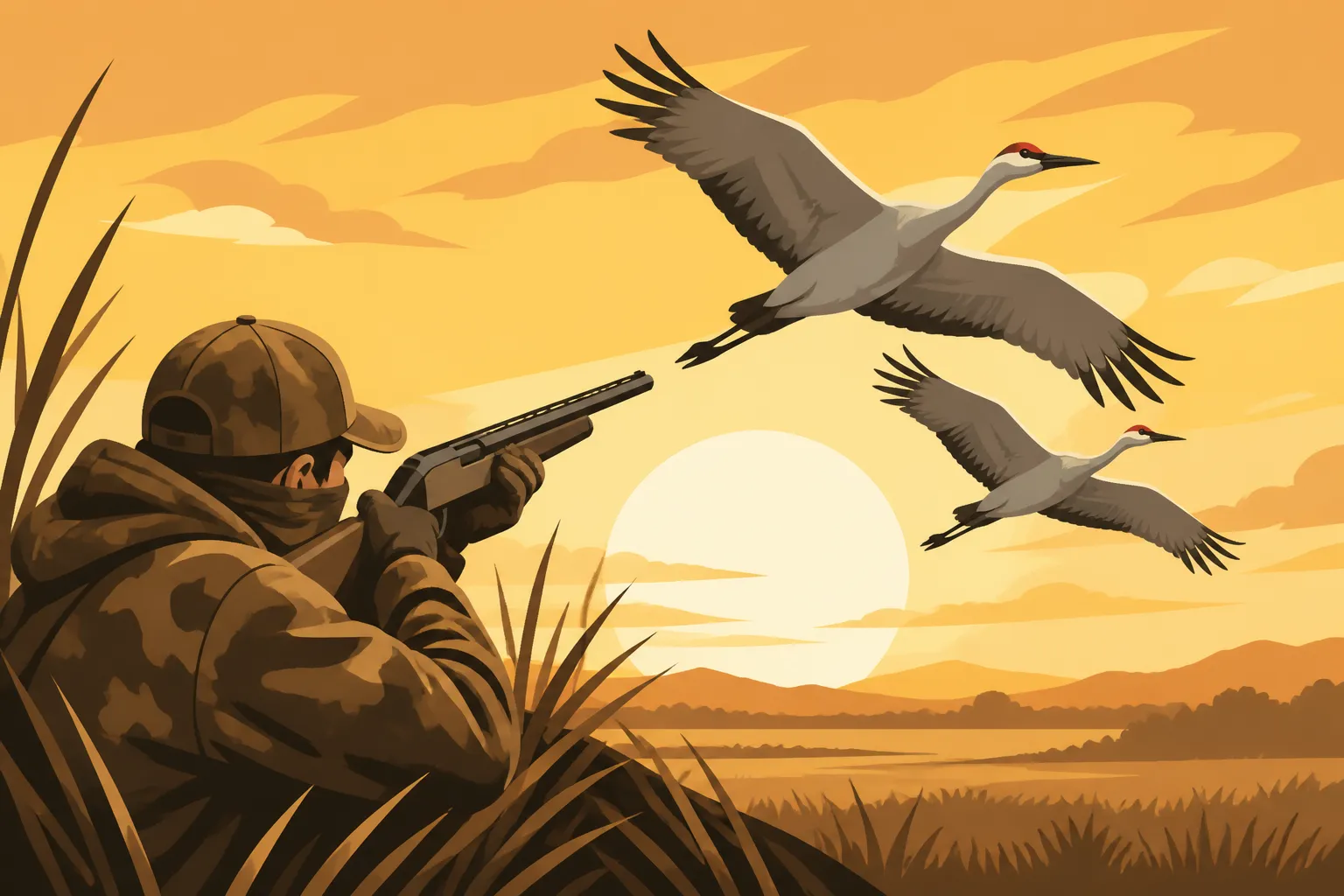
Hunting sandhill cranes in Texas can feel like trying to outsmart a seasoned general; these birds are incredibly wary, possess keen eyesight, and often seem to know exactly when you're trying to fool them. It's a hunt that demands patience, meticulous preparation, and a deep understanding of their behavior. This comprehensive guide will walk you through everything you need to know to successfully pursue these magnificent "ribeye of the sky" birds across the vast Texas landscape.
The Allure of Sandhill Crane Hunting in Texas
For many Texas hunters, the sandhill crane represents a truly unique and rewarding pursuit. It's not just about the challenge, which is considerable, but also the unparalleled table fare these birds provide. Often dubbed the "ribeye of the sky" for their rich, beef-like flavor, sandhill cranes are a culinary delight that sets them apart from other migratory birds. Their distinctive bugling calls echoing across the wide-open plains and their graceful flight patterns make every encounter memorable, whether you pull the trigger or not.
Why Texas is a Prime Destination for Cranes
Texas lies squarely within the Central Flyway, a major migratory route for millions of birds heading south for the winter. Sandhill cranes are no exception, and vast numbers migrate through or winter in the state, particularly across the western and central regions. They are drawn to Texas's extensive agricultural fields, especially those with waste grain like corn, wheat, and milo, which provide abundant food sources. The mild winters also offer a perfect refuge from the harsh northern climes, making Texas an essential stopover and wintering ground for these majestic birds. The Panhandle, South Plains, and portions of the Rolling Plains are particularly known for their significant crane populations.
The "Ribeye of the Sky" Reputation
You hear it all the time from seasoned hunters: "You've got to try sandhill crane." This isn't just hyperbole; the meat truly is exceptional. Unlike many waterfowl or upland birds, crane meat has a dark red color and a texture that more closely resembles venison or a tender steak. Its mild, earthy flavor lends itself well to various cooking methods, from grilling and searing to slow-cooking. This culinary appeal is a huge motivator for many hunters, transforming what is already a challenging hunt into a truly gratifying experience from field to table. Properly harvested and cared for, a sandhill crane can provide several generous portions of premium wild game.
Navigating Sandhill Crane Regulations in Texas
Before you even think about setting out your decoys or blowing a call, understanding the specific regulations for sandhill crane hunting in Texas is absolutely critical. These aren't your typical dove or duck regulations; there are some key differences, especially concerning permits and shot requirements, that often trip up even experienced hunters. Falling afoul of these rules can lead to significant penalties, so it pays to do your homework every single season.
Required Licenses and Permits
To legally hunt sandhill cranes in Texas, you'll need more than just a standard hunting license. First and foremost, you'll need a valid Texas hunting license, which is your base requirement. Beyond that, because sandhill cranes are migratory birds, you must also purchase a migratory game bird endorsement. This endorsement covers a range of birds, including doves, ducks, and geese. However, here's where it gets specific: you also need a special Federal Sandhill Crane Hunting Permit. This permit is free but absolutely mandatory and can be obtained online through the Texas Parks and Wildlife Department (TPWD) website. Additionally, you must be HIP certified. Ensure you check the official TPWD outdoor annual for the most current information, as regulations can sometimes change year to year. For more information on what you need, check out our guide on how to buy a Texas Hunting License: Cost, Types & How to Buy (2026).
Season Dates, Zones, and Bag Limits
Texas divides its sandhill crane hunting into three zones: Zone A, Zone B, and Zone C, each with slightly different season dates and bag limits. These zones are designed to manage harvest pressure across different migratory pathways and wintering areas. Generally, Zone A covers the western Panhandle, Zone B spans the central and eastern Panhandle and extends south, and Zone C covers a smaller, more southerly portion of the state.
It's paramount to check the current year's Outdoor Annual for precise dates, as they can fluctuate. Typically, seasons run from late October or November through January or February, with varying daily bag limits, often around three cranes per day. The possession limit is usually three times the daily bag limit. Always verify the specific zone you plan to hunt in and its corresponding regulations. A quick glance at the current year's Texas Sandhill Crane Season & Free Permit page on the TPWD website will give you the latest details.
| Zone | General Season Dates (Approx.) | Daily Bag Limit | Possession Limit |
|---|---|---|---|
| A | Late October – Late January | 3 | 9 |
| B | Early November – Early February | 3 | 9 |
| C | Mid-December – Mid-February | 2 | 6 |
Note: These dates and limits are illustrative and subject to change annually. Always consult the official Texas Parks and Wildlife Department Outdoor Annual for current regulations.
Non-Toxic Shot Requirements
One of the most critical regulations to be aware of when hunting sandhill cranes, like most migratory birds, is the mandate for non-toxic shot. This means you cannot use lead shot for crane hunting. Steel shot is the most common and affordable non-toxic alternative, but bismuth, tungsten-iron, and other heavier-than-steel options are also available, often at a higher price point. The specific size of non-toxic shot you choose will depend on your shotgun gauge and personal preference, but many crane hunters opt for larger sizes like BB, BBB, or T shot to deliver enough energy for these large, resilient birds. Always ensure your shotgun is rated for the specific non-toxic shot you intend to use.
Essential Gear for Sandhill Crane Hunting
You wouldn't show up to a fancy dinner in your pajamas, and you certainly shouldn't show up to a sandhill crane hunt unprepared. These birds are tough, smart, and require a specific setup to bring them into range. Having the right gear isn't just about comfort; it's about maximizing your chances and ensuring a safe, ethical hunt. Skimping on the essentials can lead to frustration and missed opportunities, which is something nobody wants after waking up before dawn.
Shotguns and Ammunition
When it comes to shotguns for sandhill cranes, a 12-gauge is almost universally recommended, largely due to its versatility and the availability of heavy, non-toxic loads. Many hunters prefer a 3-inch or even 3.5-inch magnum chamber to handle the heavier payloads required to effectively bring down these large birds. A modified or improved modified choke is a popular choice, offering a good balance of pattern density and spread for the typical ranges at which cranes are shot. Semiautomatic shotguns are favored by many for their quicker follow-up shots, which can be crucial when a flock presents multiple targets.
For ammunition, as mentioned, non-toxic shot is mandatory. When selecting shot size, remember that sandhill cranes are large, hardy birds, often weighing between 7 and 10 pounds with substantial bone structure. This means you need heavier shot than you might use for ducks or doves. Steel shot in sizes BB, BBB, or T are common choices. Some hunters swear by more expensive alternatives like Bismuth or Tungsten, which retain more energy at longer ranges, for their denser patterns and improved knockdown power. Regardless of your choice, ensure your shells are appropriate for your shotgun's chamber and choke combination to ensure safety and optimal performance.
Decoys and Spreads
Decoys are the cornerstone of a successful crane hunt. Sandhill cranes have incredible eyesight, so realistic, full-body decoys are generally preferred over silhouettes, though a mixed spread can sometimes work. The key is quantity and realism. A small spread of 6-12 decoys might work for a small, isolated group, but for consistently drawing in large flocks, a spread of 24, 36, or even more decoys is highly effective. Many experienced crane hunters even go beyond that, running spreads of 50 to 100 decoys to mimic a large, contented flock feeding in a field. Brands like Dakota Decoy or Avian-X offer high-quality, realistic full-body sandhill crane decoys that are worth the investment.
The setup of your decoys, or your "spread," is also critical. Cranes are social birds, but they are also wary. A common tactic is to create a feeding spread with a landing zone (a clear area) downwind from your blind. This allows cranes to approach from upwind, circle, and commit to the landing zone directly in front of your concealed position. You can arrange them in family groups, mimicking their natural behavior. Some hunters also incorporate a few "sentry" decoys with heads up, positioned on the perimeter, to enhance realism. For more ideas on how to set up your field, you might find some crossover tips in our article on Dove Field Setup: Where to Stand.
Blinds and Concealment
Given the unparalleled eyesight of sandhill cranes, effective concealment is non-negotiable. Forget sitting out in the open; you'll get busted every time. Layout blinds are incredibly popular for crane hunting because they allow hunters to lie prone in the field, blending in seamlessly with stubble or natural contours. These blinds offer excellent concealment and warmth, which is a bonus on chilly Texas mornings. Good options include those from Avery Outdoors or Rogers Sporting Goods.
If layout blinds aren't an option, you can construct makeshift blinds using natural vegetation already present in the field, such as hay bales, brush piles, or standing crops. The key is to break up your human outline completely. Digging a shallow pit blind can also be highly effective, especially in open fields where natural cover is scarce. Whatever method you choose, ensure you're completely hidden, and wear camouflage that matches the specific environment you're hunting in. Even a small patch of exposed skin or a shiny object can send a wary flock veering away.
Calls and Other Useful Gear
A good sandhill crane call is an indispensable tool for attracting birds and finishing them into your spread. There's an art to calling cranes, mimicking their distinct bugles, groans, and clucks. Learning to make a realistic crane sound can often be the difference between birds circling out of range and committing to your decoys. Practice is key, and many instructional videos are available online.
Beyond the core essentials, a few other items can significantly improve your hunt:
- Binoculars: Crucial for spotting distant flocks and scouting potential fields.
- Waders: Depending on the field conditions, especially if there's standing water or dew, waders can keep you dry and comfortable.
- Comfortable Seating: Even in a layout blind, a small cushion can make a long wait more bearable.
- Cooler: After a successful hunt, you'll need a way to keep your birds cool, especially in Texas's often-warm conditions. A large, durable cooler like a Yeti or an RTIC can be invaluable. Find out more about the Best Coolers for Texas Hunting (Yeti & Alternatives).
- Game Cart: Cranes are big birds. If you're hunting far from your vehicle, a game cart can save your back when retrieving multiple birds.
Scouting and Field Selection for Cranes
You can have the best decoys, the fanciest call, and the most expensive shotgun, but if you're not in the right field, you're not going to kill a single crane. Scouting is arguably the most crucial component of a successful sandhill crane hunt in Texas. These birds are creatures of habit but can change their patterns quickly based on food availability, weather, and hunting pressure. Dedicating time to understand their movements and preferences will pay dividends far beyond any gear investment.
Identifying Prime Feeding and Roosting Areas
Sandhill cranes are primarily grazers and grubbers, with a strong preference for waste grain left in agricultural fields after harvest. Think corn, wheat, milo, and even peanuts. They will also forage for insects, tubers, and other plant matter. To find them, you need to scout harvested crop fields. Look for their distinct tracks in muddy areas, scattered feathers, and most importantly, actual birds. They often feed in large flocks, so spotting them from a distance is usually not too difficult.
Roosting areas are equally important. Cranes typically roost in shallow water bodies, such as playa lakes, stock tanks, or shallow riverbeds, which offer protection from predators. While you usually won't hunt them in their roosts, identifying these areas can help you predict their flight paths to and from feeding fields. Understanding their daily routine – flying from roost to feed in the morning, loafing midday, and returning to roost in the late afternoon – is key to setting up in the right spot at the right time. This daily pattern is similar to what you might observe in duck hunting, so tips from our guide on Duck Hunting in Texas: Decoys & Blinds can offer useful insights into migratory bird behavior.
Reading the Landscape for Crane Activity
When scouting, don't just drive by; get out and use your binoculars. Look for tell-tale signs. Are there freshly dug holes in the ground where they've grubbed for tubers? Are there feathers indicating a recent loafing spot? Pay attention to prevailing wind directions, as cranes, like all large birds, prefer to take off and land into the wind. This will inform your blind and decoy placement later.
Observe how cranes react to disturbances. Are they skittish? Do they fly directly over power lines or specific tree lines? Identifying these flight corridors can help you position your blind in a natural flight path, rather than trying to pull them completely off their established route. Often, the best fields are those that have seen consistent crane activity for several days, indicating a reliable food source. Be wary of fields that have been heavily hunted recently, as the birds will become even more educated and avoid them.
The Importance of Landowner Permission
Unless you're hunting on public land (which for sandhill cranes is rare in prime areas), securing landowner permission is absolutely essential. Texas is predominantly private land, and hunting without permission is trespassing, with serious legal consequences. When approaching landowners, be polite, respectful, and offer to share some of your harvest. Many landowners are happy to grant access, especially if cranes are putting pressure on their crops, but always build a relationship based on trust and respect.
If private land isn't an option, exploring public hunting opportunities through the Texas Public Hunt Draw System can be a viable alternative, though drawn hunts for cranes might be less common than for other species. Our guide on Public Hunting in Texas: WMAs & Annual Public Hunting Permit provides excellent resources for exploring these options. Remember, public land hunting often comes with more competition and less predictable game movement, making thorough scouting even more crucial.
Effective Hunting Tactics and Strategies
Once you've done your homework and found a promising field, the real chess match begins. Sandhill cranes are intelligent birds, and your tactics need to be as sharp as their eyesight. This isn't a spray-and-pray kind of hunt; it demands precision, patience, and the ability to adapt to changing conditions.
Decoy Spreads and Blind Placement
The most effective decoy spreads for sandhill cranes mimic a natural feeding flock. As mentioned earlier, a large spread is often best. Arrange your full-body decoys in loose family groups, not in tight clusters. Leave a large, clear landing zone (the "pocket") directly downwind from your blind. Cranes will almost always land into the wind, so positioning your blind at the upwind edge of the pocket ensures that when they commit to landing, they'll be presenting broadside or slightly quartering away, offering an ethical shot.
Blind placement should capitalize on existing cover if possible, like tall grass, hay bales, or even a fence line. If using layout blinds, ensure they are brushed in meticulously with local vegetation to completely break up their outline. Pay attention to the sun's position – if possible, place the blind so the sun is in the cranes' eyes as they approach, making it harder for them to spot you. Avoid putting your blind directly on a skyline or high point.
Calling Techniques for Sandhills
Calling is an art form that takes practice, but a well-used call can be incredibly effective. Sandhill crane calls imitate their distinctive bugle, which is a loud, rolling, trumpeting sound, and their softer clucks and groans. When birds are distant, use loud, aggressive bugles to get their attention. As they get closer, vary your calls, incorporating softer clucks and contented groans, mimicking a happy, feeding flock. This tells them, "Everything's fine down here, come on in!"
Watch the birds' reactions carefully. If they turn and start heading your way, ease off the aggressive calling and switch to softer, welcoming sounds. If they seem to lose interest, give another series of bugles to draw them back. Don't overcall; let the decoys do some of the work, too. The goal is to sound like a realistic flock, not a desperate one. Sometimes, a few soft clucks are all it takes to make them commit.
The Critical Shot and Ethical Retrieval
When cranes are locked up and committed to your spread, let them get close. Many hunters make the mistake of shooting too early. Wait until they are directly over the decoys, wings cupped, or feet down in the landing zone – ideally within 30-40 yards. Cranes are large and tough, so proper shot placement is paramount for a clean, ethical kill. Aim for the head, neck, or just above the wing butt for vital organ hits. Do not shoot at high-flying birds or birds beyond ethical range, as this often leads to wounded birds that escape and are lost.
After the shot, swift retrieval is important. Cranes can be very resilient, and a wounded bird can run surprisingly fast. If you're hunting with a dog, ensure it's trained for large birds. If not, mark where the bird falls precisely and move quickly to recover it. Losing a downed bird is not only unethical but also a waste of a valuable resource. Once recovered, immediately begin the process of How to Field Dress a Deer in Hot Weather if you're in warm weather, adapting the principles for a bird, to ensure the meat quality is preserved. This often means getting the guts out quickly and into a cooler.
Post-Hunt Care: Field Dressing and Cooking Sandhill Crane
The hunt doesn't end when the bird hits the ground. Proper post-hunt care is essential for preserving the quality of the meat, especially in the often-warm Texas climate. Neglecting these steps can turn that "ribeye of the sky" into a less-than-stellar meal.
Quick Cooling and Field Dressing
Sandhill cranes are large birds, and their body heat can quickly spoil the meat, particularly the breast, if not addressed promptly. The moment you recover a bird, the first priority is to cool it down. If you plan to retrieve multiple birds before heading back to the truck, at least get them into the shade. Ideally, you want to gut them as soon as possible, especially if temperatures are above 60°F.
To field dress a crane, you can either breast out the bird or pluck it whole. For most hunters, breasting out is the quickest and most common method. Make a cut down the center of the breastbone, then slice along the rib cage on both sides to separate the breast meat from the bone. You can also take the legs and thighs. Immediately place the meat in a game bag or zip-top bag, then get it on ice in a cooler. Ensuring proper airflow and contact with ice will rapidly bring down the meat's temperature, inhibiting bacterial growth and preserving that fantastic flavor.
Preparing the Meat for the Table
Once you're back home, the breast meat should be thoroughly cleaned, removing any shot, feathers, or bruised areas. Pat it dry with paper towels. From there, your culinary options are wide open. The robust flavor of sandhill crane meat stands up well to marinades, rubs, and bold seasonings. Many people treat it much like a beef steak. Slice the breast against the grain into medallions or leave it whole.
Grilling or pan-searing the breast to a medium-rare or medium doneness is a popular choice, allowing the meat's natural richness to shine. It can also be slow-cooked, braised, or even smoked. Consider recipes that highlight game meats, perhaps with a red wine reduction, mushrooms, or herbs like rosemary and thyme. Remember to cook it carefully; overcooking can make any lean game meat dry and tough. With proper care from field to fork, you'll understand exactly why the sandhill crane earns its reputation as the "ribeye of the sky."
Disclaimer
Hunting regulations and season dates are subject to change. Always consult the official Texas Parks and Wildlife Department Outdoor Annual or website for the most current and accurate information before planning any hunting trip. This guide is for informational purposes only and does not supersede state or federal hunting laws.