Spring vs Fall Turkey in Texas
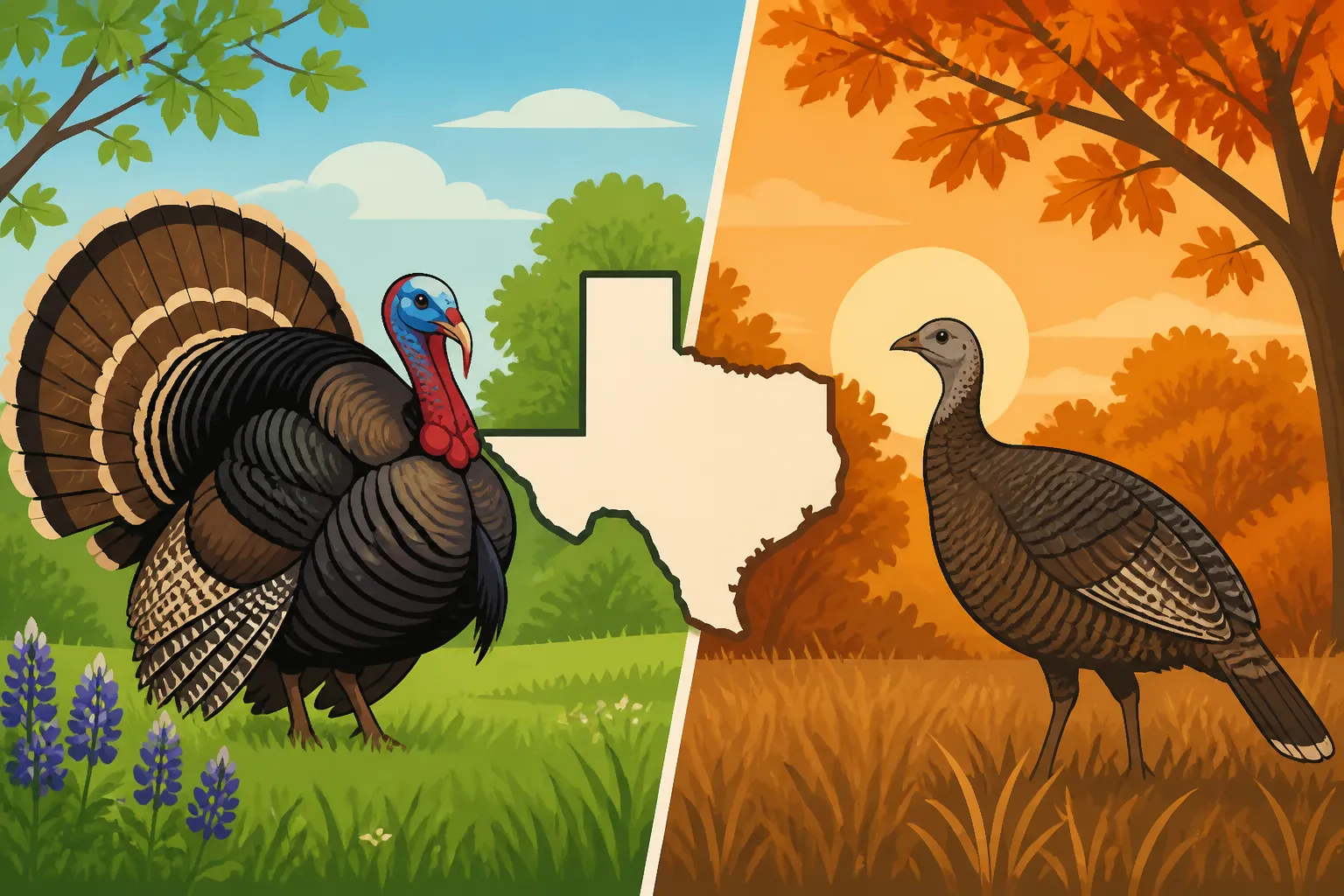
Trying to decide whether to hit the woods for gobblers in the spring or pursue flocks in the fall can be a real head-scratcher for Texas hunters. Each season offers a uniquely thrilling, and often frustrating, experience, making it tough to pick a favorite or even know where to start. This comprehensive guide will walk you through the distinct characteristics, tactics, and regulations for both spring and fall turkey hunting across our great state, helping you understand the nuances so you can plan your next successful hunt.
Understanding Texas Turkey Species and Zones
Before we dive into the nitty-gritty of spring versus fall tactics, it's crucial to understand the two primary turkey subspecies we hunt in Texas and where they typically roam. This knowledge forms the bedrock of planning any successful turkey hunt, as their behaviors and the regulations often differ significantly by location and species.
Rio Grande vs. Eastern Turkey Distribution
Texas is fortunate to be home to two distinct turkey subspecies: the widespread Rio Grande turkey and the more elusive Eastern turkey. Most hunters in Texas will primarily encounter Rio Grandes, which are by far the most abundant and are found across a vast stretch of the state. Think west-central, south, and much of north Texas – if you're out there, chances are you're in Rio country. These birds thrive in brushy, open country, often near riparian areas and agricultural fields, making them a staple for hunters from the Panhandle down to the South Texas plains. Their adaptability and booming gobble make them an exciting target for many. For a deeper dive into these birds, check out our guide on Rio Grande Turkey Hunting in Texas.
On the other hand, the Eastern turkey is a much rarer prize, primarily confined to the dense, often swampy timberlands of East Texas. Their habitat is drastically different from the Rio Grandes, preferring mature hardwood forests and pine plantations, particularly in counties like Polk, Tyler, Jasper, and Newton. The population of Eastern turkeys in Texas is considerably smaller, and hunting them often comes with stricter regulations and a much tougher challenge. This difference in habitat and population means that the hunting experience for an Eastern turkey is almost an entirely different ballgame, requiring specialized knowledge and often a good deal of patience. If you're considering this unique challenge, you'll definitely want to read up on Eastern Turkey in East Texas One-Gobbler.
Hunting Zones and Their Impact on Seasons
Texas Parks and Wildlife Department (TPWD) divides the state into specific hunting zones for turkeys, primarily to manage the populations effectively and account for regional variations in turkey behavior and habitat. The seasons, bag limits, and even the type of turkey you can hunt are all dictated by these zones. For instance, the general spring season for Rio Grande turkeys typically covers a huge portion of the state, often referred to as the "North Zone" and "South Zone," with slightly different opening and closing dates. These zones often include counties from the Hill Country all the way to the Panhandle, and down to the Mexican border.
The Eastern turkey, however, is restricted to a very specific set of counties in East Texas, and their season is much shorter, usually only allowing for one gobbler. This zoning ensures that these more vulnerable populations are protected, while allowing for sustainable hunting of the more robust Rio Grande populations. Understanding these zones is paramount. You can't just assume the rules in West Texas apply to East Texas, or vice versa. Always consult the official TPWD Outdoor Annual or our article on Texas Turkey Season 2026 Spring & Fall Zones before heading out to ensure you're in compliance. Ignoring these zones can quickly turn a fun hunt into a costly mistake.
The Allure of Spring Turkey Hunting in Texas
Spring turkey hunting is, for many, the quintessential turkey experience. It's often romanticized for the thrilling vocalizations and aggressive bird behavior. In Texas, our spring season, especially for Rio Grandes, is a vibrant, exciting time to be in the field. The air is fresh, wildflowers are blooming, and the woods are alive with the sounds of courtship.
Key Characteristics: Gobbling, Mating, and Aggression
What truly defines spring turkey hunting is the birds' breeding cycle. This is when the mature gobblers are actively seeking hens, displaying their impressive fan and strut, and, most importantly for us hunters, gobbling their heads off. This desire to breed makes gobblers much more vocal and, frankly, more susceptible to calling tactics. You'll hear those booming gobbles echoing across the landscape at dawn, sometimes responding to an owl hoot or coyote howl, but primarily in an effort to attract hens and assert dominance.
This period of intense courtship leads to peak gobbler aggression. They are territorial and eager to defend their breeding rights, which means they are more likely to respond to a hen call or even a gobbler call that sounds like an intruder. It's this natural drive that allows hunters to "talk to" turkeys, drawing them in close with a well-placed series of yelps or purrs. The challenge lies in reading their mood – sometimes they'll come charging in, other times they'll hang up just out of range, demanding a perfect setup. It’s a chess match with feathers, and that's precisely what makes it so addicting.
Tactics Employed: Calling, Decoys, and Ambush
Given the turkeys' spring behaviors, your tactics need to revolve around mimicking their natural interactions. Calling is king in the spring. Mastering a variety of calls – box calls, slate calls, diaphragm calls, even push-button calls – is crucial. You're trying to sound like a receptive hen or a rival gobbler. Often, starting with soft tree yelps at first light, then transitioning to louder yelps and cutts once they're on the ground, can entice a tom to commit. Patience is key, as is knowing when to call aggressively and when to back off. Many hunters find that knowing How to Call Rio Grande Turkeys in Texas is the most challenging, yet rewarding, part of the hunt.
Decoys also play a massive role. A strutting gobbler decoy combined with a hen decoy can enrage a dominant tom, drawing him in for a fight. Sometimes, just a lone hen decoy is enough to bring a curious gobbler in. Placement is critical; you want the decoys visible from a distance but positioned so the gobbler approaches your shooting lane. Finally, an effective ambush strategy is essential. Once you've heard a gobbler, setting up quickly and quietly is paramount. You need to position yourself with good back cover, an unobstructed shooting lane towards where you expect the turkey to approach, and enough concealment to remain undetected. This usually means sitting against a wide tree or using a pop-up blind. For a deeper look at spring strategies, our article Turkey Calling & Tactics for Texas Rios offers plenty of advice.
Gear Considerations for Spring Season
The gear you bring for a spring turkey hunt is often a bit different from fall. Given the reliance on calling and close-range encounters, a good shotgun is essential, usually chambered for 12-gauge or 20-gauge, with a tight choke (like a full or extra-full) and heavy shot (like 4, 5, or even 6 shot in TSS). You'll also need a comfortable turkey vest to carry all your calls, shells, water, and perhaps a small seat cushion.
Camo is also critical, especially full-patterned camo, including a face mask and gloves, as turkeys have incredible eyesight. The weather in Texas spring can be unpredictable, swinging from cool mornings to hot afternoons, so layering is a smart strategy. Don't forget bug spray, especially if you're in East Texas or near water, as mosquitoes and ticks can be fierce. Hydration is also a must, as you might be covering significant ground or sitting for extended periods in warming temperatures. Consider reading up on Best Early-Season Camo for Texas Heat to stay comfortable and concealed.
Embracing Fall Turkey Hunting in Texas
While spring gets all the glory, fall turkey hunting offers a completely different, equally engaging experience in Texas. It's often less about drawing a lovesick gobbler in with sweet talk and more about understanding flock dynamics and their autumnal routines. The landscape is changing, the air is crisp, and the hunt often feels more like a chess game of outsmarting an entire group of birds rather than a single individual.
Key Characteristics: Flocking, Feeding, and Roosting
In the fall, the turkey's primary drive shifts from breeding to survival: finding food, avoiding predators, and staying together in cohesive flocks. You'll typically find turkeys in larger groups during this season, often with multiple hens, jakes (young males), and even a few mature gobblers all running together. These flocks stick to predictable patterns, moving between roosting sites, feeding areas (like oak mottes for acorns or agricultural fields for waste grain), and water sources.
Gobbling is much less frequent and often sporadic in the fall. You might hear some soft clucks or purrs as they communicate within the flock, but the boisterous gobbling of spring is largely absent. This means you can't rely on shock gobbling or calls to locate them in the same way. Instead, you'll need to scout for sign, observe their movements from a distance, and understand their daily patterns. The challenge shifts from enticing a gobbler to strategically breaking up a flock and then calling the scattered birds back together.
Tactics Employed: Locating, Scattering, and Re-calling
Since fall turkeys aren't gobbling much, locating them often involves a lot more walking, looking for fresh tracks and droppings, and listening for subtle turkey sounds. Roosting is an excellent strategy: finding where birds fly up to roost for the night and then setting up nearby before dawn. Once you locate a flock, the classic fall tactic is to "scatter" them. This involves rushing the flock, making a lot of noise, and trying to get them to fly or run in all different directions. The more scattered they are, the more likely they are to want to re-flock.
After scattering, you set up quickly and quietly in the immediate area. The key then becomes "re-calling" them, particularly using plaintive "assembly" or "lost" calls. Soft clucks and yelps, mimicking a lonely hen or jake trying to find its family, are often highly effective. Young birds (jakes and hens) are usually the first to respond, eager to rejoin their companions. Patience is paramount, as it can take a scattered bird an hour or more to start calling back. This method relies heavily on understanding the turkeys' inherent desire for safety in numbers.
Gear Considerations for Fall Season
Fall turkey hunting gear is generally similar to spring, but with a few adjustments. A good shotgun remains the primary weapon, but since shots might be a bit longer on scattered birds, a tighter pattern can be beneficial. Camouflage is still important, though the fall foliage in many parts of Texas means darker, more earthy tones might blend better than the bright greens of spring. Layers are still crucial, as Texas fall weather can start chilly and warm up quickly.
One piece of gear that becomes more important in the fall is good binoculars or a spotting scope. Since you're often trying to locate flocks from a distance, quality optics are invaluable for scanning fields and distant treelines. A comfortable pair of walking boots is also a must, as you'll likely be covering more ground scouting and chasing flocks. And, as always, having a variety of calls on hand is wise, focusing more on softer, more empathetic hen and jake sounds rather than aggressive gobbler calls.
Comparing the Hunt: Spring vs. Fall Experience
It's clear that spring and fall turkey hunting in Texas are two distinct experiences, each with its own unique flavor, challenges, and rewards. It's not a matter of one being "better" than the other, but rather which experience aligns more with what you're looking for in a hunt. Let's break down some of the key comparative aspects.
Difficulty and Success Rates
Generally speaking, spring turkey hunting is often perceived as more challenging but potentially more rewarding for a specific type of hunter. The challenge comes from directly engaging a gobbler in a "conversation," trying to outsmart a single, often wary bird that can see and hear everything. A successful spring hunt often feels like a true victory of wits. However, the success rate can be lower for beginners, as calling technique and setup are critical. A gobbler "hanging up" just out of range is a common and frustrating occurrence.
Fall hunting, while requiring more scouting and potentially more walking, can sometimes have a higher success rate for hunters willing to put in the legwork and learn the scatter-and-call technique. Once you've scattered a flock, the inherent desire of turkeys to regroup works in your favor. Young, less experienced birds are often easier to call back, and while you might not always tag a trophy gobbler, the chance of filling your tag with a jake or hen for the table is often higher. Both seasons demand patience, but they test different skill sets.
Meat Quality and Management Goals
When it comes to table fare, there isn't a huge difference in meat quality between a spring gobbler and a fall gobbler, assuming similar age and diet. However, some hunters argue that fall turkeys, having spent months feeding on insects, seeds, and acorns, might have a slightly richer flavor. Spring gobblers can sometimes be leaner, having put much of their energy into breeding. Hens harvested in the fall, particularly younger ones, are often considered excellent eating.
From a wildlife management perspective, fall hunting often plays a more significant role in population control and herd health. By harvesting hens and jakes, hunters can help manage flock sizes, ensuring there's enough food and habitat to support the remaining birds. Spring hunting, especially with a "gobblers only" regulation, targets mature males, which has less impact on overall population numbers as one gobbler can breed many hens. For many landowners, a productive fall turkey season can be a vital tool in their overall wildlife management plan, especially in areas with high turkey densities.
Weather Challenges and Hunter Comfort
Texas weather is famously unpredictable, and both spring and fall seasons present their own unique challenges. Spring hunting often starts with cool, crisp mornings that quickly give way to warm, sometimes even hot, afternoons. This means layering is essential, and being prepared for humidity and sudden pop-up thunderstorms is wise. The warmth also means that proper game care after a successful harvest is crucial, as meat can spoil quickly. Our guide on How to Cool a Deer Fast in Texas Heat offers principles that can be applied to turkeys as well.
Fall hunting, particularly later in the season, can bring cooler, more stable temperatures, which is a blessing for hunter comfort and game preservation. However, early fall can still be quite warm, especially in South Texas. The main challenge in the fall might be strong winds, which can make hearing distant turkeys difficult and also make it harder for turkeys to hear your calls. Rain can also be a factor, turning dirt roads into muddy tracks. Both seasons demand preparedness, but the specific weather concerns shift with the calendar.
Here's a quick comparison table to summarize:
| Feature | Spring Turkey Hunting (Rio Grande) | Fall Turkey Hunting (Rio Grande) |
|---|---|---|
| Primary Behavior | Breeding, Gobbling, Displaying | Flocking, Feeding, Roosting, Socializing |
| Main Tactic | Calling (aggressive, hen & gobbler), Decoys, Ambush | Locating, Scattering, Re-calling (lost & assembly calls) |
| Primary Target | Mature Gobblers | Any Sex/Age (Gobblers, Hens, Jakes) |
| Vocalization | High (Gobbles, loud yelps, cutts) | Low (Soft clucks, purrs, occasional short yelps) |
| Difficulty | Higher (Requires precise calling/setup, "hanging up" common) | Moderate (Requires scouting/walking, less reliant on perfect calling) |
| Success Rate | Variable (Often feast or famine) | Potentially higher for filling a tag (especially with jakes/hens) |
| Meat Quality | Excellent (Can be leaner) | Excellent (Potentially richer, good for young birds/hens) |
| Weather | Warm to hot, humid, potential for thunderstorms | Cooler, crisp, but can still be warm early season; windy conditions |
| Required Gear | Calls (various), decoys, camo, shotgun, comfortable vest | Calls (softer), binoculars, comfortable walking boots, camo, shotgun |
Regulations and Licensing Differences
Navigating the Texas hunting regulations can sometimes feel like trying to untangle a stubborn fishing line, but it's absolutely vital, especially when comparing seasons. The rules for spring and fall turkey hunting have some significant distinctions that every hunter needs to be aware of.
Season Dates and Bag Limits by Zone
This is where the biggest differences lie. Spring turkey season in Texas is generally "gobblers only" and focuses on the Rio Grande turkey, with specific dates for the North and South Zones. For instance, the general North Zone might open in late March and run through early May, while the South Zone often opens a bit earlier in mid-March and closes mid-April. Eastern turkey season, as mentioned, is a much shorter, often concurrent period within these zones, typically allowing for only one gobbler.
Fall turkey season, on the other hand, is usually much longer, often extending from early November through late February or even early March in some areas. It allows for the harvest of "any sex" Rio Grande turkeys, meaning you can take gobblers, hens, or jakes. The bag limit for Rio Grandes is typically four birds per season, regardless of whether you hunt in spring or fall, but the type of bird you can harvest changes. Eastern turkeys, if they are open for a fall season at all (which is rare), will have very stringent limits, usually one gobbler only. Always double-check the Texas Spring Turkey Season Zones & Dates and the broader Texas Hunting Seasons Complete Calendar by Species for the most current information. These dates can shift slightly year to year.
License and Endorsement Requirements
No matter which season you hunt, a valid Texas hunting license is always required. For resident hunters, the Super Combo License is a fantastic value, covering almost everything you need. Non-residents will need to purchase a non-resident hunting license. Beyond the general license, there are often specific endorsements needed for certain game. For turkey, you will need an Upland Game Bird Endorsement, which is typically included in the Super Combo or can be purchased separately.
It's also important to remember that if you're hunting on federal lands, like National Forests (e.g., Sam Houston National Forest) or some Wildlife Management Areas (WMAs), you might need additional permits or stamps. For instance, an Annual Public Hunting Permit is required for most WMA access. While turkeys are not migratory game birds, it's a good habit to ensure you understand all endorsements. To avoid any confusion, make sure you've sorted out your Texas Hunting License Cost Types & How to Buy 2026 well in advance of your hunt.
Special Late Seasons and Youth Opportunities
Texas, being a state dedicated to hunting heritage, also offers special opportunities that extend beyond the general seasons. For instance, many counties will have a "Special Late Season" for spring turkeys. This usually occurs after the general season closes, often running for a few weeks in May. These late seasons are typically restricted to gobblers only and often have specific county eligibility, providing an extra chance for hunters who missed the primary window or just want more time in the field.
Additionally, TPWD actively promotes youth hunting, providing "Youth-Only" seasons for both spring and fall turkeys. These seasons usually precede the general opening dates by a week or two, giving young hunters a unique chance to get out and pursue turkeys with less pressure. These youth seasons are fantastic opportunities to introduce the next generation to the thrill of turkey hunting without the crowds. Always check the annual regulations for specific dates and rules surrounding these special opportunities, as they are fantastic resources for passing on our hunting traditions.
Disclaimer
Please remember that hunting regulations in Texas can change. Always consult the current official Texas Parks and Wildlife Department Outdoor Annual or their website before planning any hunting trip to ensure you have the most up-to-date information on seasons, bag limits, and licensing requirements. This article is for informational purposes only and should not be considered a substitute for official regulations.