How Many Deer Can You Kill in Texas?
One of the most common questions new hunters in the Lone Star State, or even seasoned veterans moving to a new county, grapple with is exactly how many deer they can legally harvest. It's not a simple, one-size-fits-all answer, and getting it wrong can lead to serious trouble. This comprehensive guide will break down the intricate world of Texas deer bag limits, helping you understand the regulations for white-tailed deer, mule deer, and even exotic species, so you can hunt confidently and legally.
Decoding Texas White-Tailed Deer Limits
Hunting white-tailed deer in Texas is a deeply ingrained tradition, but the regulations surrounding their harvest can feel like a maze, especially with our vast and diverse landscapes. It’s not just about the number of deer; it's about which deer, where, and when.
Statewide vs. County-Specific Regulations
Texas operates under a system where general statewide regulations are established by the Texas Parks and Wildlife Department (TPWD), but individual counties often have their own specific rules. This is largely due to the immense size of Texas and the wildly varying habitat and deer populations from one region to another. What works for managing deer in the dense South Texas brush country might not be appropriate for the oak-filled expanse of the Texas Hill Country or the wide-open spaces of the Panhandle.
For example, while there's a general framework for deer season dates, specific counties might have slightly different start and end dates, or designated "doe days" when antlerless deer can be harvested. These local regulations are crucial for maintaining healthy deer populations and ensuring sustainable hunting. Ignoring them can quickly turn a successful hunt into a costly legal issue. Understanding these distinctions is the first step in responsible deer management and hunting. Many hunters rely on resources like GoHunt to help navigate these county-specific nuances, ensuring they have the most current information at their fingertips.
The Importance of the Outdoor Annual
When it comes to understanding Texas hunting regulations, the official Texas Parks and Wildlife Department Outdoor Annual is your Bible. Seriously, it's not just a suggestion; it's the definitive source of truth for all hunting and fishing laws in the state. Each year, around August, TPWD releases the updated annual, detailing all seasons, bag limits, and special regulations for every county and every species.
Hunting without consulting the most current Outdoor Annual is like driving without a map in unfamiliar territory – you're bound to get lost, or worse, break the law. Whether you're planning a trip to the Pineywoods or heading out to your lease in South Texas, you need to know exactly what the regulations are for that specific area. This document covers everything from proper tagging procedures to legal shooting hours, and it's readily available online as a digital publication or as a free print version at license retailers. I can't stress this enough: always check the Outdoor Annual before you head out. It's the only way to be absolutely sure you're compliant with all the current rules, including those related to Texas Deer Season 2026-2027: Dates by Zone.
Navigating Antler Restrictions and Doe Harvest
When people ask "How many deer can you kill in Texas?", they're usually thinking about white-tailed deer, and that conversation quickly turns to antler restrictions and doe limits. This is where Texas really gets specific in its management strategy.
The "Three Deer" Rule and Its Nuances
For white-tailed deer, the general statewide bag limit in Texas is three deer per hunting season. However, this isn't a free-for-all. This three-deer limit typically comes with a significant caveat: no more than two of those three deer can be bucks. The remaining deer must be antlerless.
This "2 Buck, 1 Doe" or "1 Buck, 2 Doe" combination is a common framework, but it's vital to understand that it's a general guideline. The specific number of bucks and does you can harvest will still largely depend on the county you're hunting in and whether that property is enrolled in a special management program. For instance, some counties might limit you to only one buck, regardless of the statewide general rule, to encourage specific herd dynamics. Always cross-reference the statewide rule with the county-specific regulations found in the Outdoor Annual. It's a critical step in responsible White-Tailed Deer Hunting in Texas: Complete Guide.
Antler Restrictions: The 13-Inch Rule and Beyond
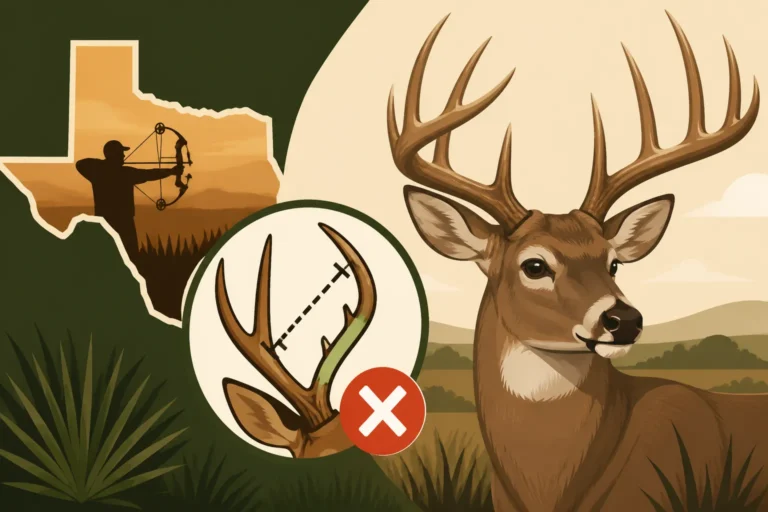
One of the most discussed and sometimes confusing aspects of Texas deer hunting is the antler restriction rule, often referred to as the "13-inch rule." This regulation, implemented in many Texas counties, aims to improve the age structure and quality of the buck population by protecting younger bucks, allowing them to grow older and develop larger antlers.
Under the 13-inch rule, a buck is legal only if:
- It has an inside spread of at least 13 inches.
- It has at least one unbranched antler, meaning a spike, or a single main beam without any points (this is often called the "bonus buck" or "forked horn rule"). This exception allows for the harvest of young bucks with poor genetics that might not develop into trophy animals.
- If a buck has an inside spread of less than 13 inches, but both antlers are branched (i.e., no unbranched antler), it is not legal unless specifically allowed in a few highly managed areas.
The exact counties where the 13-inch rule applies are listed in the Outdoor Annual, and they primarily cover the Edwards Plateau, Cross Timbers, and parts of the Post Oak Savannah regions. It's absolutely crucial to know if your hunting county falls under these restrictions and to understand How to Field Judge a 13-Inch Buck accurately. Misjudging can lead to a costly citation, not to mention wasting a deer. Some areas might have different antler restrictions, such as requiring a certain number of points on one side or a minimum main beam length, so always verify the specific rules for your hunting location. You can find detailed information on this by checking out Texas Antler Restrictions: 13-Inch Rule & Counties.
Doe Days and Antlerless Deer Permits (MLDP)
Managing the antlerless deer population (does) is just as critical as managing bucks for overall herd health. TPWD employs a few different methods to allow for antlerless harvest.
Many counties have designated "doe days" or specific periods during the general deer season when hunters are permitted to harvest antlerless deer. These dates are clearly outlined in the Outdoor Annual for each specific county. Outside of these designated "doe days," taking an antlerless deer can be illegal unless you're participating in a special program.
One such program is the Managed Lands Deer Program (MLDP). This is a highly effective, voluntary program for landowners and lessees who want to actively manage their deer populations to achieve specific habitat and deer herd objectives. Properties enrolled in MLDP receive special permits (tags) that allow for a longer hunting season and greater flexibility in harvesting both bucks and does, often outside the standard county framework. For example, an MLDP property might have tags for several antlerless deer per hunter, or different buck antler criteria. This allows for more intensive, science-based management. If you're hunting on a private lease, it's worth asking the landowner if they participate in MLDP, as it significantly impacts Texas Deer Bag Limit by County and season length. You can learn more about this specific program by reading MLDP Tags in Texas: How They Work.
Beyond White-Tails: Mule Deer and Exotic Species
While white-tailed deer are the most prevalent and widely hunted deer in Texas, the state is also home to other deer species and a plethora of exotics, each with its own set of rules and opportunities.
Mule Deer Bag Limits in the Panhandle and Trans-Pecos
Mule deer in Texas are primarily found in the Panhandle and the Trans-Pecos regions, particularly in rugged areas like the Davis Mountains and Guadalupe Mountains. Unlike white-tailed deer, mule deer populations are much smaller and are managed very conservatively. The bag limit for mule deer is typically one buck per hunter per season. Antlerless mule deer harvest is rare and usually only allowed through specific, limited drawn hunts or on properties with special permits.
Hunting mule deer in Texas often involves applying for special permits through the TPWD drawn hunt system, or hunting on private ranches that have a limited number of permits. These hunts are highly sought after due to the majestic nature of these animals and the challenging terrain they inhabit. It's imperative to consult the Outdoor Annual specifically for mule deer regulations, as they are distinct from white-tailed deer rules and are subject to changes based on herd health and drought conditions. If you're dreaming of a mule deer hunt, make sure you know the ins and outs of Mule Deer Hunting in Texas: Panhandle & Trans-Pecos.
Exotics: No Seasons, Different Rules
Texas is unique in that it has a thriving population of exotic game species, many of which are free-ranging on private lands. These aren't native species, so they fall under a different regulatory framework. When it comes to exotics like Axis deer, Blackbuck antelope, Fallow deer, Sika deer, and the ever-popular Aoudad sheep, there are generally no closed seasons or bag limits on private land in Texas.
This means that if you're hunting on private property, you can often harvest multiple exotic deer or sheep throughout the year, provided you have a valid Texas hunting license. While there are no specific bag limits set by the state for these species, individual hunting ranches and outfitters will almost certainly have their own harvest quotas and pricing structures. This flexibility makes exotic hunting incredibly popular, as it offers year-round opportunities and a chance to pursue different species. Just remember, even for exotics, a valid Texas Hunting License: Cost, Types & How to Buy (2026) is still required. For a deeper dive into these unique hunting opportunities, check out Exotic Hunting in Texas: Axis, Aoudad, Blackbuck & More.
Staying Legal: Licenses, Reporting, and Resources
Navigating the complexities of deer bag limits in Texas requires more than just knowing the numbers; it demands adherence to a broader framework of licensing, reporting, and utilizing modern tools to stay informed.
The Role of Harvest Reporting
Harvest reporting is a crucial component of wildlife management in Texas, especially for white-tailed and mule deer. For hunters taking white-tailed deer or mule deer in many counties, and for all drawn hunts, it is mandatory to report your harvest to the Texas Parks and Wildlife Department. This isn't just bureaucratic red tape; it's vital data that helps biologists track population trends, monitor herd health, and make informed decisions about future regulations and seasons.
Reporting is typically done through the "My Texas Hunt Harvest" app on your smartphone or via the TPWD website. You'll need to provide details about the deer, such as species, sex, and county of harvest. Some counties require specific reporting for bucks that meet certain antler criteria. Failing to report a mandatory harvest can result in penalties, so it's a step you absolutely cannot skip. Make sure you're familiar with Texas Hunting Tags & Harvest Reporting (My Texas Hunt Harvest) before you head out this season.
Hunter Education and Licensing Requirements
Before you even think about how many deer you can kill, you need to ensure you're properly licensed and, if applicable, have completed hunter education. In Texas, generally, anyone born on or after September 2, 1971, must successfully complete a hunter education course or deferral to legally hunt. This course teaches not only safety but also ethics, wildlife management principles, and, critically, how to find and understand hunting regulations.
Beyond hunter education, every hunter, regardless of age (unless specifically exempt, like some youth hunters under direct supervision), must possess a valid Texas hunting license. This license is your fundamental permit to hunt any game species in the state, including deer. The type of license (e.g., Super Combo, Resident Hunting, Non-resident) will depend on your residency and the species you plan to pursue. It's the absolute foundation for legal and ethical hunting in Texas.
Staying Informed with Digital Tools
In today's fast-paced world, staying current with regulations is easier than ever thanks to digital tools. While the printed Outdoor Annual is authoritative, digital versions and dedicated apps offer unparalleled convenience. The official TPWD Outdoor Annual app for smartphones is an excellent resource, providing instant access to all regulations, season dates, bag limits by county, and even CWD (Chronic Wasting Disease) zones.
Many hunters also leverage third-party hunting apps and platforms. For instance, services like GoHunt often integrate mapping features with regulation overlays, helping hunters visualize property lines, public land, and even real-time CWD zones, which can impact carcass transport rules. These digital aids can be invaluable for planning hunts, verifying regulations on the fly, and ensuring you're always hunting within the bounds of the law. They make navigating complex rules like Texas White-Tailed Deer Hunting Regulations 2026 much simpler.
Summary of General Texas Deer Bag Limits
To give you a quick overview, here's a table summarizing the general bag limits for deer species in Texas. Remember, always consult the current Texas Outdoor Annual for specific county and season details, as these are subject to change and local variations.
| Deer Species | General Statewide Bag Limit (per hunter per season) | Common Restrictions/Notes | Primary Hunting Regions |
|---|---|---|---|
| White-tailed Deer | 3 Deer (no more than 2 bucks) | Many counties have 13-inch antler restrictions; Doe Days | Statewide (except extreme west) |
| Mule Deer | 1 Buck (permit/drawn hunt often required) | Highly regulated; specific antler criteria may apply | Panhandle, Trans-Pecos (West Texas) |
| Exotic Deer (e.g., Axis, Fallow, Sika) | No Statewide Bag Limit on Private Land | Valid hunting license required; ranch rules apply | Primarily Hill Country, South Texas (private ranches) |
This table provides a snapshot, but it absolutely does not replace the detailed information you'll find in the official Outdoor Annual. Think of it as a quick reference, not the complete rulebook. To truly be prepared, you should know How to Read the Texas Outdoor Annual.
Disclaimer
Please remember that hunting regulations in Texas are subject to change by the Texas Parks and Wildlife Department. While this guide provides a comprehensive overview based on current information, it is your responsibility as a hunter to consult the most recent Texas Outdoor Annual for the specific county and season you plan to hunt. Always verify all regulations before engaging in any hunting activity.