Sandhill Crane Hunting in Texas (Ribeye in the Sky)
Hunting sandhill cranes in Texas might seem a little intimidating at first. You've heard whispers of the "Ribeye in the Sky," but perhaps you're unsure about the permits, the zones, or even how to set up for these magnificent birds. It's easy to feel overwhelmed by the specifics, especially when trying to pinpoint the best strategies for a successful hunt. This comprehensive guide is here to demystify everything you need to know about pursuing sandhill cranes in the Lone Star State, ensuring you're well-prepared for an incredible experience.
The Allure of the "Ribeye in the Sky": Why Sandhill Cranes are a Top Texas Hunt
For many Texas hunters, the sandhill crane is a bucket list bird, not just for the challenge but for its legendary table fare. These majestic birds offer a unique hunting experience that blends waterfowl and upland bird tactics, often requiring significant scouting and strategic setup. The term "Ribeye in the Sky" isn't just a catchy phrase; it truly speaks to the delicious, rich red meat that these birds provide, making the effort of the hunt all the more rewarding.
Unpacking the "Ribeye" Reputation: Taste and Challenge
Let's be honest, a big part of why hunters chase sandhill cranes is the incredible meat. Unlike many other migratory birds, crane meat is distinctly red, more akin to beef or venison than traditional poultry. It's incredibly lean, tender, and boasts a rich, earthy flavor that stands up beautifully to various cooking methods, from grilling to slow-cooking. If you’re a wild game enthusiast who appreciates quality table fare, then the sandhill crane is absolutely a must-try. The effort you put into the hunt is directly rewarded on your plate, which is a big draw for many of us.
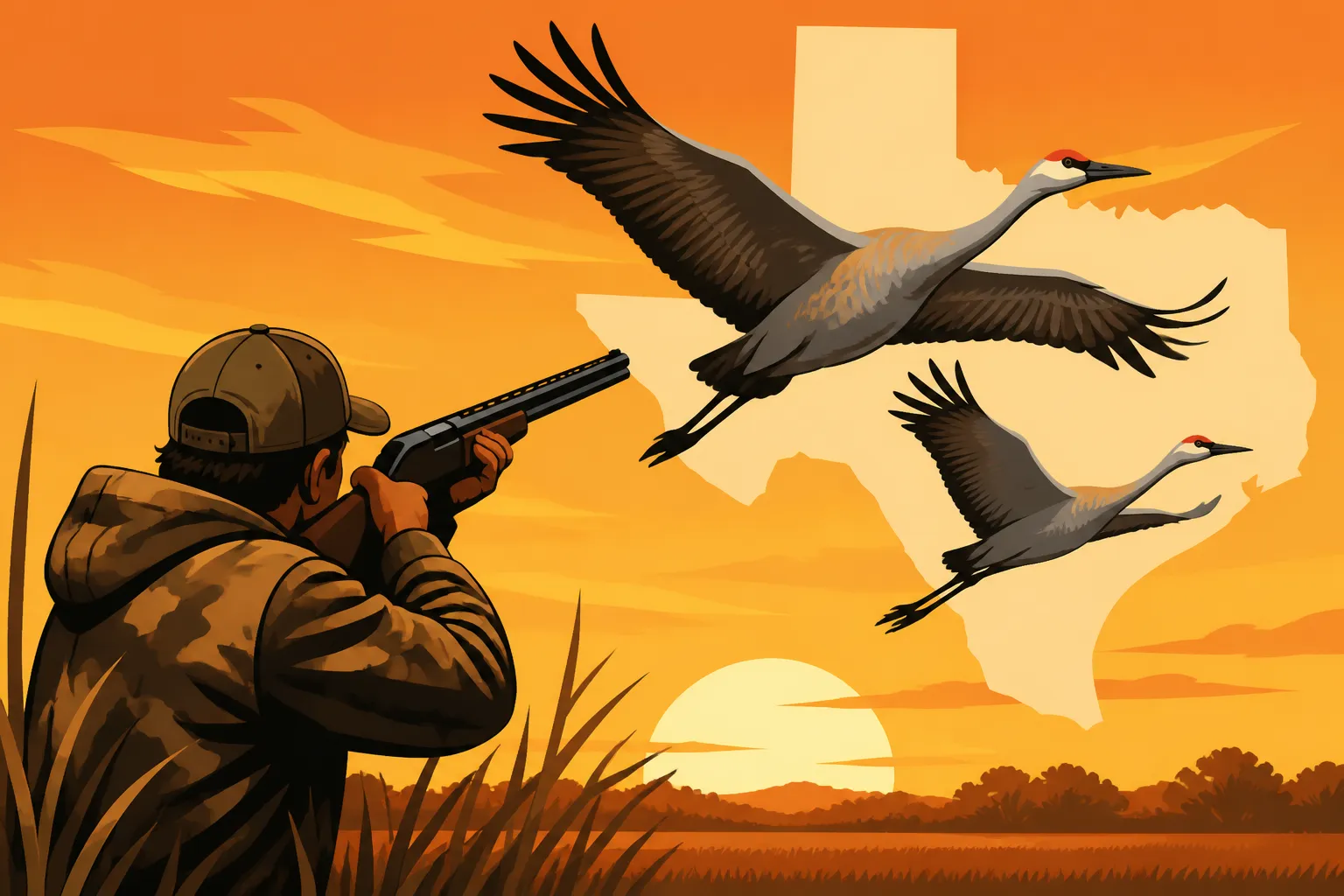
Beyond the culinary delight, hunting sandhill cranes presents a fantastic challenge. These are large, intelligent birds with keen eyesight and excellent hearing. They fly in large V-formations, often at considerable altitudes, making them seem almost mythical as they pass overhead. Decoying them into shooting range requires precision, patience, and a good understanding of their flight patterns and feeding habits. It’s a hunt that demands respect for the bird and rewards meticulous planning and execution. There's a real sense of accomplishment when you successfully bring one of these impressive birds down.
Sandhill Crane Species in Texas: Greater vs. Lesser
In Texas, we primarily encounter two subspecies of sandhill cranes: the Greater Sandhill Crane and the Lesser Sandhill Crane. While both are impressive, there are some distinctions. The Lesser Sandhill Crane is more common and makes up the vast majority of the birds harvested in Texas. These are still large birds, typically weighing 6-8 pounds with a wingspan of around 5-6 feet. They migrate from their breeding grounds in Alaska and Canada, wintering in vast numbers across the Texas Panhandle, West Texas, and the Rolling Plains.
Greater Sandhill Cranes, as their name suggests, are noticeably larger, sometimes weighing over 10 pounds with wingspans exceeding 7 feet. They are less common in Texas, generally found in smaller populations in the eastern part of the state. While both offer excellent hunting opportunities, most hunters targeting sandhills in Texas will be pursuing the more numerous Lesser variety. Regardless of the subspecies, you'll find them in large agricultural fields, particularly those with harvested corn, milo, or wheat, where they feed extensively to fuel their migration.
Navigating Texas Sandhill Crane Regulations and Licensing
Dealing with hunting regulations can often feel like deciphering ancient scrolls, and sandhill crane hunting is no exception. It's absolutely critical to understand the specific rules, seasons, and required permits before you even think about heading out into the field. Texas Parks and Wildlife Department (TPWD) has distinct guidelines for these migratory birds, and ignorance is definitely not bliss when it comes to compliance. Make sure you check the most current Texas Outdoor Annual every year, as regulations can change. For a broader overview of state-wide seasons, consult the guide on Texas Hunting Seasons: Complete Calendar by Species.
Understanding Seasons, Zones, and Bag Limits
Texas divides its sandhill crane hunting into three zones: Zone A, Zone B, and Zone C. These zones have different season dates and are designed to manage crane populations effectively across their various wintering grounds. Zone A typically covers the western Panhandle, extending south into West Texas. Zone B generally includes the central and eastern Panhandle, spreading into the Rolling Plains and parts of the Cross Timbers. Zone C encompasses the central and southern parts of the state. The season dates for each zone vary but usually run from late October or early November into late January or early February, often with a mid-season closure.
The daily bag limit for sandhill cranes is typically three birds per hunter, with a possession limit of nine birds. These limits are strictly enforced, so make sure you're keeping a mental (or physical) tally. It’s a good idea to know your zone intimately and confirm the exact dates right before your hunt, as these details are critical. For precise current season dates, refer to the Texas Sandhill Crane Season & Free Permit guide, which details the specific dates for Zone A, B, and C.
Essential Permits and Licenses Beyond the Basics
Hunting sandhill cranes requires more than just a general hunting license. You’ll need a valid Texas hunting license, of course, which you can learn more about in the Texas Hunting License: Cost, Types & How to Buy (2026) article. But specifically for migratory birds like cranes, you also need to obtain a Migratory Bird Endorsement. This endorsement is a prerequisite for hunting any migratory game bird in the state, including ducks, geese, doves, and of course, sandhill cranes.
On top of the endorsement, a Federal Sandhill Crane Permit is absolutely mandatory. This permit is free but must be obtained through the Texas Parks and Wildlife Department or an authorized license retailer. It’s essentially a federal requirement to track harvest data for these birds. You'll also need to be HIP (Harvest Information Program) certified, which is usually part of getting your migratory bird endorsement. Without both the Migratory Bird Endorsement and the Federal Sandhill Crane Permit, your crane hunt is illegal, so double-check that you have all your ducks—or rather, cranes—in a row before you head out. These requirements are detailed further in the Texas Migratory Bird Endorsement & HIP Certification guide.
Texas Sandhill Crane Hunting Zone Overview (Typical Seasons)
| Zone | General Location | Typical Season Start | Typical Season End | Bag Limit (Daily) | Possession Limit | Required Permits |
|---|---|---|---|---|---|---|
| A | Western Panhandle, West Texas | Late Oct / Early Nov | Late Jan | 3 | 9 | TX Hunting License, Migratory Bird Endorsement, Federal Sandhill Crane Permit, HIP Certification |
| B | Central/Eastern Panhandle, Rolling Plains | Late Oct / Early Nov | Late Jan / Early Feb | 3 | 9 | TX Hunting License, Migratory Bird Endorsement, Federal Sandhill Crane Permit, HIP Certification |
| C | Central, South, and East Texas (Limited Areas) | Mid-Dec | Late Jan | 3 | 9 | TX Hunting License, Migratory Bird Endorsement, Federal Sandhill Crane Permit, HIP Certification |
Note: Specific dates and boundaries can change annually. Always consult the official Texas Parks and Wildlife Department Outdoor Annual for the most current regulations.
Gear Up for Success: Decoys, Blinds, and Firearms
Successfully hunting sandhill cranes isn't just about showing up in a field; it's about having the right tools for the job. These birds are incredibly wary, and without proper concealment and convincing decoys, you'll likely watch them fly right on by. Investing in quality gear, specifically designed for these large birds, makes a world of difference. It minimizes the frustrations of missed opportunities and maximizes your chances of bringing home that "ribeye."
Decoy Spreads for Drawing in Cranes
Decoys are your absolute best friend when crane hunting. Sandhills are highly social birds and will often commit to a field where they see others feeding or resting. You'll need large, realistic crane decoys – silhouettes are a popular and effective choice due to their portability and realistic appearance from a distance. Full-body decoys are fantastic if you have the budget and space, but even a dozen high-quality silhouettes can be incredibly effective. Look for decoys that mimic cranes feeding, preening, and standing alert.
The size of your spread matters. Generally, more is better. A typical spread for a group of hunters might include 2-4 dozen decoys, but some serious crane hunters run spreads of 50 or more. Placement is key: set your decoys in a natural feeding pattern, leaving a landing zone directly in front of your blind. Cranes typically land into the wind, so understanding wind direction is crucial for decoy orientation and blind placement. Integrating a few motion decoys or flags can also add realism and draw in wary birds. For more detailed information on setup, check out specific guidance on Sandhill Crane Decoy Setup in Texas. While aimed at waterfowl, principles from Best Decoy Spread Gear for Texas Waterfowl can also offer valuable insights for adding realism to your setup.
Concealment is Key: Choosing Your Blind
Sandhill cranes have eyesight that rivals a hawk's, meaning any movement or unnatural silhouette will send them packing. Effective concealment is non-negotiable. Large layout blinds are excellent for field hunting, allowing you to lie flat and emerge only when ready to shoot. These blinds integrate well into stubble fields and offer superb camouflage. Alternatively, A-frame blinds or panel blinds can work, but they must be meticulously brushed in with natural vegetation from the field you're hunting. Think beyond just "hiding" and focus on "becoming part of the landscape."
You need to pick a blind that completely breaks up your outline and blends seamlessly with the surrounding environment. If you're hunting a cornfield, cut corn stalks and weave them into your blind. If it's a wheat stubble field, use that. The key is to disappear. Many hunters will even wear white or light-colored camo if there's frost or very light stubble, adapting to the specific conditions. Remember, cranes circle before committing, scrutinizing the ground below, so your blind must be flawless from all angles.
Selecting the Right Firearm and Ammunition
Given the large size and robust nature of sandhill cranes, you need a firearm and ammunition combination that delivers sufficient knockdown power. A 12-gauge shotgun is the overwhelming choice for crane hunters, though a 10-gauge can also be effective. The larger payload and consistent patterns of these gauges are ideal for targeting birds with substantial wingspans and strong bone structures.
When it comes to ammunition, steel shot is mandatory for all migratory bird hunting. For cranes, a load of #2 or BB steel shot is generally recommended. Some hunters prefer BBB for increased energy, especially at longer ranges. Opt for high-velocity loads (1550+ fps) to ensure maximum penetration and clean kills. Cranes are tough, and ethical hunting demands that you use loads capable of consistently bringing them down. Always pattern your shotgun with your chosen ammunition before the hunt to understand its effective range and shot dispersion. Don't be tempted to stretch shots beyond 40-50 yards, as wounding these magnificent birds is always something we want to avoid.
Mastering the Hunt: Tactics for Texas Sandhill Cranes
Hunting sandhill cranes requires a blend of meticulous planning, keen observation, and good old-fashioned fieldcraft. These are not birds you stumble upon and shoot; they demand respect and a strategic approach. From the moment you start scouting to the final call you make, every step contributes to a successful, ethical hunt. It's about understanding their habits and using that knowledge to your advantage.
Scouting Smart: Finding the X-Factor
Scouting is arguably the most critical component of a successful sandhill crane hunt. These birds are creatures of habit, typically roosting on large bodies of water (lakes, reservoirs, playas) and flying out daily to specific feeding fields. Your goal is to find "the X" – the exact field where they are consistently feeding. This usually means driving country roads at dawn and dusk, watching flight lines, and observing where large groups of birds are dropping in. Look for fields with harvested crops like corn, milo, or wheat, as these are prime food sources.
Once you identify potential feeding fields, watch them for a few days if possible. Cranes will deplete a food source quickly, so a field they used yesterday might be empty today. Note wind direction, access points, and potential hiding spots for your blind. Always secure permission from the landowner before entering any private property. Without finding that consistent feeding pattern and getting permission, all the gear in the world won't help you. It's truly a game of detective work and boots on the ground. For tips on how to get permission on private land, consider advice from articles about finding a Hunting Leases in Texas: Complete Guide (Cost & How to Find) or generally getting access to property.
Calling Cranes: Imitation and Interaction
While not as complex as duck or goose calling, crane calling can definitely enhance your hunt. Sandhill cranes have a distinctive, often loud, trumpeting call, which is how they communicate with each other. A good crane call mimics this sound, drawing attention to your spread and reassuring incoming birds that your decoys are indeed real cranes. There are various types of crane calls on the market, from mouth calls to larger bellows-style calls.
Start with subtle calls to get their attention when birds are distant, then increase the intensity as they get closer. Don't overcall; let the birds work your spread naturally. A few well-placed calls can make wary birds commit the last few hundred yards. Listen to real crane calls online to familiarize yourself with their cadence and pitch. Practice before you hit the field, and remember that good calling works in conjunction with a realistic decoy spread and excellent concealment. The goal is to sound like the real thing, making them comfortable enough to drop those landing gear right into your kill hole.
Ethical Shooting and Efficient Retrieval
When cranes finally commit and are circling your spread, patience is paramount. Wait until they are fully committed, cupped up, and ideally within 30-40 yards. Because they are such large birds, they can appear closer than they actually are, leading to many missed shots or wounded birds. A general rule of thumb is to let them get close enough that you can clearly see their legs dangling. Communicate with your hunting partners to ensure everyone is on the same page for when to call the shot.
Aim for the head and neck if possible, or the front half of the bird to hit vitals. Avoid shooting at birds directly overhead, as their thick bodies and feathers can shield vitals, leading to poor penetration. Once a bird is down, retrieve it immediately. Cranes are big, powerful birds, and a wounded one can travel a significant distance or hide in dense cover. A good retrieving dog can be an invaluable asset, but if you don't have one, mark the fall carefully and be prepared for a thorough search. Ethical hunting means making clean kills and ensuring no game is wasted, which connects directly to the principles of Best Shot Placement for Hogs or Best Shot Placement for Whitetail Deer – ensuring a clean, humane kill every time.
From Field to Table: Processing, Culinary Delights, and Conservation
The hunt doesn't truly end when the gunshots cease. The post-harvest steps are just as crucial, ensuring you honor the bird and make the most of that "Ribeye in the Sky." Proper field care ensures the meat's quality, while thoughtful preparation transforms it into a meal to remember. Beyond the plate, understanding your role in conservation is vital for the continued health of sandhill crane populations.
Field Care and Transport for Quality Meat
Given the warmer temperatures common during much of the Texas hunting season, immediate and proper field care of your harvested crane is essential. Unlike some smaller game birds, cranes have a fair amount of body mass, which means they hold heat. The faster you cool them down, the better the meat quality will be. As soon as you retrieve a bird, bleed it out and remove the entrails (gutting). This process helps the meat cool more rapidly and prevents bacterial growth. You might be interested in a broader guide on How to Field Dress a Deer in Hot Weather, as some principles for cooling game quickly apply here too.
After gutting, get the birds into a cooler with plenty of ice as quickly as possible. Don't just toss them in the back of your truck if it's a warm day; that's a recipe for spoiled meat. Many hunters will breast out cranes in the field, taking just the prized breast meat to lighten the load and maximize cooler space. Remember, you must leave one wing attached to the breast if you're transporting only the breast meat, for identification purposes. This is a common regulation for migratory birds. A good cooler, like those discussed in Best Cooler to Hold Ice in Texas Heat, is an indispensable tool for keeping your harvest pristine, especially in the Texas sun.
Cooking Your Crane: Beyond the Grill
The "Ribeye in the Sky" nickname is well-earned, and it speaks volumes about how you should approach cooking sandhill crane. This isn't chicken; it's more like a lean cut of beef. The breast meat is incredibly versatile. Many hunters simply slice the breasts into medallions, season them, and quickly grill or pan-sear them to a medium-rare or medium doneness. Overcooking will dry out the meat and make it tough, just like a prime steak.
Beyond searing, crane meat shines in slow-cooked dishes. Consider braising it, using it in stews, or even grinding it for chili or burgers. Marinades can also be your friend, adding moisture and flavor. Some popular preparations include crane fajitas, chicken-fried crane steaks (even though it’s red meat, it’s delicious prepared this way!), or even thinly sliced and quickly stir-fried. Don't be afraid to experiment with your favorite beef or venison recipes, substituting the crane meat. You'll be surprised at the delicious results!
The Importance of Responsible Hunting
Hunting sandhill cranes in Texas isn't just about bagging birds; it's about being a responsible steward of the resource. These magnificent birds undertake epic migrations, and their populations rely on ethical hunting practices and conservation efforts. Strict adherence to bag limits, season dates, and licensing requirements is crucial for ensuring sustainable populations for future generations.
Furthermore, hunters play a vital role in funding wildlife conservation through the purchase of licenses, stamps, and excise taxes on firearms and ammunition. Participating in programs like HIP certification helps wildlife agencies collect essential data to manage migratory bird populations effectively. By following regulations, respecting landowners, making clean kills, and retrieving all downed birds, you contribute directly to the positive image and continued tradition of hunting in Texas. Whether you hunt on a private South Texas Deer Hunting: Brush Country Guide lease or utilize Public Hunting in Texas: WMAs & Annual Public Hunting Permit opportunities, your actions have an impact.
Disclaimer
Please remember that hunting regulations in Texas are subject to change. Always consult the most current Texas Parks and Wildlife Department Outdoor Annual or their official website for the definitive and up-to-date rules, seasons, and licensing requirements before engaging in any hunting activities. This guide is for informational purposes only and should not be considered a substitute for official regulations.