Best Hunting Method for Mule Deer in Texas
Mule deer hunting in Texas can be an exercise in extreme frustration, as hunters often find themselves staring at thousands of acres of desert scrub or rugged canyons with no idea where to start. This guide solves that problem by breaking down the absolute best hunting method for mule deer in Texas, focusing on the specialized tactics required for the Trans-Pecos and Panhandle regions.
The Dominance of Spot and Stalk in Texas Mule Deer Country
If you are coming from the world of whitetail hunting, your first instinct might be to find a comfortable chair and wait. In the vast landscapes of West Texas and the Rolling Plains, that is often a recipe for a very long, empty-handed trip. The undisputed king of methods here is the spot-and-stalk. Unlike the brushy thickets of South Texas, mule deer country is characterized by wide-open spaces, deep draws, and dramatic elevation changes. This topography allows you to use your eyes as your primary weapon long before you ever reach for your rifle or bow.
The reason spot-and-stalk reigns supreme is due to the sheer scale of the land. In places like Alpine or Marfa, a single ranch might encompass 20,000 acres of rimrock and greasebrush. Mule deer are notorious roamers; they don't always follow the same rigid patterns as their whitetail cousins. By using a high vantage point to "spot" the deer from a distance, you can evaluate the quality of the buck and plan a strategic "stalk" that uses the wind and terrain to your advantage. This method turns hunting into a high-stakes game of chess, requiring patience, physical stamina, and a deep understanding of Mule Deer Hunting Tactics for Texas.
Successful spot-and-stalk hunting starts at dawn. You want to be on a high ridge or "glassing knob" before the sun even peaks over the horizon. As the light hits the canyons, mule deer will often be on the move, heading from their nighttime feeding grounds to their daytime beds. This movement is your golden window. Once they bed down in the shade of a mountain laurel or under a rimrock ledge, they become incredibly difficult to see. You are looking for the horizontal line of a back, the flicker of an ear, or the sun reflecting off an antler. It is a slow, methodical process that requires you to pick the landscape apart square yard by square yard.
Glassing Techniques for the Trans-Pecos and Panhandle
Glassing is an art form that many hunters rush, which is their first mistake. When you are sitting on a ridge overlooking a massive drainage in the Panhandle, you shouldn't just scan the horizon. You need to use a tripod for your binoculars. This might seem like overkill, but the stability of a tripod allows your eyes to relax and pick up the slightest movement that handheld glassing would miss. You should scan in a "grid" pattern, moving your field of view slowly from left to right, then dropping down a level and moving right to left.
In the Trans-Pecos, pay special attention to the "benches" on the sides of mountains. Mule deer love to bed on these flat spots halfway up a slope where they have a commanding view of everything below them and the wind at their back to alert them of anything coming from above. In the Panhandle, look at the edges of wheat fields or the deep, red-clay breaks where the Texas Mule Deer Season Dates 2026 will see the deer moving frequently between cover and food. The goal is to find the deer while they are still on their feet, but if you find a bedded buck, do not rush. A bedded deer is a stationary target, and you have all the time in the world to plan your approach.
When you finally spot a buck you want to pursue, the most important step is to "range" him and then look for landmarks. Everything looks different once you leave your high-ground vantage point and descend into the brush. Identify a unique rock, a specific yucca plant, or a lone cedar tree near the deer. This will be your "reference point" during the stalk. Many hunters lose their way in the middle of a stalk because the terrain looks completely different from the bottom of the canyon than it did from the top.
The Art of the Final Approach
The stalk is where the heart rate climbs and the real work begins. The number one rule of stalking mule deer in Texas is to keep the wind in your face. A mule deer's nose is its greatest defense; if they catch a whiff of you, the hunt is over before it starts. You must be willing to take the long way around—even if it means hiking an extra mile—to ensure you are approaching from downwind. This is why Spot-and-Stalk Hunting in Texas (Exotics & Mule Deer) is considered the most challenging but rewarding method.
As you close the distance, noise becomes your next biggest hurdle. West Texas is covered in "crunchy" vegetation—dried catclaw, loose rimrock, and brittle grasses. Every step needs to be intentional. Many veteran hunters will actually remove their boots and move in thick wool socks for the last 100 yards of a stalk to dampen the sound of their footfalls. You also need to stay "off the skyline." Never walk along the very top of a ridge where your silhouette is easily spotted against the sky. Instead, stay just below the crest, using the "side-hilling" technique to remain concealed.
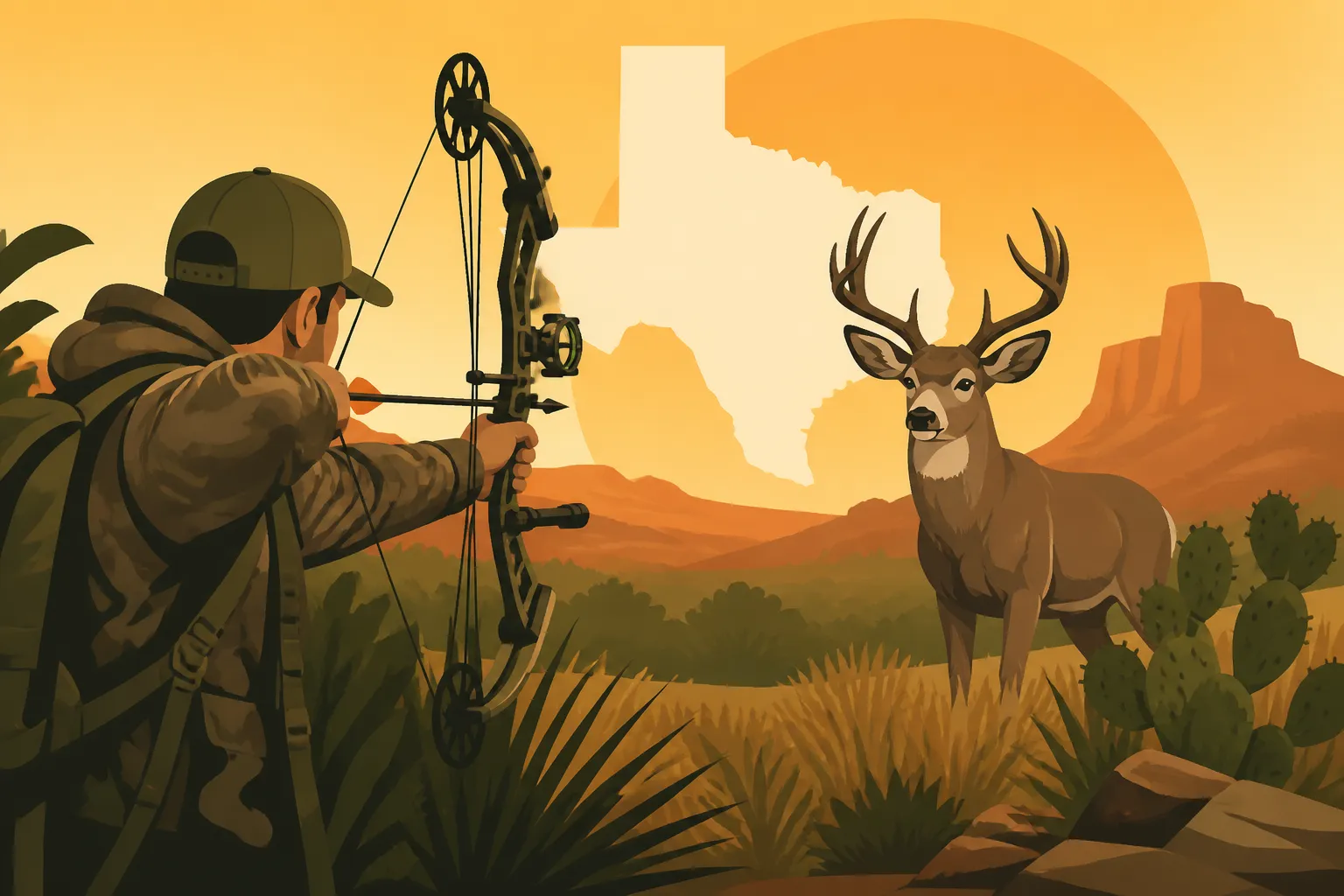
The final approach usually ends with a long wait. You might get within 200 yards only to find the buck has tucked deeper into the shade. Now, you wait for him to stand up. This can take hours, but you must remain patient. Rushing the final few yards often leads to "busting" the deer. If you are bowhunting, this is even more critical. You need to wait for the deer to offer a broadside shot, which usually happens when they stand to stretch or move to a new shadow as the sun shifts.
Alternative Tactics When Spot and Stalk Fails
While spot-and-stalk is the "best" method, it isn't always feasible. If you are hunting in the thick shinnery oak of the Rolling Plains or during a period of extreme mid-day heat, the deer simply won't be visible from the ridges. In these scenarios, you have to pivot your strategy. One of the most effective alternatives is hunting over water. In the arid desert environments of the Trans-Pecos, water is life. A secluded tinaja (a natural rock tank) or a remote cattle trough can be a magnet for mule deer, especially if it’s the only water source for miles.
Setting up a ground blind near water requires a different mindset. You aren't looking for the high-volume traffic you might see at a whitetail feeder. You are waiting for that one specific window, usually in the late morning or mid-afternoon, when a thirsty buck decides to braves the heat for a drink. This is also a great time to review How to Hunt Mule Deer in Texas (Step by Step) to ensure your setup is legal and ethical. Ground blinds should be "brushed in" with local vegetation like cedar or mesquite to hide the unnatural sharp edges of the blind.
Another alternative is hunting "travel corridors." In the Panhandle, mule deer often move between the safety of the deep canyons and the high-calorie food sources of agricultural pivots. If you can identify the specific "leads" or trails they use to transition between these areas, you can set up a tripod or box blind and intercept them. This is much more like traditional deer hunting, but it still requires a heavy emphasis on long-range glassing to confirm which trails are being used by mature bucks.
| Hunting Method | Best Terrain | Physical Effort | Success Rate | Equipment Needed |
|---|---|---|---|---|
| Spot and Stalk | Mountains / Canyons | Very High | High (Trophy) | High-end Binoculars, Tripod |
| Water Hole Blind | Desert / Flatlands | Low | Medium | Ground Blind, Scent Control |
| Travel Corridor | Panhandle / Breaks | Medium | Medium | Tripod Blind, Rangefinder |
| Still Hunting | Thick Brush | High | Low | Quiet Clothing, Snake Boots |
Why Feeders Are Not Always the Answer
In Texas, we love our corn feeders. For whitetail, they are the gold standard. However, for mule deer, they can be a bit of a trap for the hunter. While mule deer will certainly eat corn, the biggest, oldest bucks are often "feeder shy." They didn't survive five or six years in the desert by walking into a noisy, mechanical dinner bell in the middle of an opening. If you rely solely on a feeder, you will likely see plenty of does and young "basket-rack" bucks, but the trophies will remain in the shadows.
If you are hunting a lease that uses feeders, the best way to utilize them is to hunt the trails leading to the feeder, rather than sitting right on top of it. Set your blind back 200 or 300 yards in a spot that overlooks the approach. This allows you to catch the mature bucks as they hang back and scent-check the area before committing to the corn. This strategy is part of the broader Mule Deer Hunting in Texas: Panhandle & Trans-Pecos knowledge base that separates the lucky hunters from the consistent ones.
Furthermore, mule deer are primarily browsers, not grazers. They prefer the nutrient-dense tips of desert shrubs and forbs over corn. In a year with good rainfall, they may ignore feeders entirely because the natural "greed-up" provides everything they need. This is why understanding Best Hunting Method for Mule Deer in Texas always leads back to active searching rather than passive waiting. You have to go where the food is, and in the desert, that food is often scattered across thousands of acres.
Essential Gear and Physical Preparation
You cannot hunt mule deer effectively in Texas if you aren't prepared for the environment. This isn't a sit-in-the-truck kind of hunt. The terrain in West Texas is notoriously "toothy"—everything wants to poke, sting, or bite you. Your gear needs to reflect that. First and foremost, you need the best optics you can afford. Since the primary method is spotting, cheap binoculars will lead to eye strain and headaches by 10:00 AM, causing you to quit just when the hunting gets good.
Your clothing must also be adaptable. In the Trans-Pecos, it’s common to start the morning at 30 degrees and be in the mid-80s by noon. Layering is essential. You want moisture-wicking base layers and a durable, wind-resistant outer shell. Because you will be doing a lot of crawling during the stalk, your pants need reinforced knees. Many hunters also find that Best Snake Boots for Texas Hunting are a non-negotiable item, as rattlesnakes remain active in West Texas well into the fall.
Physical fitness is the "secret" gear that many people overlook. You don't need to be a marathon runner, but you do need to be able to hike several miles in rocky, uneven terrain while carrying a pack and a rifle. The air is thinner in the high-desert mountains, and the elevation changes will test your lungs. If you haven't spent some time walking on an incline before your trip, you will find yourself tethered to the truck, unable to reach the ridges where the big bucks live.
Selecting Optics for Long Range Glassing
When choosing optics for a Texas mule deer hunt, look for a 10×42 or 12×50 configuration. Anything less than 10 power won't give you the detail you need to judge antler spread at a distance, and anything more than 12 power is too difficult to hold steady without a tripod. Speaking of tripods, don't buy a cheap, flimsy one. The wind in West Texas can be brutal; you need a sturdy carbon fiber or aluminum tripod with a smooth fluid head so you can pan across the canyons without the image jumping around.
You should also carry a high-quality rangefinder that has angle compensation. Shooting in the mountains often involves steep uphill or downhill shots. If you don't account for the angle, you will overshoot the deer every time. Understanding the ballistics of your rifle at long distances is also a part of Best Hunting Method for Mule Deer in Texas. Most shots will be between 200 and 400 yards, which is a significant jump from the 100-yard shots typical of the Pineywoods or Hill Country.
Finally, consider a spotting scope for your "kit." While binoculars are for finding the deer, a spotting scope is for deciding if he’s a shooter. It allows you to count points and check for the Texas Mule Deer Antler Restrictions (20-Inch Rule) that apply in many Panhandle counties. This saves you from a three-hour stalk on a deer that turns out to be a young buck once you get close.
Footwear and Terrain Challenges
The rocks in West Texas are like razor blades for your boots. Do not show up in flimsy hiking sneakers. You need a stiff-soled mountain boot with good ankle support. A stiff sole prevents your foot from wrapping around every rock you step on, which reduces fatigue over a long day of hiking. Look for boots with a high rubber "rand" (the rubber strip that circles the base of the boot) to protect the leather from being shredded by rimrock.
In addition to boots, consider your "last mile" gear. As mentioned earlier, sound is a deal-breaker. Some hunters carry "stalking shoes"—lightweight, soft-soled moccasins—in their packs to switch into when they get within 150 yards of a deer. Also, make sure your pack has a way to securely carry your rifle or bow so your hands are free for using trekking poles. Trekking poles might look "touristy," but on a steep descent in a cactus-filled canyon, they are lifesavers for your knees and your balance.
If you are hunting on a lease, it is helpful to know How to Hunt Mule Deer on a Texas Lease and how to coordinate with other hunters. In these vast areas, you don't want two people glassing the same canyon while another prime area goes unobserved. Communication and preparation are what turn a grueling desert hike into a successful trophy harvest.
Disclaimer
This guide is intended for informational purposes only. Hunting regulations, including season dates, bag limits, and antler restrictions, can change annually. Always consult the official Texas Parks and Wildlife Outdoor Annual and ensure you have a valid Texas Hunting License: Cost, Types & How to Buy (2026) before heading into the field. Respect private property boundaries and always practice safe firearm handling.