Best Hunting Method for Squirrel in Texas
If you have ever spent a frustrating morning in the East Texas bottomlands watching squirrels chatter just out of range while you struggle with heavy brush, you know that squirrel hunting is far from a "beginner-only" sport. This guide solves the mystery of the best hunting method for squirrel in Texas, providing you with the exact strategies, gear recommendations, and local insights needed to fill your game bag this season.
Why Squirrel Hunting is the Ultimate Texas Tradition
While many hunters in the Lone Star State are hyper-focused on trophy bucks or feral hogs, squirrel hunting remains the backbone of our hunting heritage. It is the perfect way to sharpen your woodsman skills without the high stakes and high costs of a deer lease. In Texas, we primarily deal with two species: the larger, more adventurous Fox Squirrel and the smaller, more erratic Gray Squirrel (often called "cat squirrels" in the Pineywoods).
The beauty of pursuing these small game animals is the accessibility. Whether you are hunting the towering oaks of the Pineywoods & East Texas Hunting regions or the river bottoms of the Post Oak Savannah, squirrels offer a challenge that rewards patience and marksmanship. However, the thick canopy and often sweltering heat of Texas mean you can't just wander aimlessly into the woods and expect a limit. You need a method that accounts for the specific behavior of Texas squirrels and the unique terrain they inhabit.
The Most Effective Method: The Sit-and-Wait Strategy
If you ask any veteran hunter in the Deep South for the best hunting method for squirrel in Texas, they will almost always point to the "Sit-and-Wait" approach. This method relies on the squirrel’s natural curiosity and short memory. Unlike deer, which might be spooked off a property for days after hearing a loud noise, a squirrel will usually return to its normal activity within 15 to 20 minutes of a disturbance.
To execute this properly, you need to arrive at your chosen spot before the sun even thinks about hitting the horizon. Find a large, comfortable tree to lean against—preferably one with a good view of several "den trees" or "mast trees" (oaks, pecans, or walnuts). Once you sit down, you must become part of the forest. This is where a comfortable seat cushion or a lightweight stool from a retailer like Amazon can make a massive difference in your ability to stay still.
Identifying the Right Tree
Not every tree in the woods is a squirrel magnet. You are looking for evidence of "cuttings." Look on the forest floor for freshly chewed acorn caps, hickory hulls, or pecan shells. If the edges of the shells look white and moist, a squirrel was likely there within the last few hours. In the early fall, focusing on the Texas Squirrel & Rabbit Hunting Guide principles, you should target water oaks and pin oaks. As the season progresses into winter, those squirrels will shift toward the heavier-fleshed nuts like pecans and walnuts.
The Power of Patience
The biggest mistake hunters make with the Sit-and-Wait method is moving too soon. Once you hear that first "bark" or the tell-tale scratching of claws on bark, your instinct will be to stand up and hunt it down. Don't. Wait for the squirrel to move into a clear opening. If you shoot one, mark exactly where it fell, but stay seated. Often, the sound of a rimfire shot doesn't spook other squirrels as much as a human walking through the leaves does. You can often bag three or four squirrels from a single sitting if you just remain patient.
The Still-Hunting Approach: For the Mobile Hunter
For those who find sitting still for hours to be a form of torture, "still-hunting" is the preferred alternative. Despite the name, still-hunting involves moving very slowly and deliberately through the woods. This is arguably the most skillful way to hunt because it requires you to out-see and out-hear animals that are evolved to detect predators.
When still-hunting in Texas, your pace should be glacial. I like to use the "two-step rule": take two soft steps, then stop for a full minute to scan the canopy. You aren't just looking for a whole squirrel; you are looking for a flick of a gray tail, the sun reflecting off an eye, or the swaying of a branch that doesn't match the wind.
Master the Footwork
Texas woods are often covered in dry, crunchy leaves or brittle pine needles. To move silently, you should avoid "heel-to-toe" walking. Instead, keep your weight on your back foot and feel the ground with the outer edge of your front foot before committing your weight. This allows you to feel for twigs that might snap. Wearing a pair of flexible, lightweight stalking boots—which you can easily find on Amazon—will give you much better "ground feel" than heavy, stiff work boots.
Using Sound to Your Advantage
During a still-hunt, your ears are just as important as your eyes. Listen for the sound of "rain" on a sunny day; this is usually the sound of nut shells falling from the high branches as a squirrel feeds. If you hear a squirrel barking or "scolding," it has likely spotted something it doesn't like. If that something is you, stop immediately and blend into a tree trunk. If you wait long enough, the squirrel will often lose interest and provide you with a shot opportunity.
Essential Gear for Texas Squirrel Hunting
You don't need a massive budget to be a successful squirrel hunter, but choosing the right tool for the job is critical. In Texas, the debate usually boils down to the shotgun versus the rimfire rifle. Each has its place depending on the time of year and the density of the foliage.
Shotguns for the Early Season
In the early part of the season, when the "leaf-out" is still thick, a shotgun is often the best hunting method for squirrel in Texas. It is incredibly difficult to thread a tiny .22 bullet through a wall of green oak leaves. A 20-gauge or even a .410 bore is perfect. It provides enough spread to catch a moving squirrel in the branches without destroying too much of the delicious meat.
Rimfires for the Winter
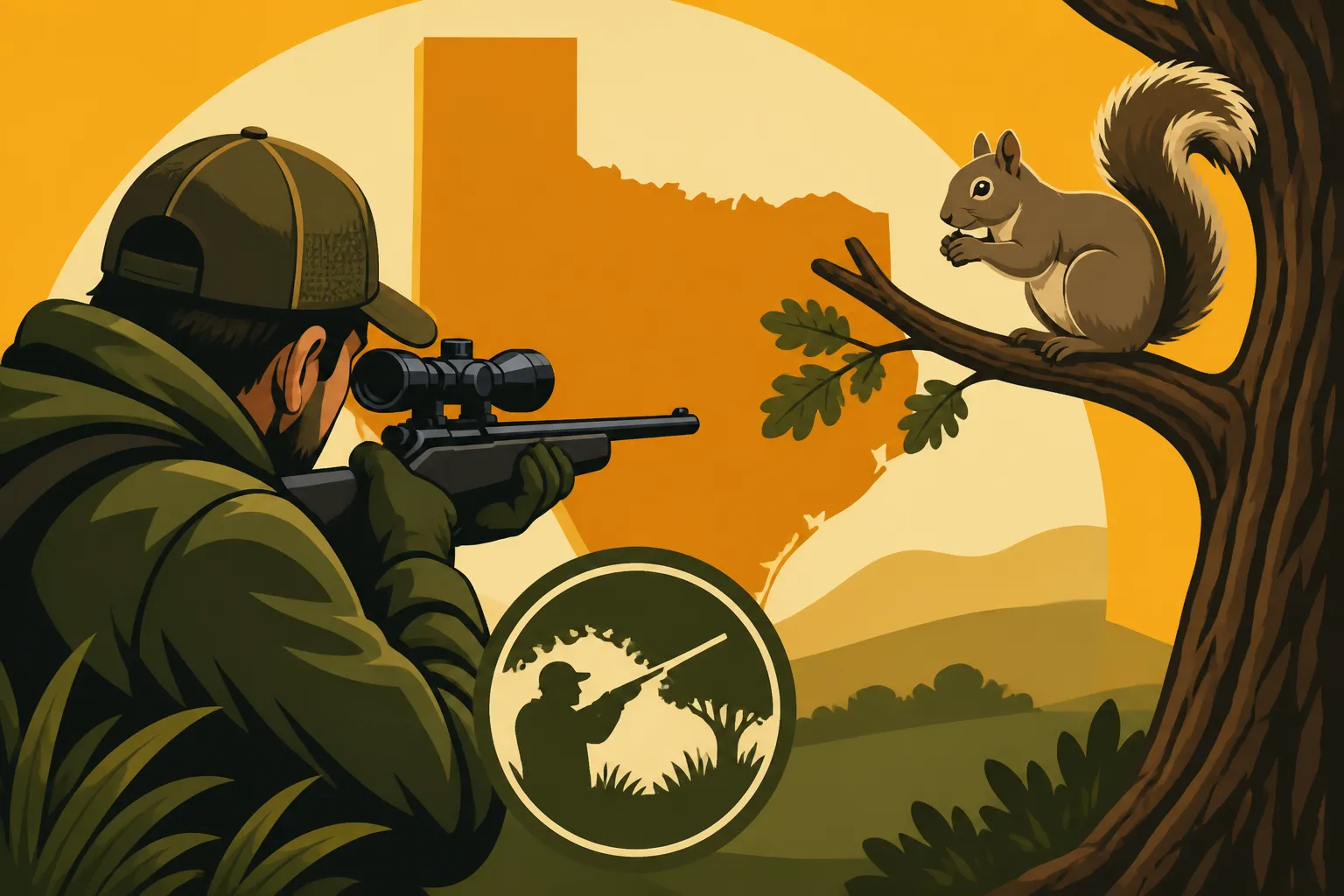
Once the leaves have dropped and you can see a hundred yards through the creek bottom, the rimfire rifle reigns supreme. The .22 Long Rifle is the classic choice, but many Texas hunters are moving toward the .17 HMR for its flatter trajectory and increased range. Using a rifle allows you to take precise "head shots," which preserves all the meat on the legs and back—the best parts for a squirrel and dumplings recipe. If you're looking for optics, a simple 4x scope from Amazon is usually more than enough for the distances you'll be shooting.
| Gear Item | Recommended Type | Best Use Case |
|---|---|---|
| Firearm | .22 LR Rifle or 20ga Shotgun | Rifle for clear woods; Shotgun for thick brush |
| Optics | 4×32 or 3-9×40 Scope | Essential for spotting ears and tails in shadows |
| Clothing | Lightweight Camo (Green/Brown) | Vital for blending into the Texas hardwoods |
| Storage | Game Vest or Small Pack | For carrying water and your harvested game |
| Calls | Bellows-style Squirrel Call | Used to "bark" and encourage squirrels to move |
Locating the Best Squirrel Woods
Texas is 95% private land, which can make finding a spot difficult if you don't have a lease. However, the state offers some incredible opportunities for those who know where to look. Many hunters utilize the Annual Public Hunting Permit: What It Covers to access thousands of acres of prime squirrel habitat.
Wildlife Management Areas (WMAs)
The WMAs in East Texas, such as the Alabama Creek WMA or the Moore Plantation WMA, are legendary for their squirrel populations. These areas are managed for timber and wildlife, meaning there is an abundance of the hardwood "mast" trees that squirrels crave. When hunting public land, always be mindful of other hunters and wear your hunter orange as required by law.
National Forests
The four National Forests in Texas—Sam Houston, Davy Crockett, Angelina, and Sabine—provide a massive playground for the small game hunter. These areas often have less pressure than the smaller WMAs. Pro tip: look for the "bottomland hardwoods" near creeks and rivers. Squirrels need water just as much as they need food, and the soil near water sources often produces the largest, most productive oak trees. You can find more details on these in the Texas Game Animals: What You Can Hunt overview.
Processing and Safety in the Texas Heat
One thing we can't ignore is the weather. Even during the fall, Texas can see temperatures in the 80s and 90s. This creates a challenge for meat preservation. When you are out in the field, you need to be prepared to handle your game quickly.
Field Dressing Basics
Once you've made a successful shot, it's a good idea to field dress the animal relatively quickly if the temperature is high. Carrying a sharp, small-bladed skinning knife, like those available on Amazon, is essential. Squirrel skin is notoriously tough, so having a dedicated tool makes the job much easier. Many hunters prefer the "tail-cut" method, where you cut through the tail bone and pull the skin off in two halves, like taking off a sweater.
Staying Cool and Safe
Always carry more water than you think you need. The humidity in the Texas creek bottoms can lead to dehydration faster than you realize. Furthermore, keep an eye out for "no-shoulders"—Texas is home to several species of venomous snakes that remain active well into the squirrel season. While you are focused on the treetops, don't forget to glance at the ground before you step or sit. It is always wise to check the Field Dressing & Processing Game in Texas Heat guide for more advanced tips on keeping meat fresh.
Rules, Regulations, and Licensing
Before you head out, you must ensure you are legal. In Texas, squirrel hunting is regulated by the Texas Parks and Wildlife Department (TPWD). Most counties in East Texas have specific seasons, while many other counties have no closed season and no bag limit. You should always consult the Texas Hunting Seasons: Complete Calendar by Species to verify the rules for the specific county you plan to hunt.
You will need a valid Texas Hunting License: Cost, Types & How to Buy (2026) to pursue squirrels. If you were born after September 1, 1971, you must also have successfully completed a Hunter Education course. Carrying a digital copy of your license on your phone is legal in Texas, but having a physical backup in your hunting vest is never a bad idea.
Tips for Success on Your First Trip
If you are a beginner, don't get discouraged if your first few trips result in an empty game bag. Squirrel hunting is a game of inches and seconds. Here are a few final tips to keep in mind:
- Watch the Wind: While squirrels don't have the nose of a whitetail, they have incredible eyesight. Try to keep the sun at your back so you aren't squinting and the squirrels are looking into the light.
- Use a Call Sparingly: A squirrel call isn't like a duck call; you don't want to use it constantly. Use it to "check" the woods. Give two or three barks and then listen for five minutes.
- Aim Small, Miss Small: If you're using a rifle, aim for the eye. This ensures a quick, humane kill and leaves the rest of the squirrel in perfect condition for the kitchen.
- Budget Wisely: You can get started with the Best Hunting Gear for Beginners in Texas (By Budget) and slowly upgrade your kit as you fall in love with the sport.
Squirrel hunting is about more than just the harvest. It’s about the smell of the damp earth in a pine grove, the sound of the woods waking up, and the satisfaction of a well-placed shot. By using the Sit-and-Wait or Still-Hunting methods, you’ll find that the "best" method is whichever one gets you out of the house and into the beautiful Texas outdoors.
Disclaimer
The information provided in this guide is for educational and informational purposes only. Hunting regulations in Texas are subject to change by the Texas Parks and Wildlife Department (TPWD). Always check the most recent version of the Texas Outdoor Annual before heading into the field to ensure you are in compliance with all local laws, bag limits, and season dates. Hunting involves inherent risks, including the use of firearms and exposure to the elements; always prioritize safety and follow all hunter education guidelines.