How to Hunt Nilgai on the Texas Coast
Nilgai antelope on the Texas Coast are one of those truly unique hunting experiences, but they also present a set of challenges that can leave even seasoned hunters scratching their heads. Their incredible toughness, wary nature, and the relentless coastal environment often combine to make a Nilgai hunt an exercise in frustration if you're not properly prepared. This comprehensive guide will walk you through everything you need to know, from understanding these formidable animals to mastering the tactics, gear, and field care essential for a successful hunt in the challenging South Texas coastal region.
Understanding Nilgai Antelope on the Texas Coast
Before you even think about loading up your truck, understanding the Nilgai itself is absolutely crucial. These aren't your typical whitetail deer; they're a different beast entirely, requiring a different approach and a significant respect for their capabilities.
Nilgai Biology and Behavior
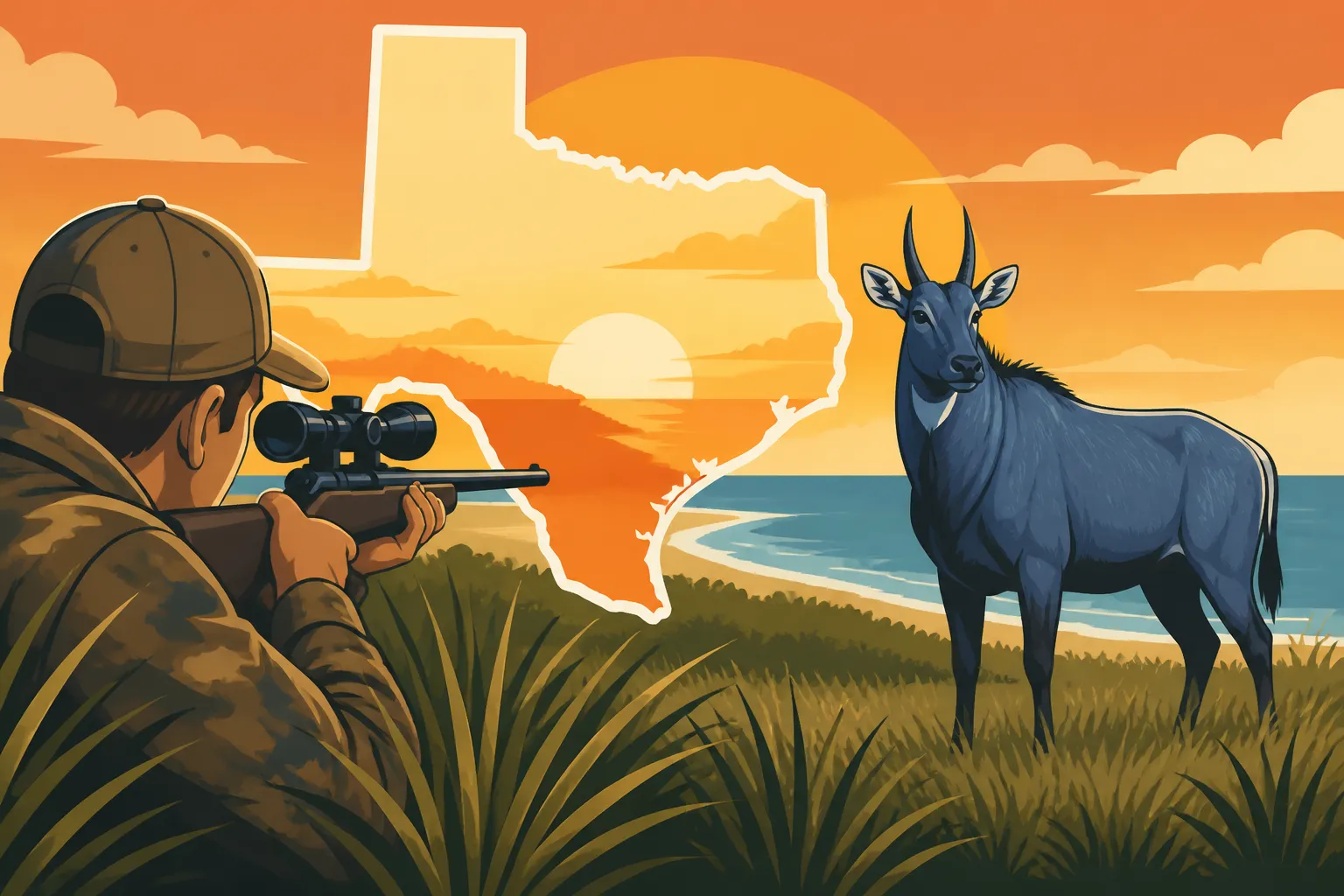
Nilgai, often called "blue bull" due to the mature bulls' slate-gray coat, are originally from India and Pakistan, where they are the largest antelope species. What does that mean for you as a hunter? It means they are incredibly robust animals, built for survival in harsh conditions. Mature bulls can weigh over 600 pounds, with some records pushing 700 pounds, making them roughly the size of a small elk. Their hide is notoriously thick and tough, often deflecting poorly placed shots or absorbing considerable energy, leading to difficult tracking jobs or even lost animals.
Their senses are also highly developed. Nilgai possess exceptional eyesight, akin to a pronghorn, making them incredibly difficult to approach in open country. They are also known for a keen sense of smell and hearing, making a stealthy approach absolutely paramount. They typically graze and browse on grasses, forbs, and woody plants, often preferring areas with a mix of dense brush for cover and open savannahs for feeding. In the sweltering Texas heat, they'll often bed down in thick cover during the hottest parts of the day, emerging to feed in the cooler mornings and evenings.
Why the Texas Coast?
You might wonder how an Indian antelope ended up thriving on the Texas Coast. Nilgai were first introduced to the King Ranch in South Texas in the 1930s for sport hunting and have since flourished, establishing a free-ranging population that now numbers in the tens of thousands. The vast, undeveloped coastal prairies and brush country of South Texas, particularly in counties like Kenedy, Kleberg, Willacy, and Cameron, provided an ideal habitat. This region, often referred to as the "Wild Horse Desert," mimics many aspects of their native range, offering abundant forage, expansive areas to roam, and suitable cover.
The proximity to the Gulf of Mexico means these areas benefit from higher humidity and often more consistent rainfall than some of the more arid parts of Texas, which contributes to lush vegetation even during dry spells. This unique coastal ecosystem has allowed Nilgai to not just survive, but truly thrive, becoming one of Texas's most sought-after exotic species for hunters. Because they are not native game animals, there is no closed season for Nilgai, and you generally don't need a special tag beyond your basic hunting license, though specific ranch rules will apply. If you're wondering, Is There a Season for Nilgai in Texas?, the answer is typically no, allowing year-round hunting opportunities, which is a major draw. However, always double-check the latest regulations in the Texas Hunting Seasons: Complete Calendar by Species to be sure.
Effective Hunting Methods for Nilgai
Hunting Nilgai successfully requires a combination of patience, strategic planning, and often, a lot of legwork. The sheer size of the coastal ranches where they roam, coupled with their inherent wariness, means that "sitting and waiting" isn't always the most effective strategy.
Spot-and-Stalk in Coastal Terrain
For many Nilgai hunters, the spot-and-stalk method is king, especially on large, low-fenced properties. This involves covering ground, often from an elevated position like a ranch buggy or a high rack, to spot animals from a distance, then making a careful, silent approach on foot. The Texas coastal terrain, however, throws a few curveballs into this classic tactic. You'll encounter sprawling, flat coastal prairies with tall grasses that can conceal an animal perfectly, interspersed with dense thickets of mesquite, huisache, and prickly pear. This makes spotting them a challenge in itself.
Once spotted, the stalk begins. This is where your ability to read the wind, utilize sparse cover, and move silently through crunchy brush or sandy soil is put to the test. A Nilgai, with its exceptional eyesight, can pick out movement from an astonishing distance. You'll need to use every contour of the land, every clump of brush, and every gust of wind to mask your approach. It's often a game of "two steps forward, one step back," patiently waiting for the animal to feed or look away before inching closer. For a deeper dive into this approach, consider checking out our guide on Spot-and-Stalk Hunting in Texas (Exotics & Mule Deer).
Ambush and Still Hunting Tactics
While spot-and-stalk is popular, don't discount the effectiveness of ambush or still hunting, especially if you've done your scouting. Nilgai, like all animals, follow patterns, particularly around water sources during dry periods or along established travel corridors between feeding and bedding areas. Setting up a ground blind or finding a natural hide overlooking such an area can be incredibly productive. This method requires extensive prior knowledge of the area, usually gained through trail cameras or previous scouting trips. You'll want to position yourself downwind, with a clear shooting lane, and be prepared for long waits.
Still hunting, which involves slowly and deliberately moving through promising areas, pausing frequently to observe and listen, can also work. This is particularly effective in areas where the brush isn't so dense that visibility is completely cut off, allowing you to scan ahead and catch animals before they catch you. The key is extreme patience and silence. Every step should be calculated, every pause an opportunity to survey your surroundings. It's a method that often tests your mental fortitude as much as your physical endurance.
Vehicle-Assisted Hunting (Safari-Style)
On many of the larger private ranches along the Texas Coast, vehicle-assisted hunting, often dubbed "safari-style," is a common and effective method. This typically involves using a high-rack truck or a UTV to cover vast distances, searching for animals. Once Nilgai are spotted, the vehicle is stopped, and hunters dismount to execute a final stalk on foot. This isn't just about riding around; it's about efficiently locating animals in expansive landscapes that would be impossible to cover on foot alone.
The vehicle provides an elevated vantage point to scan over tall coastal grasses and brush, allowing you to spot these often-camouflaged animals from afar. It also conserves hunter energy, which is invaluable in the intense South Texas heat. However, once you leave the vehicle, all the rules of a traditional stalk apply. Silence, wind direction, and cover become your immediate concerns as you close the distance for a shot. Outfitters who specialize in Nilgai hunting on the coast often employ this tactic, combining the efficiency of a vehicle with the skill required for a close-range, ethical shot.
Essential Gear and Preparation
Hunting Nilgai is not a venture for the unprepared. Their formidable nature and the challenging coastal environment demand specific gear choices to ensure both safety and success. Skimping on quality or suitability here can lead to a miserable, or even dangerous, experience.
Firearm and Ammunition Choices
This is perhaps the most critical gear decision for Nilgai. Forget about your deer rifle for this one, unless it's on the heavier side. Due to their thick hide, heavy bone structure, and sheer body mass, Nilgai require a significant amount of kinetic energy to ensure a quick, ethical kill. Many experienced Nilgai hunters recommend calibers in the .300 Winchester Magnum, .338 Winchester Magnum, or even .375 H&H Magnum range. While some hunters use .30-06 or .270 with heavy, premium bullets, larger calibers offer a much greater margin of error and significantly reduce the chances of a wounded animal.
Bullet construction is just as important as caliber. You'll want to use premium, heavy-for-caliber, bonded or monolithic bullets designed for deep penetration and controlled expansion. Think Barnes TTSX, Nosler AccuBond, Hornady GMX, or Swift A-Frame. These bullets are engineered to hold together and drive through that tough hide and bone, reaching vital organs. A poorly constructed bullet can fragment on the hide, leading to a superficial wound.
Shot placement is also paramount. Unlike a whitetail deer where a behind-the-shoulder lung shot is often sufficient, a Nilgai's vitals are positioned slightly differently, and a frontal or quartering-away shot might require a different point of aim to hit the heart/lungs effectively. A high shoulder shot or a shot aimed to break both shoulders is often preferred to anchor the animal quickly. While our guide on Best Shot Placement for Whitetail Deer offers excellent advice, remember to adjust your thinking for the Nilgai's larger, tougher anatomy.
Here’s a quick comparison of popular calibers for Nilgai:
| Caliber | Minimum Recommended Bullet Weight | Typical Energy at 100 yds (ft-lbs) | Pros | Cons |
|---|---|---|---|---|
| .300 Win Mag | 180 gr | 3000-3500 | Excellent power, common ammo | Heavier recoil than deer calibers |
| .338 Win Mag | 200 gr | 3500-4000 | Superior power & penetration | Significant recoil, less common ammo |
| .375 H&H Magnum | 270 gr | 4000-4500 | "Big medicine," ideal for large game | Very heavy recoil, specialized rifle/ammo |
| .30-06 Springfield | 180 gr (premium) | 2500-3000 | Widely available, manageable recoil | Marginal for Nilgai, requires perfect shot |
Optics and Sighting
Given the vast, often open landscapes of the Texas Coast, quality optics are non-negotiable. A good pair of binoculars (10×42 or 12×50) will be your best friend for spotting Nilgai from a distance, picking apart brush lines, and assessing animals. Clear glass with good light transmission will make a huge difference, especially in the low light conditions of dawn and dusk when Nilgai are most active.
For your rifle, a reliable scope with variable magnification (e.g., 3-9x, 4-12x, or 4-16x) is essential. The ability to dial down for close, fast shots in brush and dial up for longer shots across open fields provides versatility. Ensure your scope holds zero consistently, and zero it precisely for your chosen Nilgai ammunition. Given the potential for longer shots, a rangefinder is also a critical piece of equipment to accurately determine distance. Don't leave home without one.
Apparel and Protection for the Coastal Environment
The Texas Coast is a beautiful but sometimes brutal environment, and your clothing and protective gear need to reflect that. First and foremost, snake boots are not optional; they are a necessity. This region is home to several species of venomous snakes, including rattlesnakes and cottonmouths, which thrive in the dense brush and coastal wetlands. Investing in high-quality, comfortable snake boots will provide peace of mind and crucial protection. You can explore options in our guide on Best Snake Boots for Texas Hunting or specifically for the region with Best Snake Boots for South Texas Brush Country.
Beyond snake protection, think lightweight, breathable, and moisture-wicking clothing. The heat and humidity are relentless, even in the "cooler" months. Long sleeves and pants, while seemingly hot, can protect you from sun, thorns, and insects. Earth-toned or camouflage patterns are generally preferred. A wide-brimmed hat is also a must for sun protection. Finally, carry plenty of insect repellent – mosquitoes, ticks, and chiggers are abundant and eager to make your acquaintance.
Navigating the Texas Coastal Hunting Environment
The environment where Nilgai roam on the Texas Coast presents unique challenges that can significantly impact your hunt. Understanding and preparing for these elements is just as important as knowing your firearm.
Heat, Humidity, and Hydration
Let's be blunt: Texas heat, especially along the coast, is no joke. The combination of high temperatures and intense humidity can quickly lead to dehydration and heat exhaustion if you're not careful. This isn't just uncomfortable; it's dangerous. You must prioritize hydration. Carry significantly more water than you think you'll need, and consider electrolyte-rich drinks or supplements. A quality cooler filled with ice water is your best friend.
Wear breathable clothing, take frequent breaks in the shade, and avoid overexertion during the hottest parts of the day. If you do harvest a Nilgai, the heat immediately becomes a critical factor in meat preservation, making rapid field dressing an absolute necessity. Our article on How to Cool a Deer Fast in Texas Heat offers analogous advice on mitigating the effects of heat on game meat. Pay attention to your body and your hunting partners. Signs of heatstroke are serious and require immediate action.
Tides, Terrain, and Vegetation
The coastal plain is not uniform. You'll encounter a mosaic of habitats, each with its own set of challenges. Expansive coastal prairie grasslands, which can be surprisingly tall and dense, offer excellent cover for Nilgai but make spotting and moving difficult. Scattered salt marshes and tidal flats can be impassable or, at the very least, extremely muddy and slow going. You might also encounter areas of dense brush, often referred to as "chaparral" or "thorny brush country," which can be a literal maze of mesquite, prickly pear cactus, and various other thorny plants.
The soil itself can vary from soft, deep sand to sticky clay, both of which are tough to walk through for extended periods. Understanding the tidal influences if you're hunting very close to the bays is also important, as low-lying areas can become flooded, changing access points or animal movement patterns. Always be aware of your surroundings, scout paths of least resistance, and plan your stalks with the terrain in mind.
Insects and Other Wildlife
Beyond the big game you're after, the Texas Coast teems with smaller, often less welcome, forms of life. Mosquitoes are arguably the most ubiquitous and annoying. They are present almost year-round and can be ferocious, especially around dawn, dusk, or after rain. Good insect repellent with DEET or picaridin is non-negotiable.
Ticks and chiggers are also a constant threat in the tall grasses and brush. Perform regular tick checks, wear long sleeves and pants, and consider treating your clothing with permethrin before your hunt. And, as mentioned before, venomous snakes are prevalent. Always watch where you step, where you place your hands, and use a walking stick to probe dense vegetation before stepping into it. While Nilgai are tough, so is the wildlife that shares their home.
Post-Harvest: Field Care and Processing
Congratulations, you've successfully harvested a Nilgai! Now the real work begins. Given the animal's size and the Texas heat, swift and efficient field care is absolutely paramount to ensure the meat is not spoiled.
Rapid Field Dressing
A Nilgai bull can be a truly massive animal, easily dwarfing a large whitetail buck. When you combine this with the typically warm-to-hot coastal temperatures, you have a recipe for rapid meat spoilage if not handled correctly. Immediate and thorough field dressing is critical. This means getting the hide off and the guts out as quickly as humanly possible to allow the carcass to cool down internally.
You'll need sturdy, sharp knives and ideally, assistance from hunting partners or ranch staff. Skinning a Nilgai is a significant undertaking due to its thick hide and large surface area. Once skinned and gutted, if possible, split the carcass into quarters to facilitate further cooling and transport. Don't forget to pack plenty of large game bags to protect the meat from flies and dirt. Every minute counts in the Texas heat. For a detailed walkthrough on dealing with heat-related challenges in the field, our guide on Field Dressing & Processing Game in Texas Heat provides invaluable insights.
Transport and Professional Processing
Moving a several-hundred-pound Nilgai carcass, even in quarters, is no small feat. Many hunters rely on ranch equipment, such as UTVs with winches, tractors, or even a heavy-duty game cart, to move the animal from the kill site to a cooler or processing facility. Planning for extraction before your hunt is a smart move.
Once you've got the meat out of the field, the next step is getting it to a processor. Due to their size, many standard deer processors may not be equipped to handle Nilgai efficiently. It's highly recommended to identify and contact a processor experienced with large exotics before your hunt. They'll have the space, equipment, and expertise to properly break down and package the meat. They can also advise on specific handling requirements for large game. Consider our advice on Where to Take a Deer for Processing in Texas, and apply the principles to finding a processor who specializes in larger game. Nilgai meat is lean and delicious, often compared to beef, but only if it's handled correctly from the moment the animal hits the ground.
Disclaimer
Hunting is an inherently dangerous activity. Always prioritize safety, adhere to all local, state, and federal hunting regulations, and ensure you have the appropriate licenses and permits. The information provided in this guide is for informational purposes only and should not be considered a substitute for professional instruction, local knowledge, or official regulations from the Texas Parks and Wildlife Department. Always hunt ethically and responsibly.