How to Hunt Bobwhite Quail on a Texas Lease
Finding bobwhites on a Texas lease can feel like chasing ghosts, especially after a few dry years where the population seems to have vanished into the brush. This guide solves the mystery of locating coveys in tough terrain, managing your lease for better bird numbers, and selecting the right tactics and gear to ensure your vest is heavy at the end of the day.
Understanding the Habitat and Behavior of Bobwhites on Your Lease
The biggest mistake most lease hunters make is walking through the prettiest grass they can find and wondering why they aren't seeing birds. In Texas, "pretty" to a human often means "deadly" to a quail. Bobwhites need a very specific mix of cover, and if your lease is overgrazed or, conversely, too thick with carpet-like grass, the birds simply won't be there. You have to understand that Texas Quail Decline: Why & Where to Still Hunt is often a result of habitat fragmentation and loss of "bare ground" where birds can actually walk.
The Importance of Transition Zones and Edge Cover
Bobwhites are creatures of the edge. They rarely sit in the middle of a massive, open field, and they don't like being buried in the center of an impenetrable cedar motte. They want to be right where the two meet. Look for those transition zones where the brushy pasture meets a sender or a ranch road. These areas allow the birds to sun themselves in the morning while remaining only a few wingbeats away from safety.
When you are scouting your lease, look for the "edge effect." This is where different types of vegetation collide. A mix of native bunchgrasses like Little Bluestem combined with woody plants provides the perfect highway for a covey. They use these corridors to move from their roosting sites to their feeding grounds without ever being fully exposed to hawks or coyotes. If your lease lacks these "soft edges," the birds will likely migrate to the neighbor's property where the brush management is a bit more bird-friendly.
Identifying the Quail House or Woody Cover
In the Texas heat, bobwhites require what biologists call "loafing cover" or a "quail house." Think of this as a living umbrella. It needs to be a woody plant—like a lotebush, elbowbush, or a low-hanging mesquite—that is open underneath but thick on top. This allows the birds to sit in the shade on a 90-degree October day while staying protected from avian predators.
If you can find a lotebush that is roughly the size of a Volkswagen Beetle, you’ve likely found a covey headquarters. On a typical Texas lease, these motts should be spaced out so a quail never has to run more than 20 or 30 yards to reach safety. If the gaps between brush are too wide, the birds are too vulnerable. If the brush is too thick (like a solid wall of juniper), they can't move through it. Successful Texas Bobwhite Quail Hunting Tactics for Texas always begin with identifying these specific "houses" rather than just walking aimlessly.
Food Sources and Forage Analysis
A bobwhite’s diet changes with the seasons, but on a Texas lease, you are primarily looking for "disturbed" ground that produces weeds. Contrary to what many people think, bobwhites aren't just eating grass seeds; they love high-protein seeds from plants like croton (goatweed), ragweed, and sunflowers. They also rely heavily on insects, especially in the early season when it's still warm.
Take a look at the ground. Is it a solid mat of Bermuda grass? If so, the quail are gone because they can’t walk through it and no weeds can grow there. You want to see "interstitial space"—bare dirt between clumps of native grass. This allows the birds to move freely and find the seeds dropped on the soil. If your lease has been recently disked or has areas of light grazing, those are the spots that will hold the most forage.
Essential Gear and Dog Work for a Successful Lease Hunt
Hunting quail on a Texas lease is a physical endeavor that demands specialized gear. Between the prickly pear, the rattlesnakes, and the unforgiving sun, you cannot simply show up in a pair of blue jeans and a t-shirt. You need a system that protects you while allowing for the mobility required to keep up with a fast-moving pointer. Getting the Best Gear for Bobwhite Quail on a Texas Lease is an investment in your safety and your success.
Selecting the Right Bird Dog for the Texas Brush
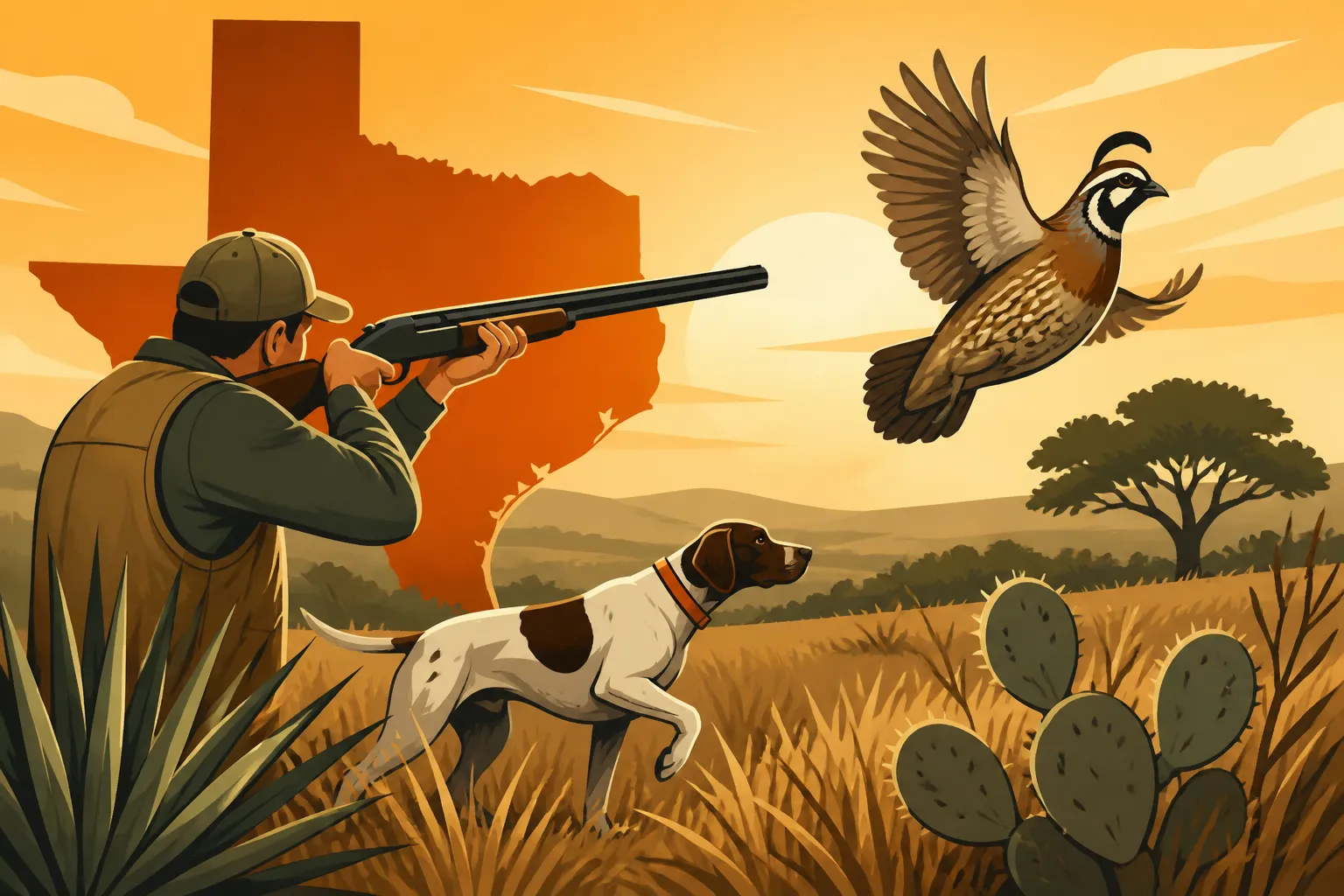
In the South Texas brush or the Rolling Plains, the dog is the star of the show. While flushers like Labradors or Springers can work, the traditional choice is a wide-ranging pointer or a versatile breed like a German Shorthaired Pointer or a Brittany. The sheer scale of a Texas lease means you need a dog that can cover hundreds of acres to find that one elusive covey.
However, the Texas environment is brutal on dogs. Thorns, sandburrs, and heat are constant threats. You must monitor your dog's hydration levels constantly. Many veteran hunters use "boots" on their dogs to protect their pads from the flint rock and cactus. Your dog’s ability to handle the "heat" is often the limiting factor of your hunt. A dog that is too "hot" (driven) might run itself into heat exhaustion before the first covey is even located. This is why the Best Hunting Method for Bobwhite Quail in Texas involves hunting in the early morning or late evening when the ground temperature is lower.
Shotgun Choice and Load Selection
You don't need a cannon for bobwhites. Most Texas hunters prefer a 20-gauge or even a 28-gauge shotgun. The goal is a light, fast-swinging gun because a bobwhite flush is one of the most explosive and disorienting events in the outdoors. You have about two seconds to mount your gun, identify your target, and squeeze the trigger before the birds are gone into the brush.
For loads, a 1-ounce or 7/8-ounce charge of #7.5 or #8 shot is standard. You want a wide pattern because you’re often shooting in thick cover. An Improved Cylinder or Skeet choke is usually the way to go. If you are hunting in the late season when the birds are "wild" and flushing at a distance, you might tighten up to a Modified choke, but for most lease hunts, "open and fast" is the rule.
Safety Gear and Navigation Tools
If there is one piece of gear you cannot skip, it is snake protection. Whether you choose Best Snake Boots for Texas Hunting or high-quality snake gaiters, you must protect your lower legs. Rattlesnakes remain active well into the fall in Texas, and a quail hunt involves walking through exactly the kind of tall grass and brush piles where they love to hide.
Additionally, a good GPS or a hunting app like onX is vital. It is incredibly easy to get turned around in the brush while following a dog. You also need to know exactly where your lease boundaries are. Nothing ruins a hunt faster than accidentally crossing onto the neighbor's high-fence ranch while chasing a singles bird.
| Feature | Optimal Bobwhite Habitat | Marginal Bobwhite Habitat |
|---|---|---|
| Grass Structure | Bunchgrass (Little Bluestem) | Thick Carpet Grass (Bermuda) |
| Woody Cover | 15-25% coverage in motts | 0% or 80%+ coverage |
| Bare Ground | 30-50% for easy travel | 0% (too thick for chicks) |
| Food Sources | Croton, ragweed, insects | Monoculture grass |
Tactical Approaches for Locating and Flushing Coveys
Once you’ve got your gear and your dogs ready, you need a plan of attack. You can't just walk the entire lease; you have to hunt the high-probability areas during the right times of day. Understanding the Texas Quail Season Dates & Limit is important, but understanding the bird's daily clock is what puts meat in the pan.
Morning and Afternoon Feeding Cycles
Bobwhites have a very predictable daily routine. They roost on the ground in a circle (tail-to-tail) for warmth and protection. Shortly after sunrise, they begin to move toward their feeding areas. This is the best time to find them because they are active and leaving plenty of "scent" for the dogs to pick up. Between 8:00 AM and 10:30 AM, you should be hunting the edges of weed fields and senderos.
By midday, the birds will move into their "loafing cover" (those quail houses we discussed earlier). Hunting during the heat of the day is often a lost cause; the dogs can't smell as well in the dry air, and the birds are hunkered down deep in the thorns. The second peak of activity happens about two hours before sunset. This is the "golden hour" where coveys move back out to feed before heading to their roosting spots. If you only have a limited time on your lease, focus your efforts on these two windows.
Managing Your Hunting Pressure
One of the quickest ways to ruin a quail lease is to over-hunt it. Bobwhites are sensitive to pressure. If you "bust" the same covey every Saturday morning, they will eventually move to a different part of the ranch or become so "wild" that they flush 100 yards ahead of the dog.
A good rule of thumb is to never take more than 20-30% of a covey. If you flush a covey of 12 birds, take two or three on the rise and maybe one "singles" bird, then leave the rest alone. You need those remaining birds to maintain the covey’s social structure and to survive the winter. Also, rotate your hunting areas. If your lease is 1,000 acres, divide it into four quadrants and only hunt one quadrant per weekend. This gives the birds time to settle back into their routines.
Weather Factors and Wind Direction
The wind is your best friend or your worst enemy. Always hunt your dogs into the wind. This allows the scent of the birds to drift directly into the dog’s nose. If you hunt with the wind at your back, the dog won't smell the birds until he has already run over them, causing a "bump" (a flush out of range).
Humidity also plays a massive role. In Texas, the air can get incredibly dry. Scent molecules "stick" to moisture. If the humidity is below 30%, your dogs will struggle to find birds even if they are standing right on top of them. The best hunting often happens the morning after a light rain or on those foggy, damp Gulf Coast mornings where the scent hangs heavy in the air. For more on the specific regional nuances, check out Rolling Plains Hunting: Quail & Deer.
Managing Your Texas Lease for Better Quail Numbers
If you are lucky enough to have a long-term lease or a friendly relationship with the landowner, you can take steps to actually increase the number of birds on the property. Quail management is all about "disturbance." They thrive in environments that are in a state of transition.
Brush Management and Half-Cutting
If your lease has become too "clean"—meaning the landowner has cleared all the brush—the quail will leave. Conversely, if it's a solid thicket of mesquite, they can't live there either. One of the best things you can do is "half-cutting." This involves cutting a mesquite limb halfway through so it falls to the ground but stays alive. This creates an instant "quail house" that provides immediate protection from hawks.
You can also talk to the landowner about "strip disking." This involves pulling a disk behind a tractor in long, narrow strips through the pasture. This disturbs the soil and encourages the growth of native weeds like croton and ragweed. It’s like planting a natural food plot for the birds without the expense of seed and fertilizer. Learning How to Build a Food Plot in Texas for quail is different than for deer; you want weeds, not necessarily clover or oats.
Supplemental Feeding and Watering Strategies
While habitat is king, supplemental feeding can help birds survive a tough Texas winter or a dry spell. Many hunters use "quail feeders" which are basically gravity-fed tubes filled with milo or cracked corn. However, be careful—feeders also attract raccoons, skunks, and snakes that prey on quail eggs and chicks.
Water is also a limiting factor. While quail get most of their moisture from the insects and plants they eat, having "guzzlers" or small water catchments can keep a covey in an area that would otherwise be too dry. If your lease has cattle troughs, ensure there is a "bird ramp" (a piece of expanded metal) inside so that if a quail falls in while trying to drink, it can climb out rather than drowning.
Texas Bobwhite Quail Hunting Disclaimer
This guide is intended for informational and educational purposes only. Hunting regulations in Texas are subject to change annually, and it is the hunter's responsibility to verify all current laws, bag limits, and season dates with the Texas Parks and Wildlife Department (TPWD) before heading into the field. Ensure you have a valid Texas Hunting License: Cost, Types & How to Buy (2026) and always obtain express permission from the landowner before entering private property. Hunting involves inherent risks, including exposure to wildlife, firearms usage, and environmental hazards; always prioritize safety and ethical hunting practices.