White-Winged Dove Hunting Tactics for Texas
Most Texas hunters have felt that specific sting of frustration on a blistering September afternoon: you have the perfect spot under a shade tree, your cooler is full of ice, and yet every single bird seems to be flying three hundred yards to your left, perfectly out of range. This guide to White-Winged Dove Hunting Tactics for Texas solves the mystery of why these birds behave so differently from their Mourning dove cousins and provides actionable strategies to ensure your limit doesn't depend on luck.
Decoding the Behavioral Differences of White-winged Doves
If you approach a White-wing hunt with the exact same mindset you use for Mourning doves, you are likely going to leave the field with a half-empty bag and a lot of spent shells. White-winged doves are fundamentally different creatures. While Mourning doves are often erratic, darting, and prone to sudden changes in direction, White-wings are the "freight trains" of the sky. They fly in a much straighter line, often in larger, more organized groups, and they tend to follow very specific aerial "corridors."
One of the most realistic struggles hunters face is misjudging the speed of a White-wing. Because they are larger and have a more rhythmic, steady wing beat, they often appear to be moving slower than they actually are. In reality, they are covering ground just as fast as a Mourning dove, but their size creates an optical illusion that leads many hunters to shoot behind them. Understanding this flight path is critical. They love to fly high and descend only when they feel completely secure about a landing zone. Unlike Mourning doves that might hop from one sunflower to another, a group of White-wings usually has a singular destination in mind—a specific watering hole or a particular corner of a grain field—and they won't deviate much from that path.
Furthermore, we have seen a massive shift in where these birds live. Historically, White-wings were primarily found in the Lower Rio Grande Valley, but they have expanded significantly into urban and suburban environments. If you are hunting near San Antonio, Austin, or even Waco, you are likely dealing with "city birds" that fly out of town in the mornings to feed and return to the safety of suburban trees in the evening. This daily commute is the heartbeat of a successful hunt. You need to position yourself along these travel routes, which are often as predictable as a highway if you spend enough time watching the horizon before the season starts. For more details on when you can legally target these populations, check the Texas Dove Season 2026: Zones & Dates to ensure you are within the legal window for your specific region.
Scouting and Hyper-Local Positioning Strategies
Scouting for White-wings is not a one-time event; it is a continuous process that should begin at least a week before you plan to pull the trigger. These birds are highly social and talkative. If you find one, you will usually find five hundred. When scouting, you aren't just looking for birds; you are looking for "pinch points." These are geographic features that funnel the birds into a narrow area. In South Texas, this might be a gap between two large stands of mesquite or a specific line of power wires that leads toward a water source.
A common mistake is sitting right in the middle of a massive sunflower field. While it seems logical, White-wings often prefer to skirt the edges of large openings before committing. Look for a "staging tree"—usually a dead mesquite or a tall oak—where the birds will land to survey the area before dropping down to feed. Positioning yourself within thirty yards of a staging tree is often more productive than sitting in the middle of the food source itself. If you are hunting a new area or a leased property, understanding the Best Hunting Method for White-Winged Dove in Texas can help you decide if you should stay mobile or commit to a single blind setup.
Don't forget the importance of water, especially in the late afternoon. In the Texas heat, birds will almost always head for water before returning to their roost. However, they don't like thick brush around their watering holes. They prefer a "clean" bank where they can land and walk to the water without fear of predators hiding in the grass. Finding a stock tank with a muddy, open shoreline is like finding gold. If you are on a managed property, you should consult the Texas Dove Bag Limit & Possession rules to make sure you keep track of your haul as the action gets fast and furious over a busy tank.
| Feature | White-winged Dove | Mourning Dove |
|---|---|---|
| Flight Style | Direct, steady beats, heavy gliding | Erratic, darting, sudden turns |
| Visual Markers | Square tail, white wing bars | Pointed tail, gray-brown body |
| Social Habit | Large flocks, very vocal | Small groups or singles |
| Primary Habitat | Urban edges, citrus groves, grain | Open pastures, grasslands, sunflowers |
| Preferred Feed | Sunflowers, milo, citrus, croton | Ragweed, sunflowers, waste grain |
Advanced Setup and Gear for the Texas Heat
When it comes to gear, the most important thing to remember is that September in Texas is essentially an extension of summer. If you aren't comfortable, you won't shoot well. I always suggest looking on Amazon for a high-quality, breathable mesh turkey vest or a dedicated dove belt. Heavy upland vests will lead to overheating in thirty minutes. You can also find great deals on Amazon for lightweight, swivel-top hunting buckets that allow you to rotate 360 degrees without standing up, which is vital when a flock of White-wings surprises you from behind.
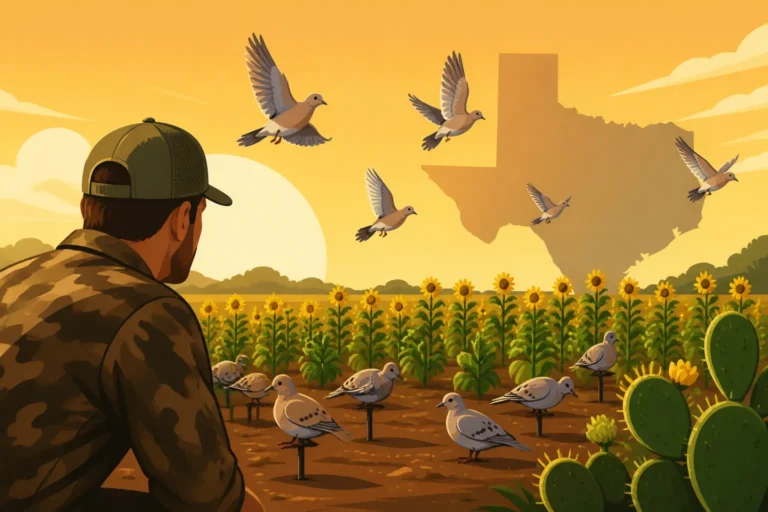
Decoys are your best friend for White-wings because of their social nature. While a single "Mojo" spinning-wing decoy is a staple for Mourning doves, White-wings respond even better to a "colony" look. Use several stationary decoys placed on fences or dead branches, and position your spinning-wing decoy in an open spot where the flash is visible from a long distance. White-wings will often veer off their flight path from hundreds of yards away just to investigate the movement. If you're setting up on a larger property, knowing How to Use Decoys for Dove Hunting will give you a significant advantage over hunters who just sit and wait.
Concealment is often overlooked in dove hunting because people think the birds aren't as wary as ducks. This is a mistake. White-winged doves have incredible eyesight. You don't need a full ghillie suit, but you do need to break up your silhouette. Wear camo that matches the parched, yellow-brown grass of a Texas September. If you are hunting in the Texas Dove Zones Map (North, Central, South), the vegetation can vary wildly, so adjust your patterns accordingly. Also, consider picking up a set of electronic ear protection on Amazon; it allows you to hear the distinctive "who-cooks-for-you" call of the White-wing before you see them, giving you those precious extra seconds to prepare.
For those hunting on a professional or private setup, having the right Best Gear for White-Winged Dove on a Texas Lease is essential. This often includes a high-quality cooler—which you can also find on Amazon—to ensure your birds stay cool immediately after harvest. The Texas heat can spoil meat quickly, and there is nothing worse than wasting a limit of the best-tasting wings in the state because of poor temperature management.
Shooting Mechanics and Field Etiquette
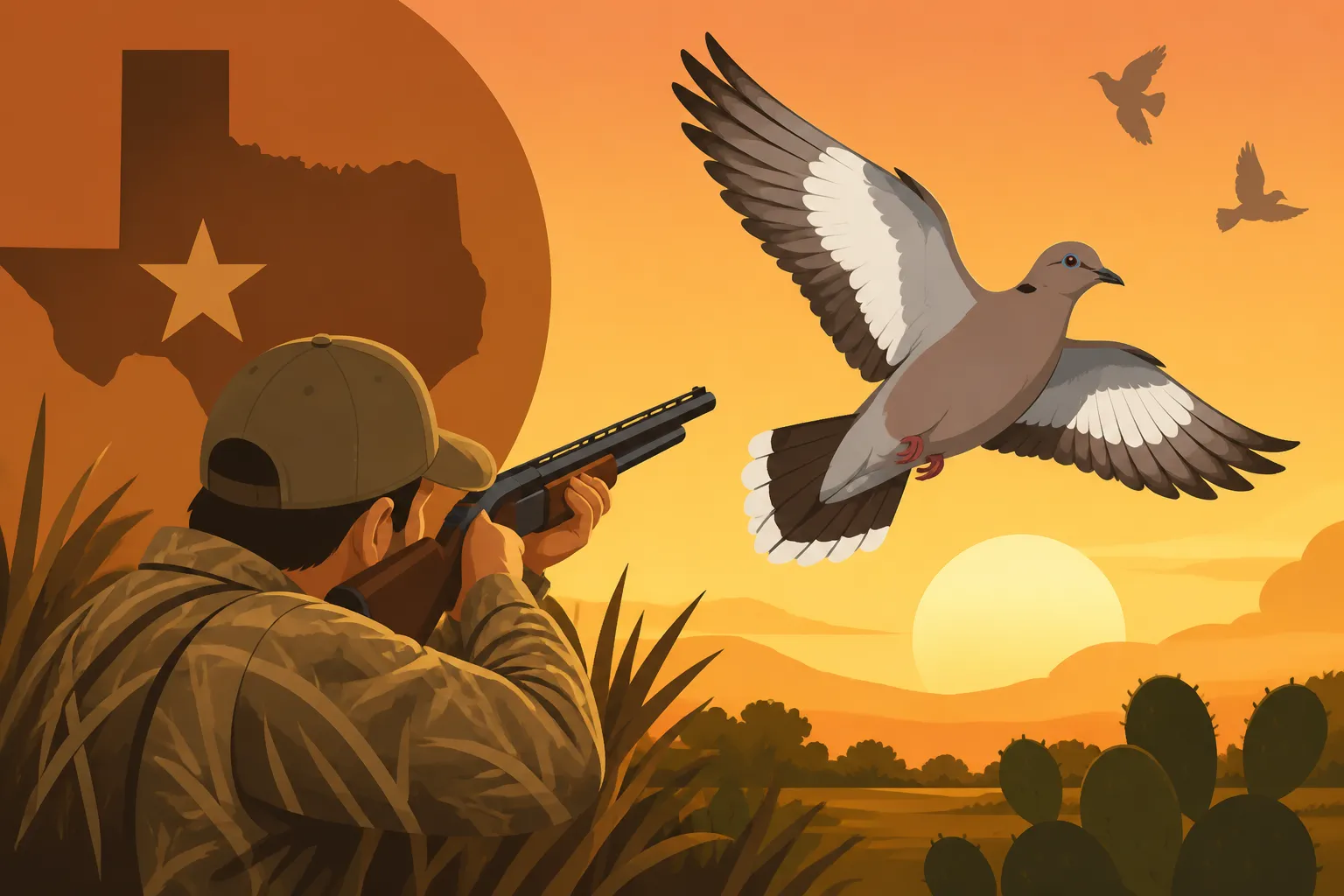
The actual act of shooting a White-wing requires a bit of a mental shift. Because they fly in a straighter line than Mourning doves, you can often use a "sustained lead" technique rather than the "pull-through" method. This means finding the bird, moving your barrel ahead of it, maintaining that gap, and firing. If you find yourself struggling to connect, you are likely either stopping your swing or failing to account for the bird's deceptive size. They are bigger targets, which makes them feel closer than they actually are. Trust your lead and keep the barrel moving even after you pull the trigger.
Shell selection is another area where hunters get into trouble. While #8 shot is standard for Mourning doves, I personally prefer #7.5 for White-wings. They are "tougher" birds with thicker feathers and a bit more body mass. A slightly heavier shot ensures a clean kill at the longer distances often required when hunting these high-flyers. If you are transitioning between species, it is helpful to review Mourning Dove Hunting Tactics for Texas to see how you might need to adjust your choke and shell choices if both species are present in the field.
Field etiquette is paramount, especially during the "Special White-winged Dove Days" in the South Zone. You will often be hunting in closer proximity to others than you would during a deer hunt. Never shoot at a "low bird"—anything below a 45-degree angle should be considered off-limits for safety reasons. Furthermore, always make a concerted effort to find every bird you drop. White-wings blend into the brush remarkably well once they hit the ground. Before you go out, make sure you have your Texas Migratory Bird Endorsement & HIP Certification in order, as game wardens are incredibly active during the opening weeks and will check for both your license and your harvest logs.
If you are looking for the best places to put these tactics to use, you might consider Best Areas for Dove Hunting in Texas or even looking into How to Hunt White-Winged Dove on a Texas Lease for a more controlled environment. Whether you are hunting the high plains or the brush country, the key to a successful White-wing season is observation, preparation, and the willingness to move when the birds dictate a change in the flight path.
Texas Hunting Disclaimer
Hunting regulations in Texas are subject to change by the Texas Parks and Wildlife Department (TPWD) at any time. This guide is for informational and educational purposes only and does not constitute legal advice. Always consult the current version of the Texas Outdoor Annual for the most up-to-date information on seasons, bag limits, and legal hunting methods before heading into the field. You are responsible for knowing the laws and boundaries of the land where you hunt.