What Is the Biggest Buck Ever Killed in Texas?
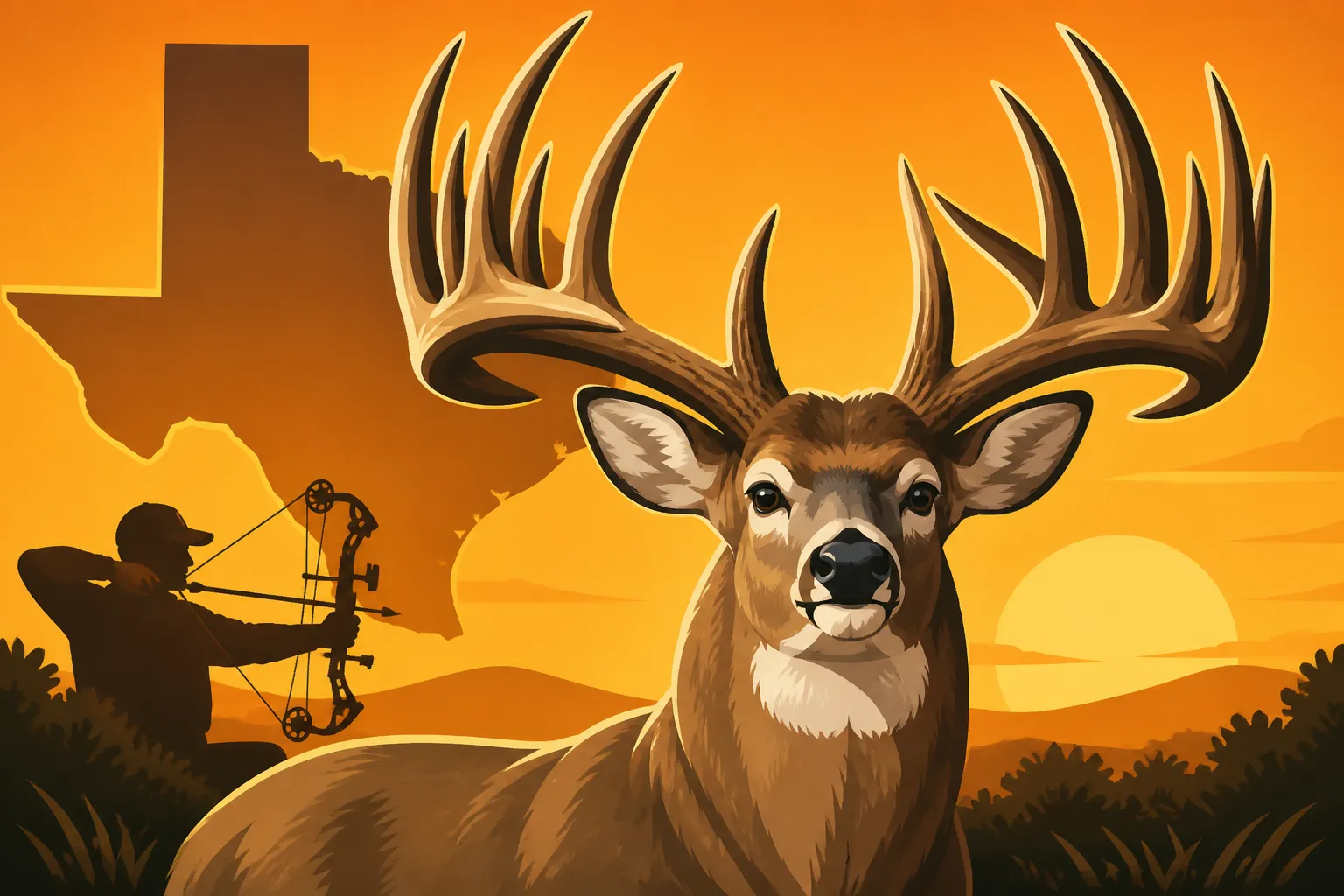
For many Texas hunters, the dream isn't just about putting venison in the freezer; it's about the legendary quest for a truly massive whitetail buck, a monarch of the brush country or the Hill Country that will be talked about for generations. It’s a goal that drives countless hours of scouting, habitat improvement, and careful planning. But when we talk about those once-in-a-lifetime encounters, one burning question often comes up: what is the biggest buck ever killed in Texas? This comprehensive guide will peel back the layers of these incredible stories, delve into the science of antler growth, and explore the dedication it takes to pursue such a magnificent animal in the Lone Star State.
The Legendary Texas Whitetail Records
Texas is a truly special place when it comes to whitetail deer. Our diverse ecosystems, from the dense South Texas brush to the rugged Hill Country and the fertile Post Oak Savannah, all produce incredible deer. But some stand head and shoulders above the rest, becoming the stuff of legend. When we talk about the "biggest buck," it's not always just about weight; it's almost exclusively about the antlers, which are meticulously measured and scored by organizations like the Boone & Crockett Club.
Distinguishing Typical and Non-Typical Antlers
Before we dive into specific giants, it's crucial to understand how antlers are categorized and scored. The Boone & Crockett Club, founded by Theodore Roosevelt, established a system to fairly compare antlers from different regions and time periods, focusing on a balance of size and symmetry.
- Typical Antlers: These are what most of us picture when we think of a classic whitetail rack. They have a defined main beam with points (tines) originating cleanly off that beam. The key here is symmetry. The scoring system heavily favors racks where the left and right sides are nearly mirror images. Any abnormal points (like kickers or drop tines that don't match on the other side) are deductions from the "gross" score to arrive at a "net" typical score. A truly symmetrical, tall-tined typical buck is a thing of beauty and often the most sought-after trophy for many hunters.
- Non-Typical Antlers: This category is for bucks that defy perfect symmetry. They might have numerous abnormal points, multiple drop tines, or wildly different configurations between the two sides. While symmetry is still considered, the scoring system for non-typicals adds all the abnormal points to the gross typical frame score, often leading to much higher overall scores. These bucks are often described as "freak" racks, displaying incredible genetic potential and environmental influences.
Both categories are equally impressive in their own right, but they represent different aesthetic ideals for hunters and different expressions of antler growth.
Texas's Most Famous Monster Bucks
Texas has produced some truly mind-boggling whitetail deer, both typical and non-typical. While the world record typical whitetail (Milo Hanson's buck from Saskatchewan) isn't from Texas, our state has several entries that consistently rank among the very best.
One of the most talked-about non-typical bucks from Texas is often referred to as the "Tucker Buck." Harvested in Zavala County in 1969 by Jeff Tucker, this buck boasted an incredible array of points and mass, officially scoring 272 5/8 inches as a non-typical. Imagine the sheer shock and awe of walking up on a deer with that much bone! It held the state record for many years and remains a benchmark for what South Texas can produce. The sheer number of points and the character of the rack make it an iconic symbol of Texas's big deer potential.
For a long time, the "Drummond Buck" was another legendary entry. Shot by Stephen Drummond in Hill County in 1991, this incredible typical scored 196 4/8 inches, showcasing near-perfect symmetry and impressive tine length. It perfectly illustrates the potential for massive, clean typical racks even outside of the traditionally famed brush country. Many hunters cherish the dream of a perfect typical rack, and this buck is a prime example of that ideal brought to life.
These bucks, and many others not quite at the top of the record book but still absolute giants, are often the result of several critical factors aligning perfectly over many years. They serve as a powerful reminder of the incredible wildlife resources we have in Texas and the stories that draw us back to the deer woods season after season.
Understanding Antler Growth and Management for Trophy Potential
Finding and harvesting a record-book buck isn't just about luck; it's a testament to good habitat, sound wildlife management, and the patience of hunters. These monster deer don't just appear overnight; they are the culmination of several key biological and environmental factors.
The "Big Three" Factors: Age, Genetics, and Nutrition
Think of antler growth as a tripod, with each leg being equally vital. If one leg is weak, the whole structure can collapse, or at least be significantly compromised.
- Age: This is arguably the most crucial factor for growing truly giant antlers. Whitetail bucks typically reach their peak antler development between 5.5 and 7.5 years old. Before this age, much of their energy is still dedicated to body growth. A 2.5-year-old buck might have 8 points, but a 5.5-year-old buck with the same genetics and nutrition will likely have significantly more mass, length, and spread. This is why antler restrictions, like the Texas Antler Restrictions: 13-Inch Rule & Counties, are so important in many areas; they allow younger bucks to survive and reach their full potential. Without older age classes, you simply won't have those truly giant racks.
- Genetics: Some deer simply have the genetic blueprint for larger antlers. Just like people, some deer are predisposed to be bigger, with thicker bones and more robust antler growth. While you can't change the wild deer's genetics directly, certain regions in Texas are known for producing larger-antlered deer due to generations of natural selection and a healthy gene pool. This is particularly true in areas like South Texas, where some of the biggest bucks often originate.
- Nutrition: Imagine trying to build a skyscraper without enough materials. It's the same for antlers. Deer need a consistent supply of high-quality forage throughout the year, especially during the antler-growing period from spring to late summer. This means plenty of protein, minerals (calcium, phosphorus), and vitamins. Relying solely on corn is rarely enough for truly superior antler growth. Many landowners use supplemental feeding with protein pellets, especially during dry periods, to boost overall herd health and maximize antler development. This is where practices like Protein Feeding Deer for Bigger Antlers and understanding Best Deer Feeder Setup for Texas become vital. A well-rounded diet supports overall health, which in turn supports maximum antler expression.
Impact of Habitat and Herd Management
Beyond the individual deer's age, genes, and diet, the broader environment and how the herd is managed play a massive role in growing big bucks.
- Quality Habitat: A diverse habitat that provides abundant food, water, and cover is essential. This means a mix of browse, forbs, mast crops, and good cover for bedding and security. Healthy habitat minimizes stress on deer, allowing them to allocate more energy to antler growth. Hunters often invest in Food Plots in Texas: What Works in the Heat to supplement natural forage, especially in areas with less diverse vegetation.
- Deer Density: An overpopulated deer herd can quickly deplete resources, leading to smaller body sizes and reduced antler quality. Managing deer density through appropriate harvest strategies ensures that the available resources can support healthy, thriving deer, allowing bucks to reach their genetic potential. This often involves harvesting a sufficient number of does to keep the herd in balance with the habitat.
- Selective Harvest: In many parts of Texas, hunters and landowners practice selective harvest, often passing on younger bucks to allow them to mature. Programs like the Managed Lands Deer Program (MLDP) offered by the Texas Parks and Wildlife Department encourage this approach by providing landowners with extended seasons and tailored bag limits based on their management goals. Learning about MLDP Tags in Texas: How They Work can show you how landowners actively work to produce bigger, healthier deer. For those serious about finding a monster buck, researching areas managed under such programs is a smart move. When evaluating potential leases, understanding the history of management is key. GoHunt, for example, is a platform that allows hunters to research and potentially connect with landowners or outfitters who prioritize this kind of intense, long-term management that results in larger animals.
The Scoring System: Boone & Crockett and Beyond
While the stories of colossal bucks are thrilling, the true measure of their "biggest" status comes down to the meticulous, standardized scoring systems established by organizations like the Boone & Crockett Club. These systems ensure that comparisons are fair and consistent across time and geography.
The Boone & Crockett Club Standards
The Boone & Crockett Club's scoring system is recognized as the gold standard for North American big game animals. It's a complex but precise method designed to measure the dimensions of antlers (or horns, skulls, etc.) to a fraction of an inch.
The basic components measured for a whitetail buck include:
- Main Beam Length: The length of each antler's main beam from its base to the tip.
- Number of Points: The total number of points on both antlers, including the main beam tips, provided they are at least one inch long.
- Length of Points: The length of each individual point (G1, G2, G3, etc.) measured from the upper side of the main beam.
- Circumference Measurements: The circumference of the main beam at several predetermined locations, adding to the "mass" of the antlers.
- Inside Spread Credit: The widest measurement between the main beams.
For typical antlers, symmetry is paramount. Measurements from each side are compared, and any differences between corresponding points or circumference measurements are deducted from the gross score. Additionally, any abnormal points are deducted entirely. The goal is to reward perfect symmetry and overall mass.
For non-typical antlers, the process starts similarly by measuring the typical frame. However, all abnormal points are then added to the gross typical score. There are still deductions for differences in the typical frame, but the emphasis shifts to the total amount of antler material present, regardless of symmetry. This is why non-typical scores can often be much higher, representing the incredible, often chaotic, proliferation of bone.
Here's a simplified look at the primary B&C scoring categories for whitetail deer:
| Category | Minimum Score (Net) | Description |
|---|---|---|
| Typical Whitetail | 170 | Emphasizes symmetry and main beam points, with deductions for abnormal points. |
| Non-Typical Whitetail | 195 | Accounts for irregular points and overall antler mass, with abnormal points added. |
Note: These are minimum entry scores for the all-time record book. There are often lower minimums for "Awards" categories.
The meticulous nature of these measurements means that an official scorer must be present, and the antlers must often undergo a 60-day drying period to account for any shrinkage. It's a serious process because once a buck is entered into the record book, it stands as a testament to its genetic potential, the habitat it lived in, and the hunter who harvested it.
Beyond the Tape Measure: The Hunt's Story
While achieving a Boone & Crockett score is an incredible accomplishment, the true value of any hunt often lies beyond the tape measure. The pursuit of a giant buck involves immense dedication, patience, and a deep connection to the land and the animal.
Think about the hours spent scouting before the season, pouring over maps on apps like GoHunt or even the old-fashioned way, walking the property. Imagine setting up trail cameras, hoping to capture a glimpse of that elusive, mature buck you've been chasing. Learning How to Pattern Bucks With Trail Cameras is a common strategy to try and understand their movements. Or the early mornings and late evenings spent in a blind or tree stand, enduring the Texas heat or a sudden cold front, all for that fleeting chance. Every hunt has a story, a narrative of effort, anticipation, and often, humility. Even if you don't harvest a record-book deer, the experience of a mature buck stepping into your shooting lane, the adrenaline rush, and the successful shot is a monumental achievement for any hunter. The friendships forged on a Hunting Leases in Texas: Complete Guide (Cost & How to Find) are just as valuable as any trophy.
The records are important, yes, but they don't capture the essence of what draws us to the woods: the challenge, the respect for the animal, the connection to nature, and the sheer joy of the chase. Using sophisticated mapping tools and data from platforms like GoHunt can certainly increase your odds by helping you find prime habitat and well-managed properties, but it's the personal journey that truly defines the hunt.
The Ongoing Quest for Texas Giants
The allure of a monster whitetail buck continues to drive hunters across Texas. With careful management, dedicated conservation efforts, and the relentless pursuit by passionate hunters, the state continues to produce world-class animals.
Where to Find Texas's Next Record Buck
Texas is a massive state with incredibly diverse ecosystems, and each region offers unique opportunities for big deer. While a monster buck can technically appear anywhere, certain regions are consistently known for producing the largest antlers.
- South Texas Brush Country: This legendary region, especially counties like Webb, La Salle, Dimmit, and Maverick, is synonymous with trophy whitetail. The dense, thorny brush provides incredible cover, and the nutrient-rich soils, combined with intense management, often yield bucks with heavy mass and wide spreads. If you're chasing truly massive typical or non-typical deer, the South Texas brush should be high on your list. Diving into articles like South Texas Trophy Whitetail: Brush Country Bucks can give you a deeper understanding of this prime hunting ground.
- Edwards Plateau: Known for having the highest deer density in Texas, the Hill Country within the Edwards Plateau also produces some impressive deer, particularly when proper management practices are in place. While the average antler size might be slightly smaller than South Texas, the sheer number of deer and the beautiful, rugged landscape make it a popular destination. Learning about Edwards Plateau Hunting: Highest Deer Density can show you the potential.
- Trans-Pecos and Panhandle: While more renowned for mule deer, pockets of the Trans-Pecos and certain areas of the Panhandle can produce excellent whitetail, often with impressive body size. These areas require different scouting tactics, often focusing on Spot-and-Stalk Hunting in Texas (Exotics & Mule Deer) due to the more open terrain.
Ultimately, the best places to find a record buck are often on well-managed private lands. Landowners who implement long-term strategies focusing on age structure, nutrition, and habitat improvement consistently produce bigger bucks. Many of these properties participate in programs like MLDP. Utilizing resources like GoHunt can provide insights into specific areas, historical harvest data, and even help connect hunters with outfitters or leases in these prime locations. A truly dedicated hunter will spend time learning How to Scout for Deer Before Season in Texas to identify these potential honey holes.
Ethical Hunting and Conservation for Future Generations
The pursuit of the biggest buck is deeply intertwined with a commitment to ethical hunting and wildlife conservation. Trophy hunting, when done responsibly, is not merely about taking a large animal; it's often a driving force behind habitat preservation, scientific research, and financial investment in wildlife management.
By respecting bag limits, adhering to Texas Hunting Seasons: Complete Calendar by Species, and understanding local regulations (like those affecting Texas Antlerless Deer Permits & Doe Days), hunters play a crucial role in maintaining healthy deer populations. The dollars generated from hunting licenses and tags directly fund conservation efforts across the state. This financial support helps Texas Parks and Wildlife Department manage public lands, conduct vital research on deer health and genetics, and educate the next generation of hunters.
The dream of harvesting a record-book buck is a powerful motivator, but it's a dream that must be balanced with a deep sense of responsibility to the resource. Every hunter, from the novice to the seasoned veteran, has a part to play in ensuring that Texas continues to be home to thriving deer populations and the potential for those legendary, once-in-a-lifetime encounters. It's about preserving the legacy of these magnificent animals for future generations, ensuring that the stories of giant Texas whitetails continue for centuries to come. Equipping yourself with the right tools, from a quality Best Rifle Scope for Texas Deer Hunting to a commitment to fair chase, helps secure this future.
Disclaimer
Please note that hunting regulations, seasons, and licensing requirements can change. Always consult the most current Texas Parks and Wildlife Department Outdoor Annual or their official website before planning any hunting activity. This guide is for informational purposes only and does not supersede official state regulations.