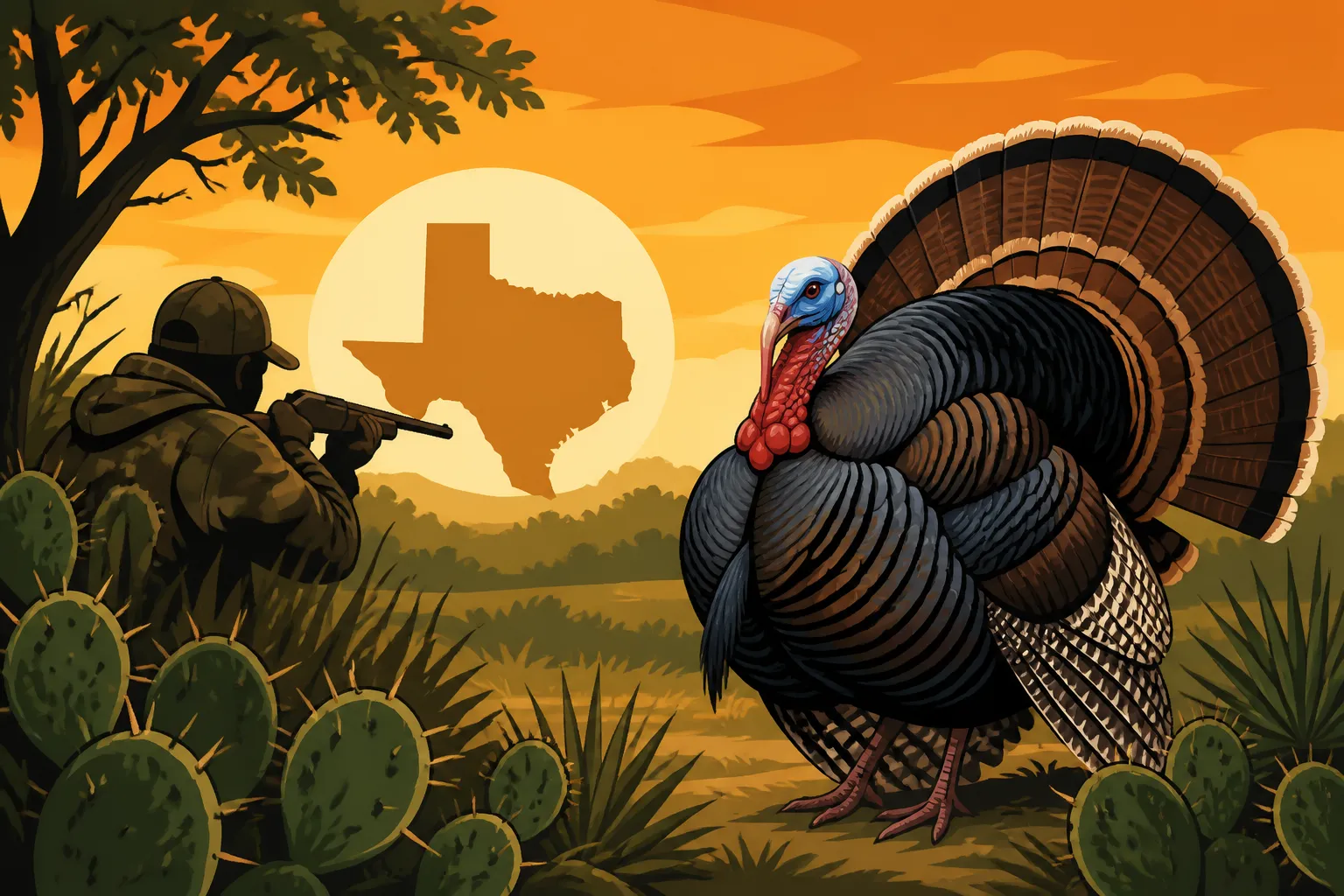
How to Hunt Rio Grande Turkey on a Texas Lease
Finding yourself on a sprawling Texas lease with the sun beginning to peak over the horizon is a dream for many, but the reality of hunting Rio Grande turkeys can quickly turn into a lesson in frustration. These birds are notorious for their nomadic nature, often traveling miles between their roosting sites and their daily feeding grounds. This guide solves the problem of "empty woods" by teaching you how to effectively scout, pattern, and call Rio Grandes specifically within the unique environment of a Texas hunting lease.
Understanding Rio Grande Behavior on a Texas Lease
When you are hunting a lease in Texas, you aren't just hunting a bird; you are hunting a specific piece of geography that the bird may or may not find hospitable. Unlike the Eastern turkey, which tends to stay in more confined timbered areas, the Rio Grande is a bird of the open brush and river bottoms. On a lease in the Hill Country or South Texas, these birds have a massive home range. Understanding their daily cycle is the first step toward a successful harvest.
Roosting Requirements and Habitat
Rio Grandes are extremely picky about where they sleep. In many parts of Texas, tall timber is a luxury. If your lease has a creek bed lined with old-growth Pecan trees, Cottonwoods, or massive Live Oaks, you likely have a roosting site. If your lease is mostly cedar (juniper) or low mesquite, the birds might be roosting on the neighbor's property and only visiting you for lunch.
I’ve spent many mornings on leases near Kerrville where the birds would roost in a single, solitary stand of trees near a water tank and then vanish into the cedar breaks the moment their feet hit the ground. To be successful, you must identify these roosts during the late winter or very early spring. If you can’t find the roost, you need to look for where the birds are heading. You can find more specific regional advice in our Rio Grande Turkey Hunting Tactics for Texas guide.
Water and Foraging Patterns
In the arid regions of Texas, water is the ultimate magnet. On a lease, this usually means cattle troughs, dirt tanks, or low-fenced creek access. Rio Grandes will hit water frequently, especially as the Texas spring heat begins to climb in late April. If you have a lease with multiple water sources, you have a strategic advantage.
Foraging is the second half of the equation. These birds love "edge" habitat. Think of the transition zone where thick brush meets an open pasture or a sendero. They are looking for tender green shoots, insects, and leftover seeds. If your lease has a supplemental feeding program for deer, the turkeys will absolutely take advantage of it. Understanding how these birds interact with existing infrastructure is a key part of How to Hunt Rio Grande Turkey in Texas (Step by Step).
Scouting Your Lease Before the Season Starts
One of the biggest mistakes lease hunters make is showing up on opening morning without having set foot on the property since deer season ended. The landscape changes drastically between January and March. The "green up" happens at different times depending on rainfall, and turkey patterns shift as the breeding season approaches.
Using Technology and Boots on the Ground
While nothing beats walking the creek bottoms to look for tracks and droppings, modern technology has changed the game for lease management. Using Best Cellular Trail Cameras for Texas (2027) allows you to monitor strut zones without spooking the birds. Place these cameras near water sources or along well-traveled senderos.
When you are on the ground, look for "dusting bowls." Turkeys will find spots with loose, dry soil to take dust baths to rid themselves of parasites. If you find a dusting bowl with fresh tracks and a few feathers, you’ve found a mid-day hotspot. This is where the birds spend their "loafing" time between the morning feed and the evening trek back to the roost.
Identifying Local Strut Zones
A strut zone is typically a flat, open area where a gobbler can be seen from a long distance by hens. On a Texas lease, this might be an old log landing, a wide spot in a ranch road, or a clear ridge top. Gobblers are vain; they want to be seen. If you find an area with a lot of "drag marks"—the thin lines left in the dirt by a gobbler’s wingtips as he struts—you have found his stage.
I remember a lease in Mason County where the gobblers would consistently use a specific limestone slab near a windmill. It wasn't the best place for them to find food, but it provided a 360-degree view of any approaching predators or interested hens. Identifying these stages is a critical component of Rio Grande Turkey Hunting Tactics for Texas.
Gear Essentials for Texas Turkey Hunting
Texas turkey hunting is a game of mobility and endurance. You might be crawling through prickly pear one minute and sitting perfectly still in 90-degree heat the next. Your gear needs to reflect the harshness of the environment while providing the finesse needed to fool a bird with eyesight that can detect the blink of an eye from sixty yards away.
Selecting the Right Calls
Rios are often more aggressive and "talkative" than their Eastern cousins, but that doesn't mean you should over-call. On a lease, these birds may have heard every bad box call in the county. I always recommend having a variety of tools in your vest. A good slate call is excellent for soft, realistic purrs and clucks when a bird is close, while a loud aluminum or glass call can "cut" through the Texas wind to reach a bird a half-mile away.
Mastering the rhythm is more important than the brand of the call. You want to sound like a hen that is interested but moving away, forcing the gobbler to close the distance. For a deeper dive into the sounds you should be making, check out How to Call Rio Grande Turkeys in Texas.
Camouflage and Decoy Strategies
The Texas "green up" can be deceptive. In the early season, the woods are still mostly grey and brown. By the end of the season, everything is vibrant green. Your camouflage needs to match the specific foliage on your lease. Furthermore, snake boots are not optional. Most Texas leases are home to Western Diamondback Rattlesnakes that become very active during the spring turkey season.
Decoys are a polarizing topic, but on a lease with wide-open spaces, they are often necessary to give a gobbler a visual reason to cross a large field. A "breeding pair" setup—a submissive hen with a jake decoy nearby—can often trigger a dominant gobbler’s territorial instincts. If you want to know what to pack in your vest, see our list of the Best Turkey Calls for Rio Grande Turkeys.
Hunting Tactics: Calling vs. Sitting
There are two schools of thought when it comes to hunting turkeys on a lease: the "Run and Gun" method and the "Ambusher" method. The best hunters are the ones who can fluidly switch between the two based on what the birds are doing that day.
The Art of the Morning Setup
The goal is to be within 100 yards of the roost before the sun comes up. However, on a Texas lease, this is easier said than done. The lack of thick understory in many areas means that if you get too close, the birds will see you from the roost as soon as the light breaks. It is often better to set up 200 yards away in a known travel corridor than to risk "bumping" them off the roost.
Once the birds fly down, the first thirty minutes are crucial. If the gobbler is with a group of hens, your chances of calling him away are slim. This is where your scouting pays off. If you know where those hens want to go to feed, you can be there waiting for them. Knowing the Texas Turkey Season 2026: Spring & Fall Zones will help you time your trips for when the birds are most active.
Dealing with "Henned Up" Gobblers
This is the most common frustration on a Texas lease. You hear a bird gobbling his head off, but he refuses to budge because he already has five hens standing right next to him. In this scenario, don't try to call the gobbler. Try to call the lead hen.
If you can mimic the lead hen’s calls but with a bit more "attitude," she may come over to investigate the "new girl" on the block. When she moves, the gobbler will follow. It takes patience and a thick skin, as hens can be quite rude with their vocalizations. This tactic is a hallmark of successful Texas Hunting Seasons: Complete Calendar by Species management.
Comparison Table: Texas Turkey Hunting Regions
| Region | Primary Habitat | Roosting Trees | Strategy Tip |
|---|---|---|---|
| Hill Country | Live Oak & Cedar | Pecan, Cypress, Oak | Hunt the draws and creek bottoms. |
| South Texas | Mesquite & Cactus | Hackberry, Large Mesquite | Use senderos for long-distance glassing. |
| Rolling Plains | Shinnery Oak & Grass | Cottonwood, Elms | Focus on water tanks and windmills. |
| Cross Timbers | Post Oak & Hickory | Oak, Hickory | Classic wood-lot calling tactics. |
Field Dressing and Processing Your Bird
Once the trigger is pulled, the work begins. The Texas heat is your biggest enemy. If you kill a bird at 10:00 AM and it’s already 85 degrees, you need to get that bird cooled down immediately. Many hunters prefer to skin their turkeys rather than pluck them, as it is faster and allows the meat to cool more quickly.
Make sure you are familiar with the Rio Grande Turkey Season & Bag Limit in Texas before you head out, as regulations can vary by county. Always keep your proof of sex (the beard or a leg with the spur attached) with the carcass until you reach your final destination. Processing your own bird is a rewarding end to a long lease hunt, and the meat of a wild Rio is some of the best table fare Texas has to offer.
Disclaimer
This guide is for informational purposes only. Hunting regulations in Texas are subject to change annually by the Texas Parks and Wildlife Department (TPWD). Always consult the current Texas Outdoor Annual for specific season dates, bag limits, and legal means of harvest for the county where your lease is located. Ensure you have a valid Texas hunting license with the appropriate migratory bird and upland game bird endorsements before heading into the field. Management of private lands and leases should always be conducted in accordance with local laws and with respect for property boundaries.