How to Report Your Harvest in Texas
Standing over a downed trophy in the thick South Texas brush is an exhilarating moment, but it is often immediately followed by a wave of "did I do this right?" anxiety. Between the nuances of physical tagging and the relatively new requirements for digital reporting, many hunters find themselves second-guessing the law while their phone signal flickers. This guide provides a clear, stress-free roadmap for navigating harvest reporting to ensure you stay legal and contribute to the state’s vital conservation data.
Understanding the Legal Requirements for Harvest Reporting
The transition from traditional paper tagging to a hybrid system involving digital reporting has created some confusion at campfires across the state. In the past, you simply notched your tag, attached it to the animal, and went about your business. While that still applies to many species, Texas Parks and Wildlife Department (TPWD) has expanded mandatory reporting for specific animals and regions to better manage populations. Understanding whether your specific harvest requires a digital report is the first step in avoiding a costly encounter with a game warden.
Mandatory vs Voluntary Reporting Species
For the 2026 season, mandatory reporting is non-negotiable for several key species. If you harvest an Eastern turkey, you are required by law to report it within 24 hours. This data is critical for biologists monitoring the restoration efforts of these birds in East Texas. Similarly, in many counties, whitetail deer harvested under certain permits or within specific management zones must be logged. You can find more details on these requirements in our guide on Texas Hunting Tags & Harvest Reporting (My Texas Hunt Harvest).
Voluntary reporting, on the other hand, is encouraged for species like feral hogs or predators. While you aren't legally bound to log every hog you take while Hog Hunting Methods in Texas: Thermal, Night & Trapping, doing so provides the state with a clearer picture of the invasive species' impact. Many hunters ignore voluntary reporting, but it actually helps shape future seasons and bag limits by showing where hunting pressure is highest.
Regional Variances and County Rules
Texas is a massive state with diverse ecosystems, and the reporting rules reflect that. A buck taken in the Panhandle might have different reporting triggers than one taken in the brush country. For example, specific counties have mandatory harvest reporting for all antlerless deer taken during certain season windows. If you are hunting in a county with strict antler regulations, such as those discussed in Texas Antler Restrictions: 13-Inch Rule & Counties, you must be extra vigilant.
The department uses these reports to track the success of the 13-inch rule and other management strategies. If you fail to report a harvest in a mandatory county, it’s treated the same as hunting without a license. Always double-check the What Counties Require Harvest Reporting in Texas? list before you head out to your lease, as these lists can change slightly from year to year based on population surveys.
Timeframes and Deadlines
The clock starts ticking the moment the animal is on the ground. For most mandatory reporting species, the window is 24 hours. This isn't just a suggestion; it's a legal deadline. The intent is to capture data while the details are fresh and to prevent "double dipping" or tag sharing. If you are participating in a special hunt, such as the Texas Drawn Hunts & Public Hunt Draw 2027, the reporting window might be even shorter or require an on-site check-in.
Waiting until you get back to the city to report your harvest is a risky gamble. If you are pulled over for a routine check and have a tagged animal but haven't completed a mandatory digital report (and you're outside the allowed timeframe), you could face a citation. It is always better to pull out your phone and handle the digital paperwork while you're still in the field, assuming you have the signal to do so.
Navigating the My Texas Hunt Harvest App
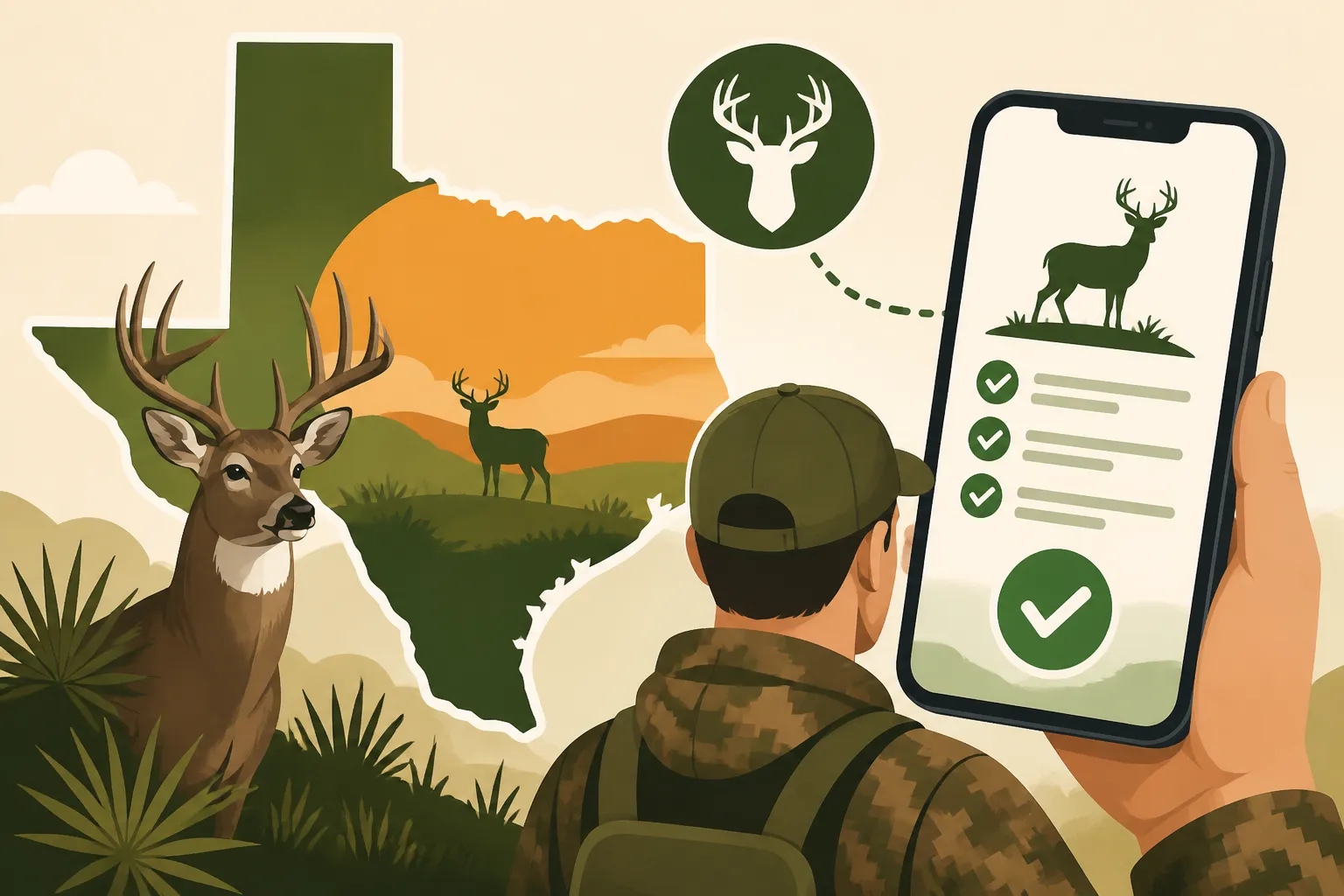
The primary tool for reporting in the modern era is the "My Texas Hunt Harvest" mobile app. It was designed to replace the need for mailing in harvest cards and to provide real-time data to biologists. While the app is generally user-friendly, it can be temperamental in the remote areas where we usually find ourselves hunting. Knowing how to navigate its features before you have blood on your hands is essential for a smooth experience.
Setting Up Your Profile for Success
Do not wait until you are in the woods to download the app and set up your profile. You need to link your current hunting license to the app using your Customer Number or your license's barcode. If you haven't secured your license yet, you should review Texas Hunting License: Cost, Types & How to Buy (2026) to ensure you have the correct endorsements for the species you’re chasing.
Once your license is linked, the app will automatically know which tags you have available. This prevents you from accidentally reporting a species you aren't licensed to hunt. Take a few minutes to walk through the menus at home. Familiarize yourself with where the "Report Harvest" button is and how the species selection works. If you are hunting as a family, make sure every hunter has the app set up on their own device or that the primary hunter has everyone's info logged.
Managing Reports in Offline Mode
One of the biggest frustrations hunters face is the lack of cell service in prime hunting spots. TPWD accounted for this by building an offline mode into the app. You can still complete your harvest report without a data connection. The app will save the report locally on your phone and timestamp it. As soon as your phone reaches a tower or connects to Wi-Fi, the app will automatically upload the data to the TPWD servers.
The critical part here is that the report is considered "filed" once it's saved in the app, even if it hasn't uploaded yet. This protects you if a game warden checks you in a dead zone. You can show them the saved report on your screen. However, for this to work, you must have logged into the app while you still had service so that your license data is cached. If you logout or get a new phone and don't sync it before heading to the Hill Country Hunting in Texas, you'll be stuck.
Common Troubleshooting Tips
If the app freezes or won't accept your report, don't panic. First, ensure you are using the latest version of the app. Updates often fix bugs related to new phone operating systems. If the app refuses to sync, try toggling your airplane mode to reset the connection. Another common issue is incorrect location data. The app likes to use your GPS to pinpoint the harvest location; if your GPS is struggling, you may need to manually select the county and property type.
If all else fails and you cannot get the app to work, you should document the harvest as best as possible. Take a photo of the animal with your physical tag attached and a timestamped photo of the app error. Then, attempt to report via the TPWD website as soon as you have a stable internet connection. Being proactive shows "good faith" to law enforcement, which goes a long way if there’s a technical glitch.
Digital Tagging vs Physical Tags
Texas has introduced a digital-only license option for many hunters, particularly those who buy the What Is the Texas Super Combo License?. This is a massive shift from the old "paper and string" days. With a digital license, you do not receive physical tags in the mail. Instead, your reporting is your tagging. This requires a different mindset and a very reliable smartphone.
How the Digital Tagging Process Works
When you harvest an animal with a digital license, you must report it immediately through the app. The app will provide you with a confirmation number. Legally, you must then write this confirmation number on a piece of durable material (like a piece of duct tape or a specialized plastic tag) and attach it to the animal, just as you would a traditional paper tag. This ensures that anyone who sees the carcass knows it has been officially logged.
This process is mandatory for all deer and turkey if you've opted for the digital license. You cannot simply kill the animal and drive home planning to report it later. The report is the tag. If you are Bowhunting in Texas: Archery Season Guide and decide to go digital, carry a permanent marker and some flagging tape in your pack specifically for this purpose. It’s a small addition to your gear that prevents a massive legal headache.
The Benefits of Staying with Paper Tags
Despite the convenience of digital, many veteran hunters prefer to stick with physical paper tags. There is a tactile reliability to paper that a smartphone can't match. If your battery dies or your phone falls in a creek while you're Field Dressing & Processing Game in Texas Heat, a paper tag still works perfectly. With paper tags, you notch the month and day, secure it to the ear or antler, and you are legally covered for transport.
If you use paper tags, you only need to use the digital reporting app if the species or county requires it. For most whitetail harvests in the state, the paper tag is sufficient. This "old school" method remains the most popular choice for those hunting in rugged areas like the Panhandle & Trans-Pecos Hunting in Texas where technology often fails. It provides a level of redundancy that many find comforting.
Avoiding Common Tagging and Reporting Mistakes
The most common mistake is failing to "double-up" when required. If you have a digital license and you harvest a buck in a mandatory reporting county, you must complete the digital tagging process. If you have a paper license and harvest in a mandatory county, you must notch the paper tag and file the digital report. One does not replace the other in that scenario.
Another frequent error is reporting the wrong species of turkey. Hunters often get confused between the rules for Turkey Calling & Tactics for Texas Rios and those for Eastern turkeys. Remember: Eastern turkeys always require a report; Rio Grandes only require it in specific counties. Always consult the Texas Spring Turkey Season Zones & Dates to be certain of the rules for your specific hunting grounds.
Reporting and Chronic Wasting Disease Zones
Chronic Wasting Disease (CWD) has fundamentally changed how we report and transport deer in Texas. If you are hunting in a designated CWD zone, your reporting requirements are much stricter and often involve physical interaction with TPWD staff or drop boxes. This isn't just about data; it’s about stopping the spread of a disease that threatens the future of the sport.
Mandatory Testing and Reporting in CWD Zones
In CWD zones, reporting your harvest is only the first step. You are often required to bring the head of your deer to a designated check station within a specific timeframe (usually 48 hours). This allows biologists to take a tissue sample for testing. Failure to do so is a major violation. These zones are clearly marked in the CWD Zones in Texas: Map & Restrictions guide.
The digital app will often alert you if you are reporting a harvest from within a CWD zone. It may provide directions to the nearest check station or instructions for using a 24-hour drop box. Even if you are just passing through a CWD zone with a deer harvested elsewhere, you must be aware of the carcass movement restrictions. You can learn more about these logistics in CWD in Texas: Zones, Rules & Carcass Transport.
Locating Check Stations and Drop Boxes
TPWD maintains both staffed check stations and self-service drop boxes. Staffed stations are great because you get to talk to a biologist, get an age estimate on your deer, and ensure all your paperwork is perfect. However, they have limited hours. Self-service drop boxes are available 24/7 but require you to accurately fill out a tag and secure it to the head before placing it in the bin.
Before you go out, use the app or the TPWD website to find the check stations nearest to your lease. If you're hunting in a remote area, like a South Texas Hunting Lease Cost & Options property, the drive to a check station could be over an hour. Factor this time into your post-hunt plans. It’s part of the responsibility that comes with hunting in these sensitive areas.
Impact of CWD Reporting on Conservation
While it might seem like a chore, this reporting and testing are the only ways we have to manage CWD. The data collected from your harvest helps biologists map the prevalence of the disease and decide where to implement or lift restrictions. It’s a direct way for hunters to act as citizen scientists. By participating fully in the reporting process, you are helping to ensure that the next generation can enjoy Mule Deer Hunting Tactics for Texas without the shadow of a population collapse.
| Species | Reporting Type | Timeframe | Requirement |
|---|---|---|---|
| Eastern Turkey | Mandatory (Digital) | 24 Hours | All Counties |
| Rio Grande Turkey | Mandatory (Digital) | 24 Hours | Specific Counties Only |
| Whitetail Deer | Mandatory (Digital) | 24 Hours | Antlerless in specific counties / Digital License holders |
| Mule Deer | Mandatory (Digital) | 24 Hours | Digital License holders / Specific Zones |
| Feral Hog | Voluntary | N/A | Highly Encouraged |
| Alligator | Mandatory (Physical/Digital) | 72 Hours | Core and Non-Core Counties |
Steps to Take Immediately After the Harvest
The moments following a successful shot are usually a blur of excitement and hard work. However, establishing a routine for your paperwork will ensure you never forget a step. Whether you are a beginner or a veteran, following a checklist prevents the kind of simple mistakes that game wardens see every day.
- Safety First: Ensure the animal is expired and your firearm or bow is made safe.
- Check the App: Open the My Texas Hunt Harvest app immediately. Even if you don't have service, start the report while the location and time are fresh.
- Physical Tagging: If you use paper tags, notch the date and month immediately. Secure it to the animal. If you are using a digital license, write your confirmation number on your DIY tag and attach it.
- Evidence of Sex: Keep the evidence of sex attached to the carcass as required by law until you reach your final destination or a processing facility. This is a common point of contention during roadside checks.
- CWD Preparation: If you are in a CWD zone, prepare the head for transport to a check station. Make sure you don't cross zone lines with restricted carcass parts. For more on handling game in the field, check out How to Field Dress a Deer in Hot Weather.
By following these steps, you transition from "hunter" to "steward." Reporting your harvest isn't just about following the law; it's about providing the data that keeps Texas one of the premier hunting destinations in the world. Whether you're chasing bucks in the Post Oak Savannah Hunting Lease Cost & Options or calling birds in the spring, your report is your voice in the management of our state's wildlife.
Disclaimer
This guide is intended for informational purposes only and does not constitute legal advice. Hunting regulations in Texas are subject to change by the Texas Parks and Wildlife Department at any time. Always consult the most current version of the Texas Outdoor Annual and official TPWD communications before heading into the field to ensure you are in compliance with the latest laws, bag limits, and reporting requirements for the 2026-2027 season.