How to Read the Texas Outdoor Annual
For many Texas hunters, especially those new to the game or venturing into a new region, the Texas Outdoor Annual can feel like trying to decipher an ancient scroll. It's packed with crucial information, but navigating its dense pages to find clear answers about seasons, bag limits, and specific regulations often leads to frustration and a fear of unknowingly breaking a rule. This guide is here to demystify the process, breaking down how to effectively read and understand this essential publication, ensuring you can hunt confidently and legally.
Why the Texas Outdoor Annual Can Feel Like a Mystery Novel
Let's be honest, the Texas Parks and Wildlife Department (TPWD) Outdoor Annual isn't exactly light reading. It's a comprehensive document, legally binding, and designed to cover every single permutation of hunting and fishing regulations across a vast and diverse state. It's a lot to take in, and it's easy to feel overwhelmed before you even get past the table of contents.
The Sheer Volume of Information
The annual covers everything from white-tailed deer and feral hogs to ducks, doves, turkeys, and even alligator hunting. Then it breaks down regulations by specific zones – North, Central, and South for migratory birds, and distinct deer zones for white-tailed deer. Add to that public hunting lands, drawn hunts, exotic species, and a myriad of general rules, and you’re looking at hundreds of pages. It’s not just a quick flick-through; it requires dedicated attention to detail. Many hunters wish it was simpler, but the complexity of Texas's wildlife and diverse ecosystems necessitates this level of detail.
Think about trying to find the specific deer season dates for your county in the South Texas Plains, factoring in archery season, general season, and special late season, plus antler restrictions. It's not a single line item; it's a web of interconnected rules that can vary county by county. Even seasoned hunters find themselves double-checking key sections year after year.
Decoding the Legalese and Jargon
Government documents often come with their own language, and the Outdoor Annual is no exception. Terms like "antlerless deer," "archery-only season," "means and methods," and "Chronic Wasting Disease (CWD) zones" are commonplace. If you're new to hunting, or even just new to Texas regulations, these terms can be confusing. For instance, understanding what constitutes a "legal buck" under the Texas Antler Restrictions: 13-Inch Rule & Counties can be a mental workout if you're not used to interpreting the specific definitions provided.
The annual also uses abbreviations and references to various state laws and codes, which can feel like it's written more for lawyers than for hunters just trying to enjoy their time outdoors. You're not alone if you've stared at a paragraph for five minutes, re-reading it multiple times, still unsure of its exact meaning. The key is to slow down, break down each sentence, and pay close attention to the definitions provided in the glossary.
The Ever-Changing Nature of Regulations
One of the biggest frustrations is that regulations aren't static. What was legal last year might have changed for the upcoming season. Bag limits can shift, seasons might be adjusted slightly, and CWD zones or special provisions can be added or updated annually. This means you can't just rely on your memory or a copy from a few years ago. Every new season requires a fresh look at the most current Outdoor Annual.
For example, the Texas Deer Season 2026-2027: Dates by Zone can see minor tweaks, and new counties might be added to specific regulations, like those concerning antler restrictions or mandatory harvest reporting. It’s a dynamic document that demands annual review to ensure you're always up-to-date and compliant.
Your Step-by-Step Guide to Navigating the Annual
Approaching the Texas Outdoor Annual with a strategy, rather than just randomly flipping pages, will save you a lot of time and potential headaches. Think of it as a treasure map, where the treasure is legal clarity.
Understanding the Layout and Key Sections
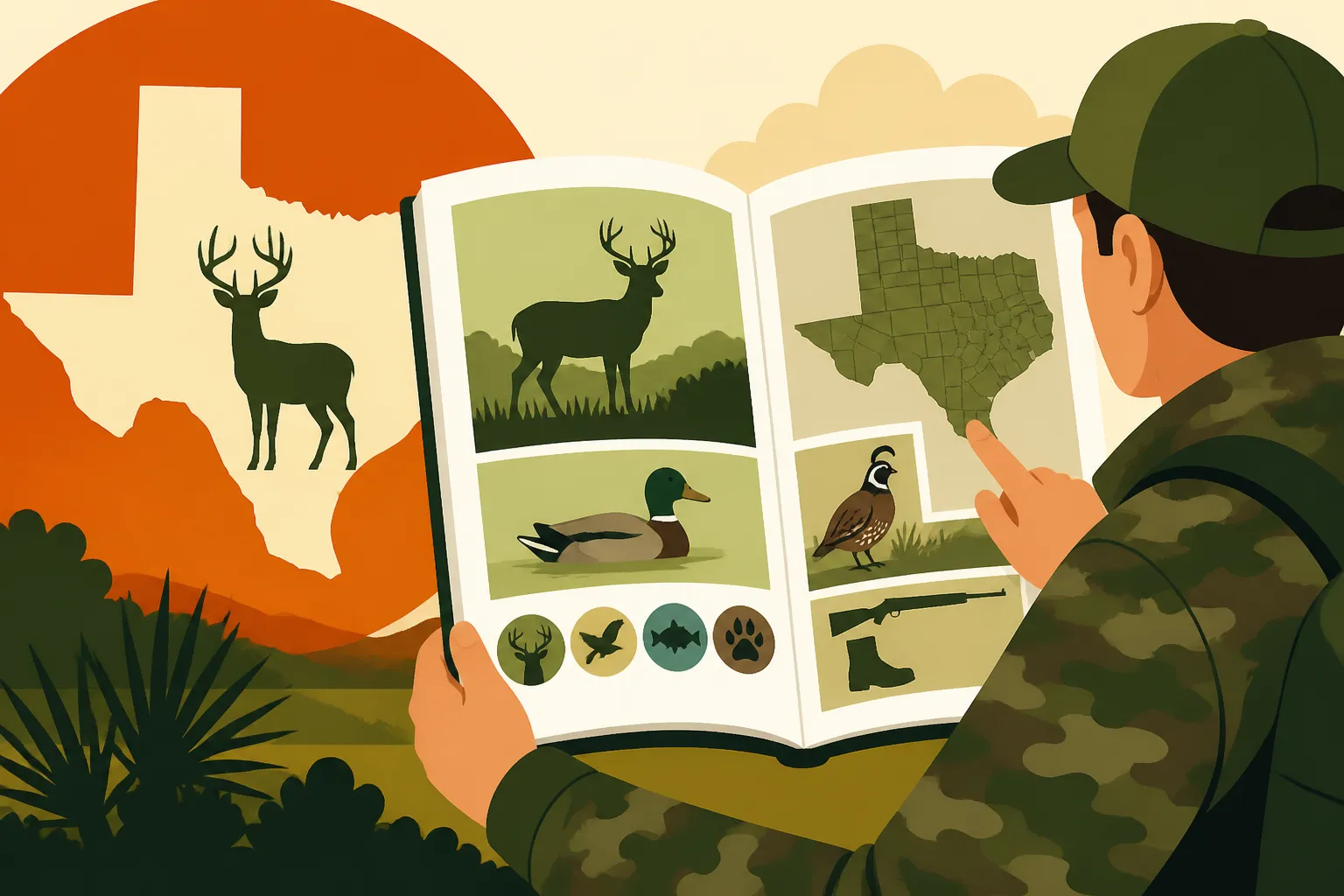
The first thing to do is get familiar with the overall structure. Don't dive straight into your specific species. Take a moment to scan the Table of Contents. You'll generally find sections broken down like this:
- General Information: This usually covers statewide regulations, license requirements (like how to buy your Texas Hunting License: Cost, Types & How to Buy (2026)), hunter education requirements, public hunting information, and important definitions. Never skip this section! It contains foundational rules that apply to all hunting.
- Hunting Regulations: This is the bulk of it, typically organized by game animal categories:
- Deer: White-tailed and Mule Deer.
- Turkey: Rio Grande and Eastern Turkey.
- Migratory Game Birds: Doves, Ducks, Geese, Sandhill Cranes, etc.
- Upland Game Birds: Quail, Pheasant.
- Small Game: Squirrels, Rabbits.
- Furbearers & Predators: Coyotes, Bobcats, Foxes.
- Non-Game & Exotic Species: Feral Hogs, Javelina, Axis Deer, Aoudad, etc.
- County Listings: This crucial section often lists regulations by county, which can supersede or add to the general statewide rules for specific species.
- Special Provisions/Programs: This includes information on things like the Managed Lands Deer Program (MLDP) or CWD in Texas: Zones, Rules & Carcass Transport.
A good habit is to start with the general regulations, then move to your target species, and finally check the county-specific rules where you plan to hunt.
Locating Specific Species Regulations
Once you have a handle on the layout, you can drill down. Let's say you're hunting white-tailed deer. You'd go to the "Deer" section. Here's where the regional breakdowns come into play. Texas is vast, so deer regulations are often divided by zones like the North, South, and Central Texas deer zones, as explained in articles like Texas Deer Zones: North vs South Explained.
Within each species section, you'll typically find:
- Season Dates: When you can legally hunt. For instance, understanding the Texas Hunting Seasons: Complete Calendar by Species is essential.
- Bag Limits: How many animals you can harvest per day or per season.
- Legal Means and Methods: What weapons (e.g., archery, firearm, muzzleloader) are allowed during different seasons.
- Special Requirements: Any additional tags, permits, or reporting requirements.
Always use the most current Outdoor Annual, which is published annually, typically in late summer, just before dove season kicks off.
Interpreting Zones, Dates, and Bag Limits
This is where many hunters get tripped up. Texas's zone system is designed to manage diverse wildlife populations across the state.
- Zones: For deer, you'll see specific maps detailing the various zones, often with county lines dictating boundaries. For migratory birds, there are distinct North, Central, and South Dove Zones, as detailed in the Texas Dove Zones Map (North, Central, South). It’s vital to know which zone your hunting location falls into, as seasons and bag limits can differ drastically. A hunter in the North Zone for dove season will have different dates than one in the South Zone, and missing this detail could lead to a violation.
- Dates: Pay close attention to the specific dates, including opening and closing days, and if they apply to weekdays only, weekends only, or both. Some seasons have early periods for specific weapon types, like Texas Archery Season Dates, followed by general season. Also, note any "youth-only" or "special late" seasons.
- Bag Limits: This is usually presented as a daily bag limit (how many you can shoot in one day) and a possession limit (how many you can legally have in your possession at any given time, including those already processed). The annual will also specify antler restrictions, such as the minimum main beam spread or number of points on a buck, which can vary by county. For example, the rules regarding the Texas Antler Restrictions: 13-Inch Rule & Counties are often detailed here.
Let's look at a common example for dove hunting:
| Category | North Zone (Example) | Central Zone (Example) | South Zone (Example) |
|---|---|---|---|
| Early Season Dates | Sep 1 – Nov 12 | Sep 1 – Oct 31 | Sep 14 – Oct 31 |
| Late Season Dates | Dec 17 – Jan 1 | Dec 20 – Jan 14 | Dec 14 – Jan 21 |
| Daily Bag Limit | 15 doves in aggregate | 15 doves in aggregate | 15 doves in aggregate |
| Possession Limit | 45 doves | 45 doves | 45 doves |
Note: These dates are hypothetical and change annually. Always refer to the current Texas Outdoor Annual.
This table highlights why knowing your zone for Texas Dove Season 2026: Zones & Dates is critical; while the bag limit might be consistent, the dates can vary significantly.
Special Provisions and Exceptions
The Outdoor Annual isn't just about general seasons; it also covers specific situations that can affect your hunting.
- Managed Lands Deer Program (MLDP): If you hunt on property enrolled in the MLDP, you’ll find that the regulations outlined in the annual might be superseded by specific harvest recommendations and tags provided through the MLDP. Understanding MLDP Tags in Texas: How They Work is vital if you participate in this program, as your tagging requirements and season dates can be unique.
- Chronic Wasting Disease (CWD) Zones: These are areas where CWD has been detected, leading to special rules for carcass movement, testing, and sometimes even feeding. The annual provides maps and detailed regulations for CWD in Texas: Zones, Rules & Carcass Transport, which is paramount for hunters in those affected areas to prevent further spread. Ignoring these rules can lead to serious penalties.
- Public Hunting Lands and Drawn Hunts: The annual will have sections dedicated to hunting on public lands, including Wildlife Management Areas (WMAs). These areas often have highly specific regulations that differ from general statewide rules, and some opportunities require participation in the Texas Drawn Hunts & Public Hunt Draw 2027 system.
Essential Tips for Staying Compliant and Informed
Mastering the Outdoor Annual isn't a one-time task; it's an ongoing commitment to staying informed.
Digital vs. Physical Annual: Pros and Cons
In our digital age, you have choices! The TPWD offers a full digital version of the Outdoor Annual, often accessible through their website or dedicated apps.
- Digital Annual (Website/App):
- Pros: Always up-to-date (updates can be pushed quickly), searchable, convenient on your phone or tablet in the field. Many hunters find the search function invaluable for quickly checking a specific rule. The Texas Parks and Wildlife app is a great tool for this.
- Cons: Requires a device and battery power, potentially limited cell service in remote hunting areas.
- Physical Annual (Printed Booklet):
- Pros: No battery needed, durable (if cared for), easy to dog-ear pages or highlight key regulations for your specific area. Available for free at most license vendors.
- Cons: Can get lost or damaged, may not reflect the absolute latest changes if an amendment is made after printing (though this is rare for major season dates).
Many savvy hunters carry both—a physical copy for reliable reference and the digital version for quick searches and to ensure they have the very latest version on hand.
Cross-Referencing with TPWD Website and Apps
While the printed annual is authoritative, the official TPWD website (tpwd.texas.gov) and their mobile apps are excellent supplementary resources. The website often features news releases about regulation changes, interactive maps, and further explanations of complex rules. For example, if you're looking up Texas Duck & Waterfowl Season 2026: Zones, the website might have an interactive map that's easier to use than the static map in the booklet.
The "My Texas Hunt Harvest" system, which is part of the TPWD online portal, is where you'll typically report mandatory harvests, further integrating digital tools into your hunting experience. Learning how to use tools like Texas Hunting Tags & Harvest Reporting (My Texas Hunt Harvest) becomes part of staying informed. Always use official TPWD sources for verification. Forums and social media can offer insights, but only official TPWD channels provide the definitive word.
When in Doubt, Call Your Game Warden
This is perhaps the most important piece of advice. If you read a regulation multiple times and still aren't absolutely sure what it means for your specific hunting scenario, do not guess. Reach out to the local game warden for the county where you'll be hunting. Their contact information is often listed within the Outdoor Annual or easily found on the TPWD website.
Game wardens are there to enforce the law, yes, but they are also a fantastic resource for clarification. They would much rather answer a question beforehand than deal with a violation after the fact. Don't be shy; a quick, polite phone call can save you a heap of trouble and ensure you’re hunting ethically and legally. This also applies to understanding complex rules like those for Texas Turkey Season 2026: Spring & Fall Zones or specific exotic species regulations.
Reading the Texas Outdoor Annual might never be as thrilling as stalking a big buck, but it's an indispensable part of being a responsible and successful Texas hunter. Take your time, understand its structure, and use all the resources available to you. Happy hunting!
Disclaimer
Please remember that hunting regulations can change. While this guide aims to provide accurate and helpful information based on the typical structure and content of the Texas Outdoor Annual, it is not a substitute for the official, current publication. Always consult the most recent Texas Parks and Wildlife Department Outdoor Annual and any supplementary county-specific regulations or updates before you hunt to ensure full compliance with all state laws.