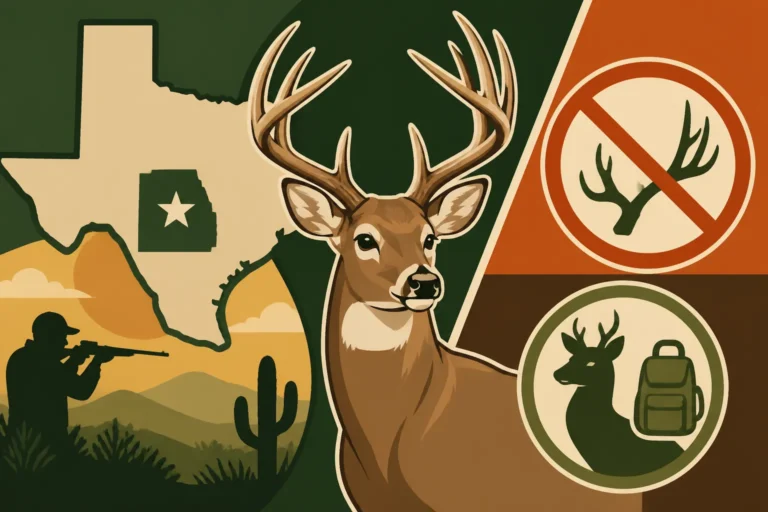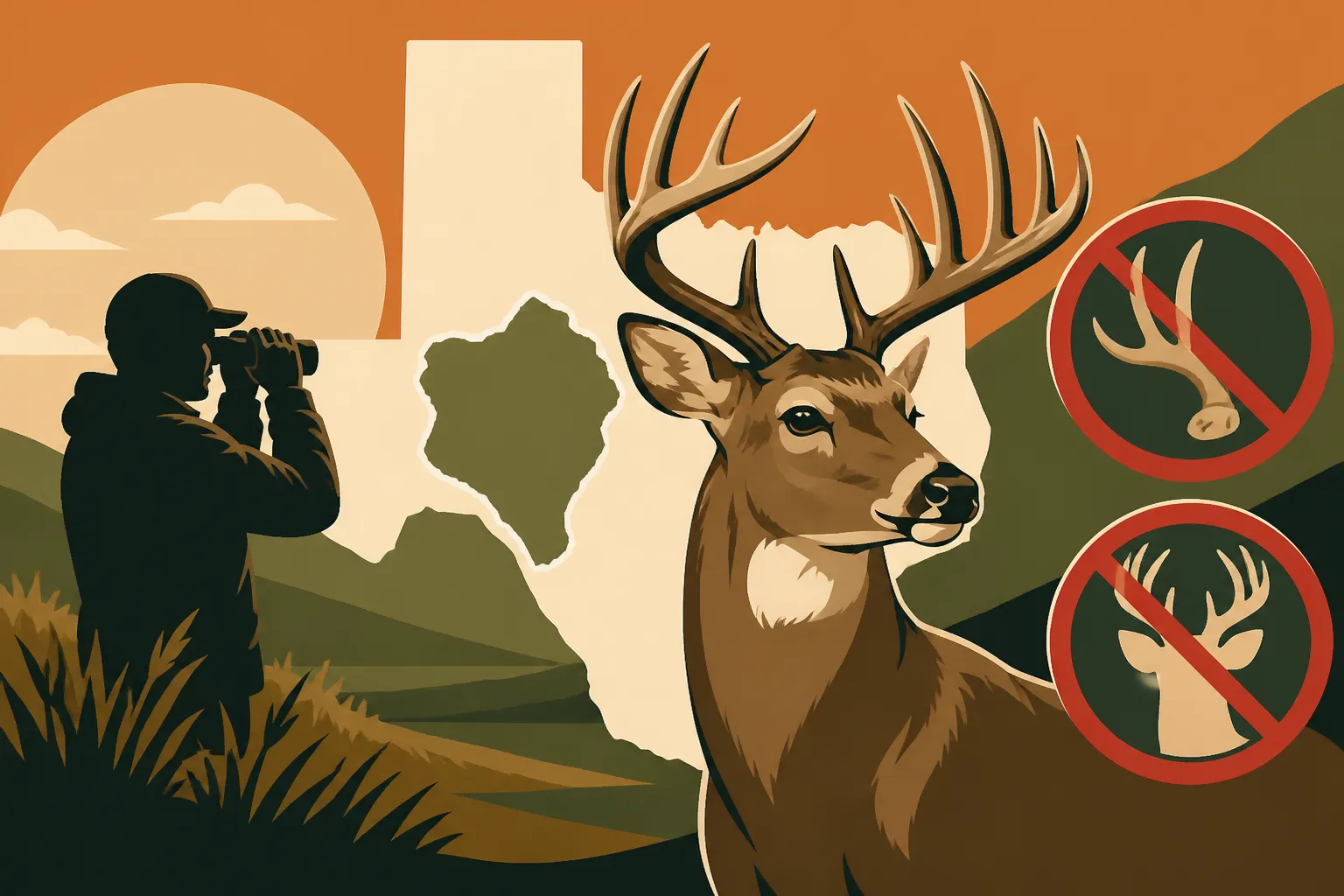
Kimble County Antler Restriction & Bag Limit
Sitting in a box blind surrounded by dense cedar brush near Junction, watching a tense Hill Country buck step out at twilight, brings an unmistakable rush paired with an agonizing question: is that inside spread wide enough? Navigating the local game laws in Kimble County can leave even seasoned hunters second-guessing their target before squeezing the trigger. This comprehensive guide clarifies the exact county antler restrictions, seasonal bag limits, and practical field-judging techniques to keep your harvest legal and successful.
Understanding White-Tailed Deer Antler Restrictions in Kimble County
Kimble County sits squarely in the heart of the Edwards Plateau, a region famous for high deer densities, rugged limestone hills, and endless stretches of live oak and Ashe juniper. Because deer populations here are dense, wildlife management strategies rely heavily on antler restrictions to protect younger bucks and allow them to reach maturity. If you are hunting anywhere near Junction, Telegraph, or Roosevelt, understanding how these rules apply in the field is essential to avoid costly mistakes.
The primary goal of these regulations is to ensure that bucks reach at least three and a half years of age before being harvested. In the past, high hunting pressure led to an over-harvest of young, prospective trophy bucks, skewing the herd’s age structure and adult sex ratios. The implementation of modern antler restrictions has transformed Hill Country Deer Hunting in Texas, allowing bucks to reach better age classes while still offering plenty of opportunity for meat hunters and land managers alike.
The 13-Inch Inside Spread Rule Explained
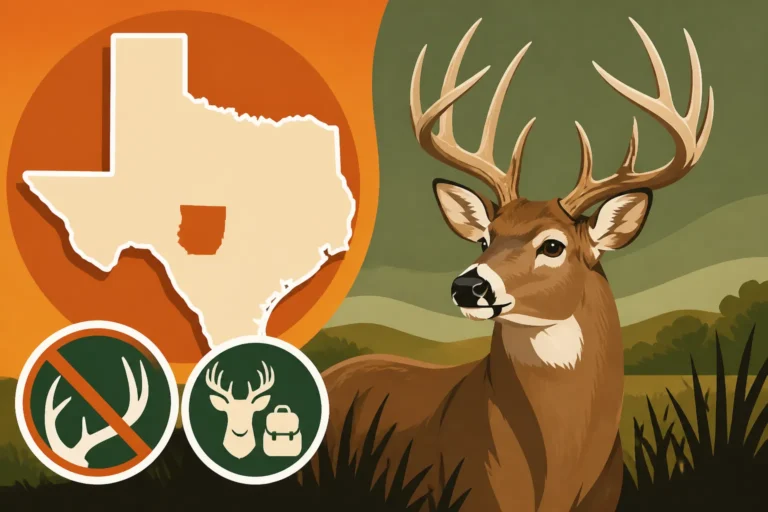
In Kimble County, a legal buck must meet specific antler criteria before you take a shot. The cornerstone of this regulation is the minimum 13-inch inside spread requirement. To be considered a legal antlered buck under this rule, the main beams must have an inside distance of at least 13 inches at their widest point.
Visualizing 13 inches through a pair of binoculars at a hundred yards in low light is notoriously difficult. Fortunately, nature provides a reliable built-in measuring tape on the deer itself. On an adult Texas white-tailed buck, the tip-to-tip distance between the ears when fully alert and focused forward measures right at 13 inches. If the inside edges of the main beams extend beyond the outer edges of the ears in that alert position, the buck is almost certainly legal.
However, the inside spread rule is not the only path to legally harvesting a buck in Kimble County. The regulations also allow for the harvest of bucks with at least one unbranched antler. An unbranched antler is defined as a main beam that has no points coming off it that are one inch or longer. This includes true spikes as well as older, degraded bucks that may have developed a smooth, single main beam on one side due to genetics or past injury.
Understanding this distinction is vital when evaluating your options in the field. When hunters ask, Is My Buck Legal Under Texas Antler Restrictions?, the answer hinges entirely on whether the deer meets either the 13-inch inside spread rule or possesses at least one unbranched antler.
DO NOT USE ASCII ART FOR TABLES! (System prompt restriction)
Must use standard GFM pipe tables.
| Buck Classification | Antler Criteria Required | Key Field Identification Marker | Legal for Harvest? |
|---|---|---|---|
| Legal Spread Buck | Inside spread equal to or greater than 13 inches | Beam width clearly extends past ear tips when alert | Yes |
| Unbranched Antler Buck | At least one main beam with no points 1 inch or longer | Smooth single beam or spike on at least one side | Yes |
| Immature Branch-Antlered Buck | Inside spread under 13 inches, points on both beams | Beams fall inside or flush with ears; multiple points | No |
| Spike | Two unbranched main beams | Smooth single spikes on both sides | Yes |
Field Judging Bucks in Kimble County Cedar and Live Oak Cover
Field judging a buck in the rocky, thick terrain of Kimble County requires patience and proper technique. The country surrounding the North and South Llano Rivers is choked with heavy cover, meaning you rarely get a ten-minute window to stare at a relaxed deer. Bucks often step out of the brush, take a few mouthfuls of corn or acorns, and melt back into the thickets.
To judge inside spread quickly, wait for the buck to turn its head directly toward your blind or position. When the buck drops its ears into a wide, horizontal position, judging spread becomes nearly impossible and leads to optical illusions. You must wait for the animal to alert on something—a bird, a noise, or another deer—bringing its ears up into a forward, attentive posture.
If the main beams curve inward dramatically at the tips, be extremely cautious. A buck might have a wide base spread near the skull, but if the beams pinch inward, the widest inside point might fall just short of the magic 13-inch mark. In these scenarios, it helps to look at the relationship between the main beams and the eyes. On an adult buck, the distance from eye to eye is roughly 8 to 9 inches, giving you another baseline for comparison when analyzing narrow frame structures.
Taking time to master these visual cues is part of learning How to Field Judge a 13-Inch Buck effectively. Never rush a shot on a borderline buck, especially during the early morning or late afternoon when low light distorts depth perception and antler mass.
Bag Limits and Tagging Requirements for Kimble County Hunters
Beyond individual antler criteria, hunters must carefully manage their overall seasonal harvest limits. Kimble County has specific bag limits governing how many white-tailed deer you can take during a single hunting season, as well as strict rules regarding how those deer are tagged and logged.
Violating bag limits or improperly filling out your log can lead to hefty penalties, confiscation of game, and the loss of hunting privileges. Understanding the framework of the local regulations keeps your freezer full while maintaining total legal compliance throughout the autumn and winter months.
Breakdown of Buck and Antlerless Limits
The annual bag limit for white-tailed deer in Kimble County is five deer total, with a strict maximum of two bucks. However, you cannot simply harvest any two bucks you encounter. To prevent the over-harvest of mid-tier age classes, Texas game laws mandate that if you harvest two bucks in Kimble County, at least one of those bucks must have an unbranched antler.
This means you are legally allowed to harvest:
* One buck with an inside spread of 13 inches or greater, and one buck with at least one unbranched antler; OR
* Two bucks that both feature at least one unbranched antler.
You cannot legally harvest two bucks that both feature branched antlers with inside spreads of 13 inches or wider in Kimble County. This rule ensures that hunters harvest spikes or degraded cull bucks alongside mature trophy animals rather than taking two prospective breeding bucks out of the local gene pool in a single season.
The remaining allocation of your five-deer total bag limit consists of antlerless deer (does and button bucks). Antlerless harvest regulations can vary depending on whether you are hunting during the general season, archery season, or special late seasons, as well as whether your land is enrolled in managed land conservation programs. Always review the broad framework of Texas Antler Restrictions: 13-Inch Rule & Counties to verify how county-wide rules align with state guidelines.
Proper Tagging, Log Completion, and Harvest Reporting
The moment a buck or doe is down on the ground in Kimble County, your legal responsibilities shift from field identification to paperwork. Before the deer is moved, dragged, or loaded onto a UTV, you must cut out the appropriate tag from your paper hunting license or complete the digital tagging process if you are utilizing the state’s digital license option.
If using a traditional paper license, use a pen to carefully notch the exact date and month of the harvest on the tag. Attach the tag securely to the animal—typically around the base of the antler for bucks or through the hock tendon on the rear leg for does. Additionally, you must complete the deer log printed on the back of your paper license before moving the carcass.
Managing game in the Hill Country climate poses environmental challenges as well. Kimble County temperatures often soar into the 80s even during November. Knowing How to Field Dress & Processing Game in Texas Heat ensures that your hard-earned meat does not spoil while you complete your harvest log and transport the deer back to camp.
If you hit the trail late in the day and need to cool the carcass down immediately to preserve venison quality, knowing How to Cool a Deer Fast in Texas Heat becomes as important as putting a clean shot on the animal.
Tactical Advice for Meeting Harvest Goals in Kimble County Terrain
Harvesting a mature, legal buck in Kimble County requires a tactical approach adapted to the local topography and vegetation. The mix of brush, open oak draws, and steep limestone bluffs creates micro-habitats that influence deer movement, especially once hunting pressure heats up in mid-November.
Feeder Placement and Sightlines in the Hill Country
Feeding corn and protein is standard practice throughout Kimble County, but blind placement dictates whether you get a clean, relaxed look at a buck’s antlers or just a fleeting glimpse of a tail disappearing into the brush.
When setting up your hunting station, position your feeder in an area that offers long, clear sightlines from multiple angles. Dense cedar thickets provide security cover, but if a feeder sits directly inside heavy brush, deer will pop out, eat, and step back into cover before you can properly evaluate ear-width ratios.
Clear shooting lanes that extend at least 50 to 80 yards out from the feeder into surrounding oak mottes or creek bottoms. This forces bucks to cross open ground where you can get a clear side and front view of their head gear. For detailed guidance on maximizing your stand setup, review Where to Place a Deer Feeder for Best Results.
Wind direction is equally critical along the Llano River corridor. Thermal drafts pull air down off the high limestone divides into the river valleys during the early morning and late evening. Set your blinds downwind of primary bedding areas, taking these terrain-driven wind shifts into account so bucks do not scent-check your feeder setup from the security of thick cedar cover.
Trail Camera Strategies for Pre-Season Aging and Sizing
One of the most effective ways to avoid split-second field judging mistakes during the season is to build an extensive trail camera library during late summer and early autumn. By cataloging the local buck population before opening day, you eliminate the guesswork when a known buck steps into your feeder lane.
Mount trail cameras along high-traffic fence crossings, water troughs, and protein feeder sites throughout August and September. Position cameras facing north or south to avoid direct sunlight washed-out photos that blur antler points and main beams.
When analyzing trail camera photos:
1. Measure the spread relative to the ear placement in high-resolution, head-on shots.
2. Note specific biological markers, such as abnormal points, unique brow tines, or distinct beam curvatures.
3. Keep an updated digital photo album on your phone so you can quickly cross-reference a buck in your scope with known trail camera captures.
Learning How to Pattern Bucks With Trail Cameras allows you to identify which bucks clearly clear the 13-inch mark long before you ever step foot into your box blind.
DO NOT USE ASCII ART FOR TABLES! (System prompt restriction)
Must use standard GFM pipe tables.
| Hunting Phase | Primary Focus Area | Recommended Gear / Strategy | Goal |
|---|---|---|---|
| Pre-Season (Aug – Sept) | Water points, protein stations | High-resolution trail cameras | Inventory local bucks & judge spread early |
| Early Season (Oct – Nov) | Oak mottes, natural browse drops | Glassing from elevated blinds | Spot legal bucks before rutting movements start |
| Peak Rut (Late Nov – Dec) | Pinch points, thick cedar draws | Rattling horns & grunt calls | Intercept cruising bucks searching for does |
| Late Season (Dec – Jan) | High-energy corn & feed sites | Cold weather stands over feed lanes | Fill remaining doe tags & target surviving culls |
Navigating Leases and Public Opportunities in Kimble County
Finding a place to hunt in Kimble County generally involves securing a private land lease, booking a guided day hunt, or entering state drawn hunt programs. Because private land dominates the Hill Country, land access arrangements dictate how intensely a specific piece of property is managed.
If you are entering into a new hunting agreement, check out Hill Country Hunting Lease Cost & Options to understand typical pricing structures, acreage requirements, and lease rules common to the area. Many landowners establish supplemental ranch rules that are stricter than state regulations—such as requiring bucks to be four or five years old regardless of inside spread—so always clarify ranch expectations before signing a contract.
If you plan on hunting multiple regions across the state or simply want to review how many deer tags you have available on your license for the season, consult How Many Deer Tags Do You Get in Texas? to ensure your tags are accounted for before heading out to camp.
By honoring Kimble County’s antler restrictions, maintaining precise record-keeping, and preparing your equipment for the rugged Hill Country terrain, you ensure a safe, legal, and rewarding hunting experience in one of Texas’s most classic outdoor destinations.
Disclaimer
This article is for general informational purposes only and does not constitute professional advice. Laws, prices and regulations vary by location and change over time. Consult a qualified professional for guidance on your specific situation.