White-Winged vs Mourning Dove in Texas
If you've spent any time hunting doves in Texas, you've likely encountered the delightful challenge of distinguishing between the ubiquitous Mourning Dove and the increasingly common White-Winged Dove. It's a common frustration, especially when the birds are zipping by at breakneck speeds, and a wrong identification can lead to legal issues or a missed opportunity at a limit. This guide aims to clear up that confusion, offering a detailed comparison of these two beloved Texas game birds, helping you confidently identify them both on the wing and in hand.
The Iconic Mourning Dove: Texas’s Most Widespread Bird
The Mourning Dove, with its distinctive mournful coo, is arguably the most recognized dove species across North America, and certainly in Texas. These birds are true survivors, adapting to a vast array of habitats, and their presence is a reliable sign that dove season is just around the corner. They’re often the first birds many hunters learn to pursue, providing fast-paced action and a delicious meal.
Identifying Features and Distinguishing Marks
When you think of a “dove,” chances are you’re picturing a Mourning Dove. They typically present a slender, graceful profile, measuring around 10-13 inches in length with a wingspan of about 17-19 inches. Their plumage is a soft, muted grayish-brown across the back and wings, fading to a lighter, almost buffy-tan on the belly. One of their most consistent identifiers is the small, iridescent patch of purplish-pink feathers on the sides of their neck, though this can be subtle and depends on the light.
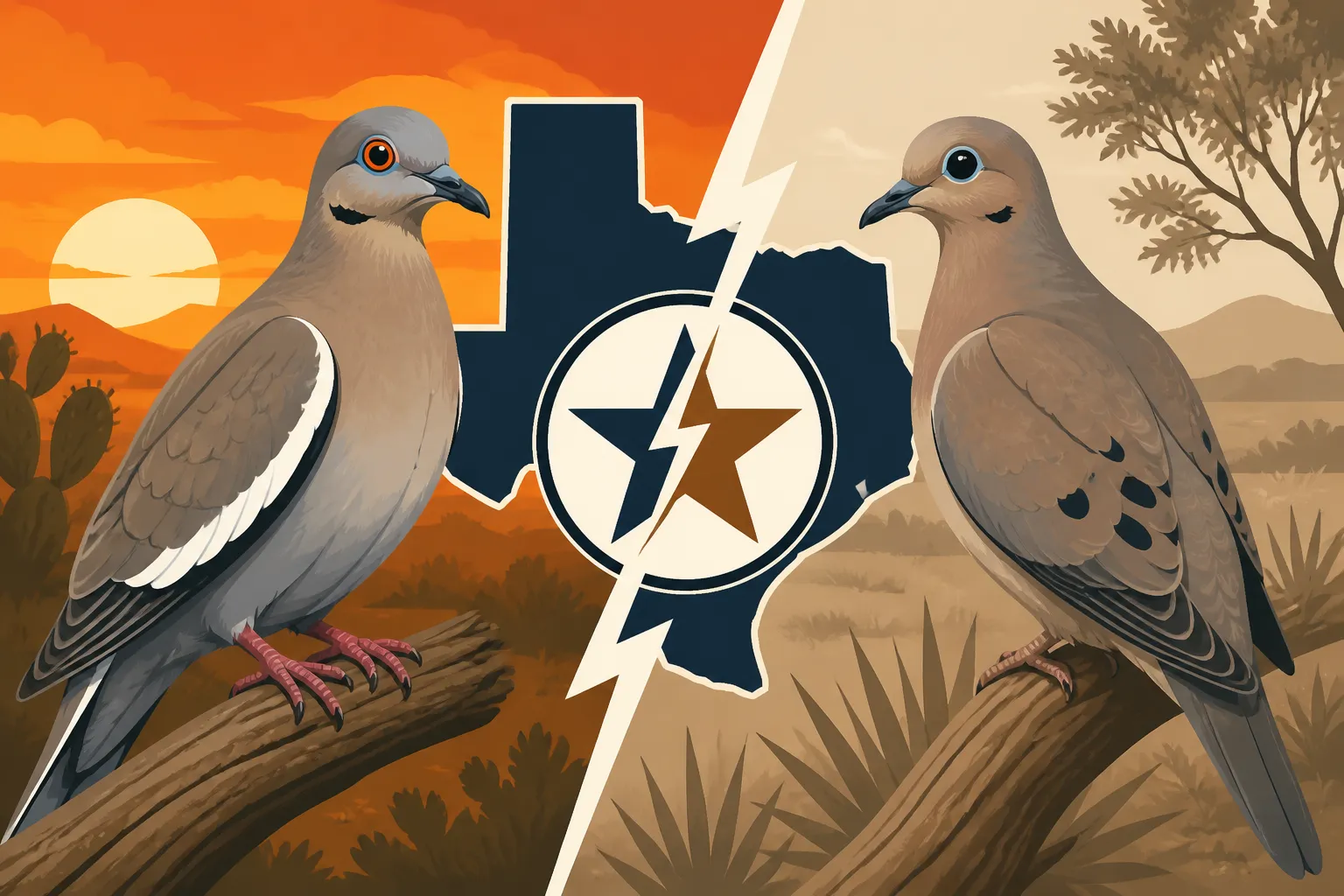
Look closely, and you'll also notice a small, black spot just below the eye, which can be quite pronounced. Their tails are long and pointed, a crucial characteristic for in-flight identification. When they fly, you'll see white tips on the outer tail feathers, creating a clear border against the darker central tail. This white edging is a classic Mourning Dove hallmark, visible as they flare their tails for landing or banking turns. Their legs are a reddish-pink, and their beaks are short and dark. Young birds might appear a bit duller, with some light scaling on their feathers, but the overall shape and tail markings remain consistent.
Habitat and Preferred Environments
Mourning Doves are incredibly versatile when it comes to habitat, which is a major reason for their widespread distribution throughout Texas. They aren’t picky. You’ll find them thriving in a mosaic of environments, from wide-open agricultural fields of sunflowers, milo, and wheat to suburban backyards, sparse woodlands, and even desert scrublands. They particularly love areas with a mix of short-cropped vegetation for feeding and taller trees or power lines for perching and resting.
They are grain eaters, primarily feasting on seeds from grasses, weeds, and cultivated crops. This reliance on seeds means that finding a good Mourning Dove hunt often involves scouting recently harvested fields. They need readily available water sources, so tanks, ponds, rivers, and even cattle troughs will draw them in, especially during the hot Texas afternoons. You'll frequently see them congregating in large numbers at these communal water holes, offering fantastic shooting opportunities. Their ability to adapt to almost any landscape, from the High Plains to the Gulf Coast, makes them a consistent presence across all Texas Dove Zones Map (North, Central, South).
Flight Patterns and Behavior
The flight of a Mourning Dove is nothing short of exhilarating for a hunter. They are known for their incredibly swift, erratic, and agile flight patterns. When flushed, they explode into the air with a characteristic whistling sound from their wings – a sound every dove hunter knows well. Their flight path is often straight for a short burst, followed by quick changes in direction, sharp dips, and sudden climbs, making them a true challenge to hit.
They often fly in smaller groups or pairs, though larger flocks can be seen migrating or concentrating around prime food and water sources. When approaching a field, they tend to fly lower to the ground, often hugging tree lines or fence rows before pitching down quickly. Their long, pointed tail acts almost like a rudder, aiding in their acrobatic maneuvers. Observing their flight behavior is key to understanding how to position yourself for the best shots. They typically feed actively in the early morning and late afternoon, flying from roosting areas to feeding grounds and then to water. Understanding these daily movements is a core component of successful Dove Hunting Tactics: Field Setup & Shooting.
The Resilient White-Winged Dove: A Texas Success Story
The White-Winged Dove, once primarily associated with the deep brush country of South Texas, has truly expanded its range across the state and beyond, becoming a common sight even in metropolitan areas like San Antonio, Austin, and Dallas. Their booming population is a testament to their adaptability, and they now provide fantastic hunting opportunities in many regions where they were once rare.
Key Visual Identifiers
White-Winged Doves are generally a bit larger and stockier than their Mourning Dove cousins, typically measuring 11-12 inches in length with a wingspan that can stretch up to 20 inches. Their overall body color is a pale grayish-brown, often with a slightly more bluish or purplish tint on the head and neck. While they also have a faint iridescent patch, it’s often overshadowed by their most striking and reliable field mark: the prominent white patch on the outer edge of their wings.
This bright white patch, which extends from the bend of the wing, is incredibly distinct and is easily visible both when the bird is perched and, more importantly, when it's in flight. As they beat their wings, this white crescent flashes, providing an unmistakable signal. Their tail is shorter and more rounded than the Mourning Dove's, lacking the pointed central feathers and the distinct white tips. Instead, the tail is generally dark with a thin, whitish band at the very end. They have a bright blue eye ring that stands out, and their legs are red, just like the Mourning Dove. This combination of a chunkier body, bright white wing patches, and a shorter, rounded tail with a thin white band are the go-to identifiers.
Habitat Shift and Urban Adaptation
Historically, White-Winged Doves were primarily birds of the dense, thorny brushlands of South Texas and Mexico, particularly favoring areas with mesquite, huisache, and prickly pear. They still thrive in these traditional environments, but their story of adaptation is remarkable. In recent decades, White-Wings have made a significant move into urban and suburban environments. They’ve discovered that city parks, tree-lined neighborhoods, and even backyard bird feeders offer abundant food, water, and nesting sites, often with fewer natural predators than rural areas.
This urban migration means that hunters often find them on the outskirts of towns and cities, feeding on everything from agricultural grains to berries, ornamental seeds, and even backyard birdseed. They still frequent traditional agricultural fields, especially those planted with sunflowers or milo, but their comfort with human proximity sets them apart. This adaptability has not only increased their numbers but also expanded the geographic range of White-Winged Dove Hunting Tactics for Texas dramatically, making them accessible to more hunters.
Flight Characteristics and Flocking Habits
White-Winged Doves generally have a more direct and powerful flight than Mourning Doves. While still fast, their flight path tends to be straighter and less erratic. The prominent white wing patch, as mentioned, is their signature in the air, flashing distinctly with each wingbeat. They tend to fly higher than Mourning Doves when traveling between roosts, feeding areas, and water, often maintaining a more consistent altitude.
They are very social birds and frequently fly in larger, more cohesive flocks, especially when moving between different areas. You might see several dozen White-Wings approaching a field or waterhole together, offering opportunities for multiple birds with a well-placed shot. When they decide to pitch down into a field, they often do so with less hesitation than Mourning Doves, making a more direct descent. This distinction in flight behavior, coupled with their visual cues, is crucial for distinguishing them during a fast-paced hunt.
Key Differences on the Wing and in Hand: What to Look For
While both species offer fantastic hunting, knowing how to tell them apart is essential for staying within regulations and for appreciating the unique characteristics of each bird. It’s not just about compliance; it’s about becoming a more informed and skilled hunter.
Size, Shape, and Wing Patterns
The most reliable visual distinction, both in flight and in hand, comes down to size and wing patterns. As we discussed, White-Winged Doves are generally stockier and slightly larger overall. But the real giveaway is on the wing. The Mourning Dove’s wing will appear uniformly grayish-brown, perhaps with some subtle darker spots on the coverts, but no prominent white patch. Its long, pointed tail with white outer tips is the key.
In stark contrast, the White-Winged Dove proudly displays that striking white crescent on its wing. This bright band against the darker body is like a neon sign in the sky once you know what to look for. Their tail, while dark, will be shorter and more rounded, often with a thin white terminal band instead of the distinct white tips of the Mourning Dove. Imagine two birds flying past: one with a slender body and a long, pointed tail showing white tips, the other with a fuller body and a strong white band on the wing.
Here's a quick comparison table:
| Feature | Mourning Dove | White-Winged Dove |
|---|---|---|
| Size/Build | Slender, graceful, typically smaller (10-13") | Stockier, slightly larger (11-12") |
| Wing Markings | Uniform grayish-brown, no prominent white | Distinct white crescent on outer wing |
| Tail | Long, pointed, white outer tail tips | Shorter, more rounded, thin white terminal band |
| Eye Ring | Subtle, dark | Prominent blue eye ring |
| Neck Patch | Subtle iridescent purplish-pink | Faint iridescent, less prominent than wing mark |
| Flight Sound | Distinctive wing whistle | Less pronounced wing whistle |
Vocalizations and Sounds
While seeing them in flight is one thing, sometimes your ears can provide crucial clues. The names themselves are a hint! The Mourning Dove is famous for its sad, drawn-out “coo-OOO-woo-woo-woo” call. It’s a soft, melancholic sound that carries well, especially in the quiet hours of dawn and dusk. When flushed, they also produce that distinctive, almost musical whistling sound from their wings. This wing whistle is unique and immediately identifiable.
The White-Winged Dove, on the other hand, has a much different, more raucous vocalization. Their call is often described as a series of hooting or cooing sounds that can sound like "who cooks for you, who cooks for you-all." It's more of a rapid, guttural sound, often repeated. While they also have a wing sound, it's generally less pronounced and lacks the distinct whistle of the Mourning Dove. Listening carefully from your Box Blind vs Tripod vs Ground Blind in Texas or position in the field can sometimes give you an early heads-up on which species is approaching.
Dietary Preferences and Feeding Habits
Both doves are primarily granivores, meaning they eat seeds, but there can be subtle differences in their preferred forage and how they feed. Mourning Doves are true generalists, consuming a wide variety of weed seeds like croton, sunflower, ragweed, and various grasses, alongside cultivated grains such as wheat, milo, and corn. They tend to feed on the ground, picking up seeds from open, disturbed areas, often concentrating in fields that have been recently harvested or disked. They’re typically quite active in these open areas.
White-Winged Doves also love cultivated grains like sunflowers, milo, and corn, but they have a broader diet that includes more fruits and berries. They're known to consume berries from hackberry, mesquite, and even grapes. Their increasing presence in urban areas is partly due to their willingness to forage on ornamental seeds and backyard birdseed. They can be a bit more arboreal in their feeding, sometimes plucking seeds or fruits directly from plants, though they will also feed extensively on the ground. Understanding these preferences can guide your scouting efforts. If you're looking for Food Plots in Texas: What Works in the Heat, remember that sunflowers and milo are excellent choices for both species.
Hunting Regulations and Bag Limits in Texas
Navigating Texas dove regulations can feel like cracking a code sometimes, with its different zones and specific limits. But it’s absolutely crucial to understand the rules for both Mourning and White-Winged Doves to have a legal and ethical hunt.
Understanding Zone-Specific Rules
Texas is divided into three primary dove hunting zones: North, Central, and South. Each zone has distinct season opening and closing dates, as well as separate daily bag and possession limits. It’s not uncommon for the White-Winged Dove season to have a special, earlier opening in the South Zone, particularly, due to their higher populations there. These special early White-Winged Dove seasons are often short, occurring over a couple of weekends before the general dove season opens across all zones. This unique aspect underscores the importance of proper identification, as shooting a Mourning Dove during a White-Winged-only special season is illegal.
Always consult the most current Texas Dove Season 2026: Zones & Dates in the Texas Parks and Wildlife Department's (TPWD) Outdoor Annual. Pay close attention to the specific dates for each zone and any species-specific regulations. These rules can change from year to year, so relying on old information is a surefire way to run into trouble. Knowing your zone and the rules for that specific zone is paramount for any dove hunter in Texas.
Legal Shooting Hours and Equipment
General shooting hours for doves in Texas are typically from one-half hour before sunrise to sunset. However, always double-check the current Outdoor Annual for any deviations, as regulations can occasionally be updated. This full day of hunting offers ample opportunities, but it also means hunters need to be aware of the changing light conditions, especially at dawn and dusk, when identification can be more challenging.
When it comes to equipment, doves are fast, so a scattergun is your friend. Most hunters opt for 12 or 20-gauge shotguns, with lighter loads like 7 1/2 or 8 shot being common. Lead shot is still legal for doves across most of Texas, unlike waterfowl hunting where non-toxic shot is mandatory. However, some public hunting lands or specific areas may require non-toxic shot, so again, always check local regulations. You also need a valid Texas hunting license with a migratory game bird endorsement and HIP certification. You can learn more about securing these in the Texas Hunting License: Cost, Types & How to Buy (2026) guide. Remember, plugs are required for shotguns, limiting them to a total capacity of three shells.
The Importance of Accurate Identification
This is where the rubber meets the road. Texas regulations often differentiate between Mourning and White-Winged Doves within the aggregate bag limit. For example, a common daily bag limit might be 15 doves, *to include no more than two White-Winged Doves during the special early White-Winged season*. During the general season, the aggregate limit might be 15, with no more than 10 of those being White-Winged Doves. These numbers are illustrative and can change, but the principle remains: you *must* be able to tell them apart.
Mistaking a Mourning Dove for a White-Winged Dove, or vice versa, especially during a restricted season or when approaching the bag limit, can lead to fines and legal penalties. Beyond the legal aspect, it's a matter of ethical hunting. Being able to identify your target accurately before pulling the trigger shows respect for the game and the regulations designed to manage these valuable resources. Take the time to study the differences, perhaps even carry a small dove identification card, and when in doubt, don't shoot. It's always better to pass on a questionable bird than to violate the law.
Tactics for Hunting Each Species Effectively
While there’s overlap in how you hunt doves generally, understanding the specific behaviors of Mourning and White-Winged Doves can significantly increase your success rate. Tailoring your approach to each species’ habits is key.
Field Setup for Mourning Doves
Mourning Doves are creatures of habit, especially when it comes to their daily flight patterns between roosts, feeding areas, and water. A successful Mourning Dove hunt often hinges on scouting before the season opens. Look for recently cut grain fields (wheat, milo, sunflowers) or fields with abundant weed seeds (croton, goatweed). Pay attention to flight lines – the paths birds consistently take between these resources. These often follow treelines, fence rows, or natural topographical features.
When setting up your Dove Field Setup: Where to Stand, concealment is paramount. Doves have excellent eyesight. Utilize natural cover like tall weeds, brush lines, or the edge of a tree line. A good ground blind or even just camouflaged clothing can make a huge difference. Decoys can be incredibly effective for Mourning Doves. Spinning-wing decoys, like those from Mojo Outdoors, placed high on poles or stakes, mimic landing birds and draw them in from a distance. Regular dove decoys scattered on the ground or clipped to fences can also add realism. Position yourself to have shots at incoming and outgoing birds, anticipating their fast, erratic flight. Remember, the key is finding their "pattern" and setting up along it.
Urban and Suburban White-Winged Dove Strategies
Hunting White-Winged Doves, especially in areas where they’ve adapted to human environments, requires a slightly different mindset than traditional field hunting. While they do frequent agricultural fields, their preference for fruit-bearing trees and backyard feeders means you might find them concentrating around orchards, riparian zones with hackberry or mulberry trees, or even large shade trees on the edge of towns.
Scouting these "urban fringe" areas is crucial. Look for large concentrations of birds flying to and from known food sources or roosts. White-Wings tend to fly higher and in larger, more direct groups than Mourning Doves. This means you might need to position yourself to take higher shots. Concealment is still important, but sometimes finding a strategic spot near a flight corridor, even if it's less dense cover, can be effective. Consider areas with power lines or tall trees that they use as staging points before descending to feed or water. Since they can be found closer to populated areas, always be acutely aware of safety zones and local ordinances regarding discharge of firearms. Many urban and suburban areas have restrictions, so confirm legality before you even think about setting up.
Decoy Selection and Placement
Decoys are a fantastic tool for both species, but their effectiveness can vary slightly. For Mourning Doves, motion decoys like the Mojo Dove are almost indispensable. Their erratic flight often makes them curious, and a spinning-wing decoy flashing in the sun can pull them off a distant flight line right into your shooting zone. Place these decoys relatively high (5-10 feet) to maximize visibility, especially if you’re trying to attract birds flying at a mid-level altitude. Complement these with static decoys on the ground, creating a realistic feeding or resting scenario.
White-Winged Doves, while also attracted to motion, might not react with the same intensity as Mourning Doves. Because they often fly higher and in larger groups, a well-placed spread of static decoys on a fence line or in a prominent tree can still be highly effective. The key for White-Wings is often less about luring them directly into a tight pattern on the ground and more about getting them to commit to flying over your position. Consider placing your decoys along a known flight path, giving them a visual cue to swing by. For both species, remember that the sun should ideally be at your back, making your decoys more visible to incoming birds and helping to conceal your silhouette. Learning How to Use Decoys for Dove Hunting effectively can dramatically improve your bag limits.
Conclusion
Hunting doves in Texas is a tradition cherished by many, and understanding the nuances between Mourning and White-Winged Doves makes the experience even richer and more responsible. While both offer thrilling wing-shooting and delicious table fare, their distinct appearances, behaviors, and habitat preferences demand slightly different approaches from the hunter. By taking the time to learn their unique characteristics, you’ll not only become a more skilled and successful hunter but also a more ethical steward of Texas’s incredible wildlife. So, next time you’re in the field, take a moment to truly observe these magnificent birds – knowing the difference makes all the difference.
Disclaimer
Hunting regulations are subject to change. Always consult the current Texas Parks and Wildlife Department Outdoor Annual or website for the most up-to-date information before heading into the field. This guide is for informational purposes only and does not supersede official regulations.