How to Hunt Coyote in Texas
Coyotes in Texas can be a real headache, whether you're trying to protect livestock, manage game populations for deer and turkey, or just keep your pets safe. Their intelligence and adaptability make them incredibly challenging to hunt effectively, often leaving hunters frustrated with empty-handed trips. This comprehensive guide is designed to cut through the confusion and equip you with the practical knowledge, tactics, and gear needed to become a successful coyote hunter across the vast and varied landscapes of Texas.
Understanding the Texas Coyote: Behavior and Habitat
Before you can effectively hunt a coyote, you really need to understand what makes them tick. These aren't just random critters; they're incredibly intelligent and adaptable predators, and knowing their habits is your first step to success. Texas is home to an abundance of coyotes, often leading to conflicts with landowners and hunters alike.
Coyote Behavior and Patterns
Coyotes are masters of survival, thriving in almost any environment you can imagine, from the deep South Texas brush to the suburban outskirts of our biggest cities. They're opportunistic carnivores, meaning they'll eat just about anything – small mammals like rabbits and rodents, birds, insects, fruits, and unfortunately for many, deer fawns, turkey poults, and even young livestock. This broad diet is part of why they're so successful.
Their activity patterns often revolve around dawn and dusk, but don't let that fool you; they can be active any time of day or night, especially when food is scarce or they feel less pressured. They often travel alone or in small family groups, communicating through a distinctive array of barks, yips, and howls. Understanding these vocalizations can be key to luring them in. They're also territorial, marking their areas with scat and urine, and can be incredibly wary, always on the lookout for danger. This wariness is what makes them such a formidable quarry and why a stealthy approach is crucial.
Where Coyotes Live in Texas
You'd be hard-pressed to find a corner of Texas where coyotes don't roam. They're truly ubiquitous. In the dense South Texas brush country, they use the thick cover to their advantage, ambushing prey and disappearing into the thorns. In the Texas Hill Country, they navigate the rocky terrain and cedar breaks, often found near water sources or open fields bordering dense woodlands. Up in the Panhandle and West Texas, you'll find them ranging across vast open plains and breaks, sometimes miles from the nearest human habitation, while also adapting to agricultural areas.
Even the East Texas Pineywoods, with its towering timber and swamps, hosts healthy coyote populations. They'll use the fringes of clear-cuts, gas lines, and timber roads as travel corridors and hunting grounds. Identifying key features on a map, like creek beds, fence lines, and changes in vegetation, can give you a significant advantage in narrowing down their likely hangouts. They often use the same travel routes regularly, so scouting for tracks, scat, and even den sites can be incredibly valuable. Remember, a coyote isn't tied to just one type of landscape; they make a living wherever they can find food and cover.
Legalities and Seasons for Coyote Hunting in Texas
One of the great things about hunting coyotes in Texas, especially if you're looking for year-round action, is the very relaxed regulatory framework compared to other game animals. This means more opportunities for you to get out in the field.
Year-Round Opportunity and License Requirements
This is probably the best news for any aspiring coyote hunter: there is no closed season and no bag limit for coyotes in Texas. That's right, you can hunt coyotes 365 days a year, day or night, as long as you have a valid Texas hunting license. You'll need a general hunting license, which covers most game animals and non-game animals like coyotes. There aren't any specific tags or additional permits required for coyotes, making them a very accessible target.
It's crucial to understand that even though they are considered non-game animals, all other hunting laws still apply. This includes respecting property boundaries and always having explicit permission from the landowner if you're on private land. Many landowners are actually keen to have hunters help them reduce coyote populations, so don't be afraid to ask for access! For those interested in acquiring a license, our detailed guide on the Texas Hunting License: Cost, Types & How to Buy (2026)Texas Hunting License: Cost, Types & How to Buy (2026) will walk you through the process. Public lands may have specific rules or require an Annual Public Hunting (APH) Permit, so always check with the local WMA or National Forest regulations before heading out.
Hunting Hours and Restrictions
While the season is open year-round, there are some important considerations regarding hunting hours and specific methods. In Texas, you can hunt coyotes during daylight hours and also at night. This flexibility is a huge advantage, as coyotes are often most active and less wary under the cover of darkness.
However, hunting from a motor vehicle, including ATVs or UTVs, is generally illegal unless you have a specific depredation permit issued by Texas Parks and Wildlife Department (TPWD) for agricultural purposes. This means you'll typically be hunting on foot. Always confirm regulations, especially if using artificial light or thermal imaging at night. Speaking of which, a common question we get is, Is Thermal Hunting Legal in Texas?Is Thermal Hunting Legal in Texas?, and the answer for coyotes (and hogs) is generally a resounding yes on private land, offering a significant edge during nocturnal hunts. Always verify current regulations in the Texas Hunting Seasons: Complete Calendar by SpeciesTexas Hunting Seasons: Complete Calendar by Species before you head out, as laws can occasionally change.
Effective Coyote Hunting Methods and Tactics
Hunting coyotes isn't just about spotting one and shooting it; it's a strategic chess match where patience, stealth, and a good understanding of their behavior are your best allies. There are several proven methods you can employ, often best used in combination.
Calling Coyotes: The Art of Deception
Calling is arguably the most popular and effective method for coyote hunting in Texas. It taps into their predatory instincts and social behaviors, luring them into range. There are two main types of calls:
-
Electronic Calls: These are incredibly versatile, offering a wide array of sounds that mimic prey animals or other coyotes. Common sounds include rabbit distress, fawn distress, pup distress (especially effective if coyotes have dens nearby), and various coyote vocalizations like howls, barks, and challenges. Brands like FoxPro and Lucky Duck dominate this market. The ability to place the caller away from you, often upwind, adds a layer of deception and can prevent a wary coyote from pinpointing your exact location. A typical calling sequence might involve a minute or two of distress sounds, followed by a few minutes of silence, then repeating the sequence. Varying the sounds and observing how local coyotes respond is key. Our guide on Predator Calling for Coyotes in TexasPredator Calling for Coyotes in Texas delves deeper into specific vocalizations and strategies.
-
Hand Calls: These require more skill but offer a more personal touch. Open-reed calls are versatile, allowing you to produce a wide range of rabbit and rodent distress sounds. Closed-reed calls are simpler to use, often mimicking a specific animal like a jackrabbit. The key to both is practice and producing realistic, desperate sounds. With hand calls, you are the source of the sound, so your concealment needs to be absolute.
Regardless of the call type, wind direction is paramount. You always want the wind in your face or quartering across, so your scent isn't carried towards an approaching coyote. They'll almost always circle downwind to scent-check the source of the sound, so set up with that in mind, positioning yourself for a shot as they approach from that direction.
Stalking and Ambush Hunting
While calling is exciting, sometimes a direct approach or an ambush is more effective, particularly if coyotes are heavily pressured or simply not responding to calls. This method relies heavily on scouting and a deep understanding of coyote travel patterns.
-
Scouting for Success: Before you even think about stalking, you need to know where coyotes are moving. Look for tracks along dusty roads, dry creek beds, and around water sources. Find scat on rocks or prominent spots. Pay attention to areas with good cover that connect feeding grounds to bedding areas. Think like a coyote: where would you feel safe moving? A great read to get your mind in the right place for pre-hunt investigation is our guide on How to Scout for Deer Before Season in TexasHow to Scout for Deer Before Season in Texas, as many of the principles apply to any wary animal.
-
Ambush Points: Once you've identified these travel corridors or areas of consistent activity, you can set up an ambush. This might be overlooking a natural funnel, a field edge, or a water tank. Use natural terrain features like hills, draws, and dense brush for concealment. A good ground blind can also be highly effective for this type of hunting. Position yourself to have a clear line of sight, anticipating the direction of travel.
Stalking is incredibly challenging for coyotes due to their keen senses. It requires extreme patience, quiet movement, and using every bit of available cover. Move slowly, scan constantly, and be ready to freeze at a moment's notice. It's often more successful in conjunction with calls, drawing a coyote close enough for a final, subtle stalk.
Night Hunting with Thermal and Night Vision
Night hunting has become incredibly popular for coyotes, especially given their nocturnal tendencies and the legal framework in Texas that allows it on private land. This is where modern technology truly shines.
-
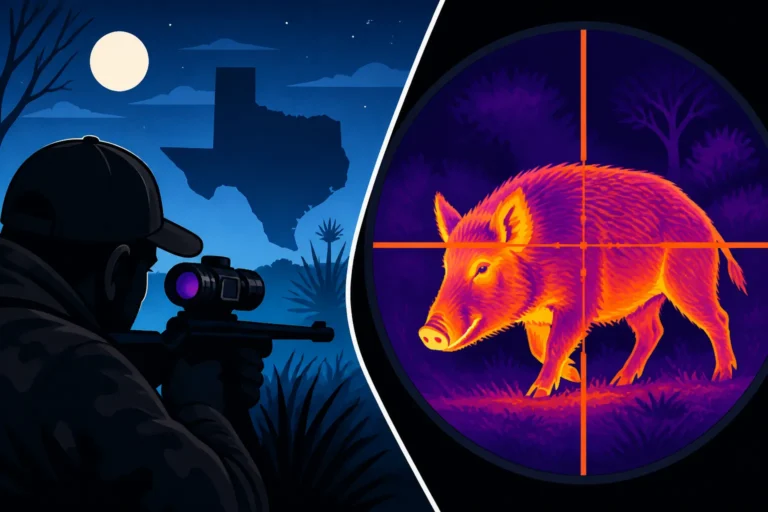
Thermal Imaging: Thermal scopes and monoculars detect heat signatures, allowing you to "see" coyotes even in complete darkness, thick brush, or fog. This gives you a massive advantage, turning the tables on their natural nocturnal stealth. You can scan wide areas with a thermal monocular to locate coyotes, then switch to a thermal rifle scope for accurate shot placement. The learning curve for thermal can be steep, but the effectiveness is undeniable. Our in-depth look at How to Hunt Hogs at Night With ThermalHow to Hunt Hogs at Night With Thermal provides foundational knowledge that translates perfectly to coyote hunting under the stars.
-
Night Vision: While thermal sees heat, night vision amplifies ambient light, allowing you to see in near-dark conditions. Digital night vision is common, offering recording capabilities. It's generally less effective in thick brush than thermal, but excels in open areas where there's some moonlight.
-
Red/Green Lights: Many hunters still use dedicated red or green hunting lights. Coyotes often react less to these colors, allowing you to spot them without spooking them immediately. These lights are typically mounted on rifles or used as handheld spotlights for scanning.
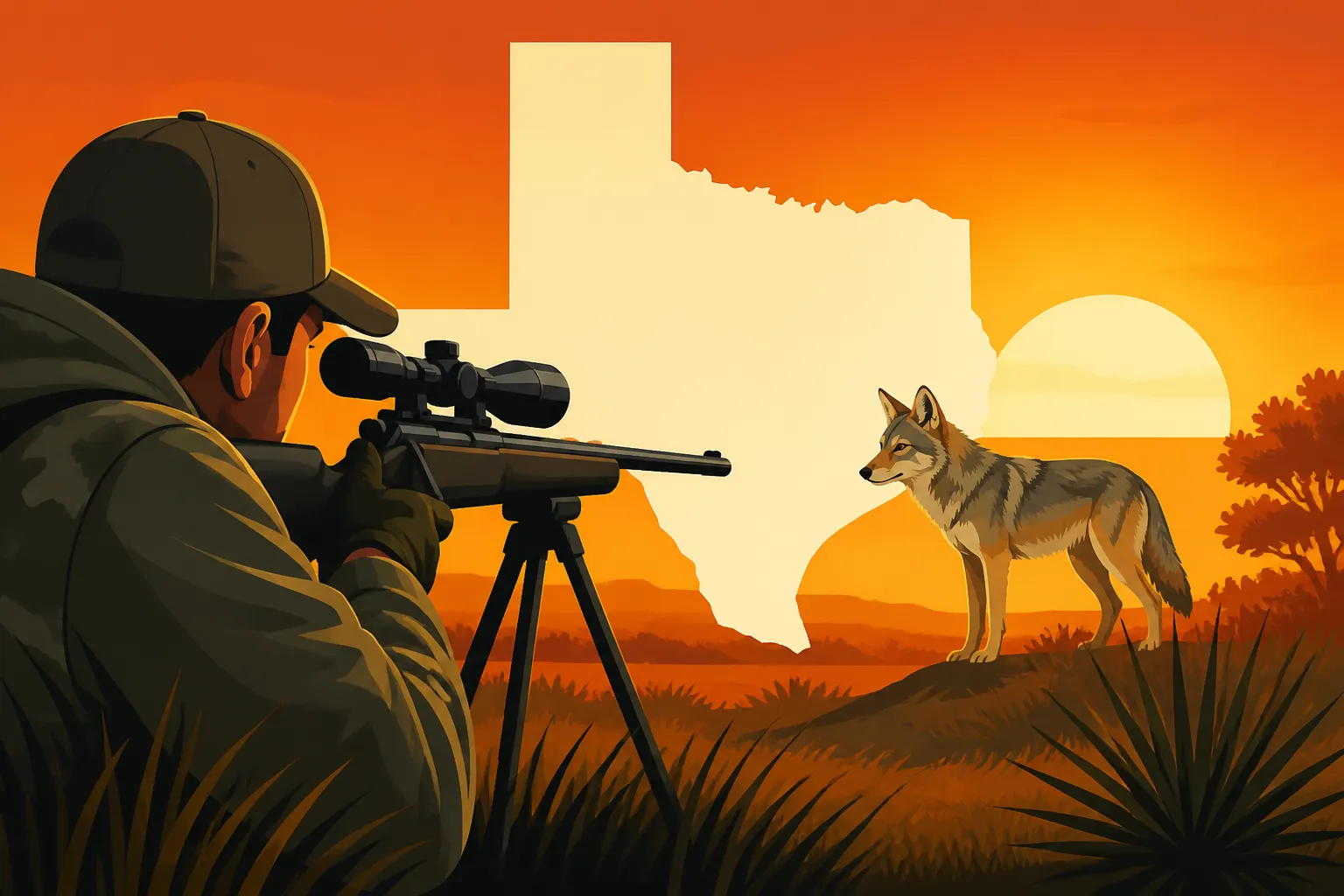
Safety is paramount during night hunts. Always be 100% certain of your target and what lies beyond it. Understand your shooting lanes and backstops. Using a quality shooting stick or tripod for stability is essential, especially when engaging targets in low light.
Trapping and Snaring
While primarily a management tool, trapping and snaring can be highly effective for reducing persistent coyote issues, particularly around livestock operations. However, this is a more specialized skill set with specific regulations. You typically need to be licensed as a trapper and follow strict guidelines regarding trap placement, type, and check intervals. For recreational hunting, calling and shooting are generally the preferred and more accessible methods.
Essential Gear for Texas Coyote Hunters
Having the right equipment can make all the difference in your coyote hunting success. From what you shoot to what you wear, every piece of gear plays a role in your ability to outsmart these cunning predators.
Firearms and Ammunition
Choosing the right firearm and ammunition is critical for clean, ethical kills on coyotes. They can be tough animals, and a well-placed shot is essential.
-
Rifles: Most coyote hunters opt for centerfire rifles due to their accuracy and range. Popular calibers include:
- .223 Remington / 5.56 NATO: A very common and effective choice, offering readily available and affordable ammunition. It has minimal recoil and is flat-shooting.
- .22-250 Remington: Known for its blistering speed and flat trajectory, making it excellent for longer shots on coyotes.
- .204 Ruger: Another high-velocity option, known for its accuracy and minimal recoil.
- .243 Winchester: A step up in power, it’s also a versatile deer cartridge but works great for coyotes, especially at longer ranges or in windy conditions.
- For ammunition, look for varmint-specific bullets that are designed for rapid expansion upon impact, such as hollow points or ballistic tips. These quickly transfer energy, ensuring a humane kill and reducing the chance of ricochet.
-
Shotguns: For close-range calling setups, especially in dense brush where coyotes might come in fast, a shotgun can be highly effective. Load it with heavy turkey loads (like #4 buckshot) or specific predator loads. A 12-gauge with a tight choke can reach out to 40-50 yards with the right load.
Optics and Lighting
Your ability to see your target clearly, whether day or night, is non-negotiable.
-
Day Hunting:
- Rifle Scopes: A variable power scope (e.g., 3-9x, 4-12x) with good light-gathering capabilities is ideal. You'll want enough magnification for precise shots but also a wide field of view for quick target acquisition.
- Binoculars: Essential for scanning, spotting movement, and identifying coyotes before they spot you. A 8×42 or 10×42 pair is a good all-around choice.
- Rangefinders: Crucial for accurately judging distance, especially on open terrain, to ensure precise shot placement.
- Our guide on Best Hunting Optics for Texas: Scopes, Binos & RangefindersBest Hunting Optics for Texas: Scopes, Binos & Rangefinders offers a deeper dive into selecting quality glass.
-
Night Hunting:
- Thermal Scopes: These are game-changers for night hunting, allowing you to detect the heat signature of coyotes. Popular brands like Pulsar and AGM offer excellent options. For specific recommendations, check out our article on the Best Thermal Scopes for Hog Hunting in TexasBest Thermal Scopes for Hog Hunting in Texas, as the technology is directly applicable.
- Thermal Monoculars: Used for scanning large areas to locate coyotes before you raise your rifle.
- Night Vision Devices: While less common than thermal for serious coyote hunting today, they are still viable.
- Red/Green Hunting Lights: If not using thermal or night vision, these lights mounted on your rifle or handheld can illuminate coyotes without completely spooking them.
Calling Devices and Concealment
Your ability to attract and hide from coyotes directly impacts your success.
- Electronic Callers: Brands like FoxPro, ICOtec, and Lucky Duck offer robust electronic callers with a wide range of realistic sounds and remote controls. Look for models with good volume and reliable battery life.
- Hand Calls: Carry a variety of hand calls (open-reed, closed-reed distress, coyote howlers) to adapt to different situations and coyote responses.
- Camouflage: Wear camo patterns that blend in with the specific Texas terrain you're hunting—whether it's mesquite and prickly pear in South Texas or the browns and greens of the Hill Country. Light, breathable fabrics are key, especially during warmer months.
- Ground Blinds/Natural Cover: For calling, sitting still and being completely concealed is vital. A compact, portable ground blind can provide excellent concealment, especially if you're hunting with a partner. Otherwise, use natural features like thick bushes, brush piles, or the base of a large tree. Understanding how to utilize cover for effective concealment, similar to the advice in Best Ground Blind for Bowhunting in TexasBest Ground Blind for Bowhunting in Texas, is essential.
- Scent Control: Coyotes have an incredible sense of smell. Using scent-eliminating sprays or wearing scent-proof clothing can help reduce your human odor, especially if a coyote tries to circle downwind.
Other Important Accessories
Don't forget the small things that can make a big difference in the field.
- Shooting Sticks or Bipods: Provide much-needed stability for accurate shots, especially at longer ranges or from awkward positions.
- Headlamp: A headlamp with a red light option is invaluable for setting up in the dark, navigating, or packing out.
- First-Aid Kit: Always carry a basic first-aid kit for emergencies.
- Water and Snacks: Hydration is key, especially during long waits in the Texas heat.
- Game Bags/Gloves: If you plan to field dress or handle coyotes, have gloves and appropriate bags.
Disclaimer
Hunting is an inherently dangerous activity. Always prioritize safety, understand and follow all local, state, and federal hunting regulations, and obtain appropriate licenses and landowner permissions. The information provided in this guide is for informational purposes only and does not constitute legal advice. Always verify current laws and regulations with the Texas Parks and Wildlife Department.